
Article Summary
Porthcawl is a charming seaside town on the south Wales coast offering sandy beaches, excellent surfing conditions at Rest Bay, world-class golf at Royal Porthcawl, and traditional Welsh seaside experiences including quality fish and chips. This guide covers everything visitors need to know about planning a trip to Porthcawl, from beach activities and water sports to dining and attractions.
A Welsh Seaside Town With Real Character
Porthcawl sits on the Glamorgan Heritage Coast, roughly midway between Cardiff and Swansea, and offers something increasingly rare among British seaside towns: authenticity. This isn’t a resort that’s been polished into identikit blandness. Porthcawl retains the character of a proper Welsh coastal community, where locals walk their dogs along the promenade year-round and the amusement arcades on John Street have been entertaining families for generations.
The town grew up around its harbour in the nineteenth century, initially as a port for exporting coal and iron from the valleys. When that trade declined, Porthcawl reinvented itself as a holiday destination, and the grand buildings along the Esplanade date from this Victorian and Edwardian heyday. Today it draws visitors for its beaches, its surf, its golf, and that indefinable quality that makes a seaside town worth visiting: it feels like somewhere, not anywhere.
Sandy Bay and the Beaches
Porthcawl’s main draw for most visitors is Sandy Bay, a broad sweep of golden sand backed by dunes and stretching towards Trecco Bay. On a summer’s day, this is classic British beach territory—families with windbreaks and picnic coolers, children building sandcastles, teenagers playing football on the hard sand near the waterline.
The beach is genuinely sandy, which distinguishes it from the pebbly stretches found elsewhere along the south Wales coast. At low tide, the beach extends for hundreds of metres, creating vast expanses of space even on busy bank holiday weekends. The dunes behind provide shelter from the wind and a sense of wildness at the edges of the resort.
Beyond Sandy Bay, Porthcawl offers several other beaches with distinct characters. Trecco Bay, home to a large holiday park, continues the sandy theme. Rest Bay, to the north, is rockier and more exposed—conditions that make it the focus of the town’s surfing scene. Coney Beach, nearest the town centre, combines sand with the traditional seaside attractions of the fairground that bears its name.
Surfing at Rest Bay
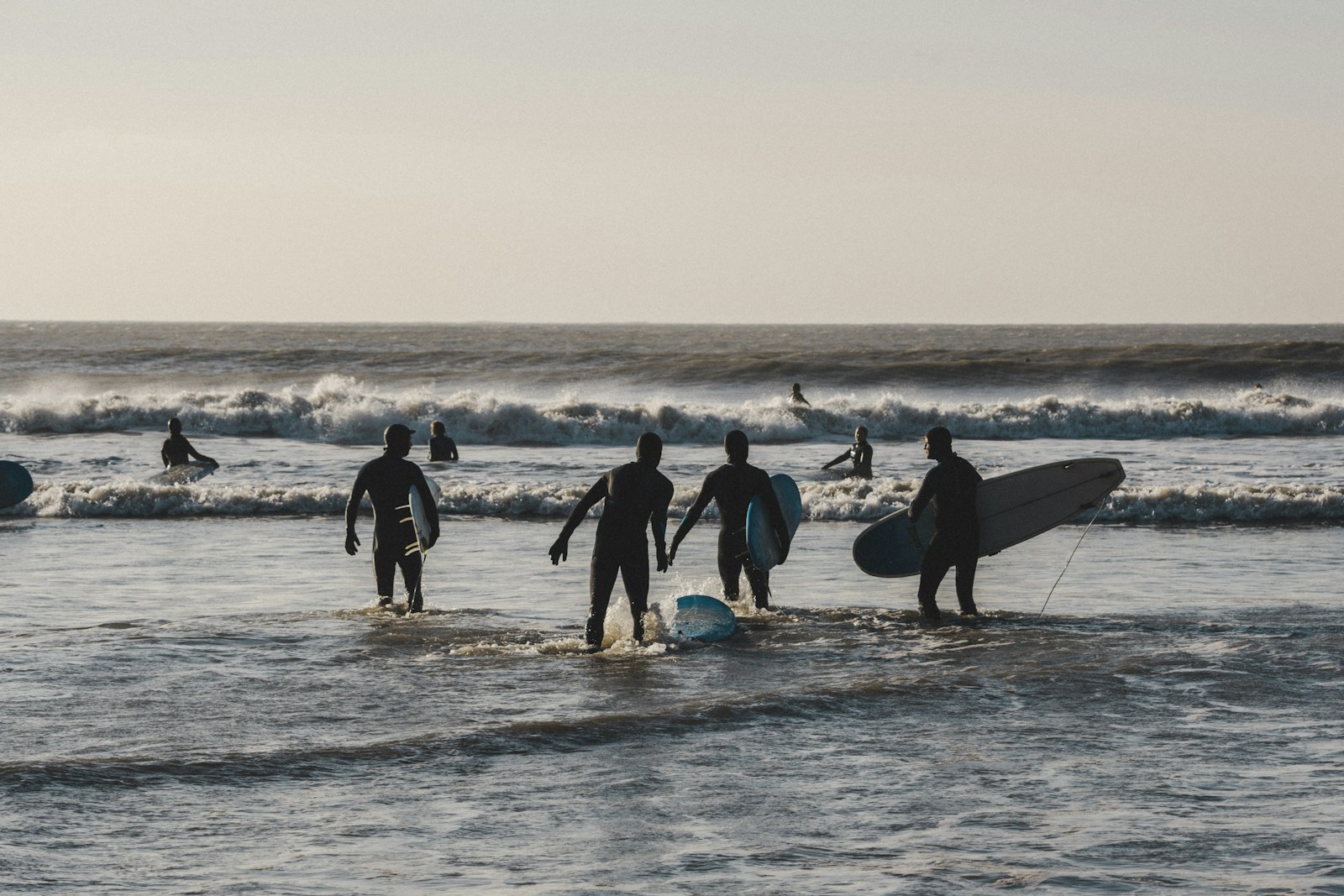
Rest Bay has established itself as one of the best surfing beaches in south Wales, attracting wave-riders from across the region and beyond. The beach faces west into the prevailing Atlantic swells, and the underwater topography creates consistent, well-formed waves that work across a range of conditions.
For experienced surfers, Rest Bay offers reliable waves through autumn and winter, when Atlantic storms send powerful swells rolling into the Bristol Channel. The beach break can produce hollow, fast waves that reward committed surfing. Summer brings gentler conditions better suited to beginners and improvers.
The Porthcawl Surf School operates from Rest Bay, offering lessons for complete beginners through to coaching for more advanced surfers. Equipment hire is available for those who want to paddle out independently. The surf community here is welcoming, and the car park above the beach serves as an informal gathering point where local surfers check the conditions and catch up on news.
Even if you’ve never stood on a surfboard, Rest Bay is worth visiting simply to watch. There’s something mesmerising about surfers waiting in the lineup, reading the approaching swells, then springing to their feet as a wave picks them up. On a good day, with offshore winds grooming the faces of the waves, it’s as good a spectacle as you’ll find on any Welsh beach.
Fish and Chips by the Sea
No seaside visit is complete without fish and chips, and Porthcawl delivers. The town has several excellent chippies, but Boostys on John Street has earned a particularly strong reputation among locals and visitors alike. The fish is fresh, the batter crisp, and the chips are proper chips—fluffy inside with just the right amount of crunch.
There’s a simple pleasure in walking along the Esplanade with a warm parcel of fish and chips, the smell of salt and vinegar mixing with the sea air. Find a bench overlooking the harbour or the rocky shoreline beyond, and you have one of life’s uncomplicated joys. Seagulls will eye your meal with obvious intent—Porthcawl’s gulls are bold—so stay alert.
For those who prefer to sit down, several of the town’s cafés and restaurants serve fresh seafood alongside more traditional seaside fare. The harbour area has been smartened up in recent years, and eating outdoors here on a warm evening, watching the boats bobbing at their moorings, ranks among the quieter pleasures of the Welsh coast.
Royal Porthcawl Golf Club
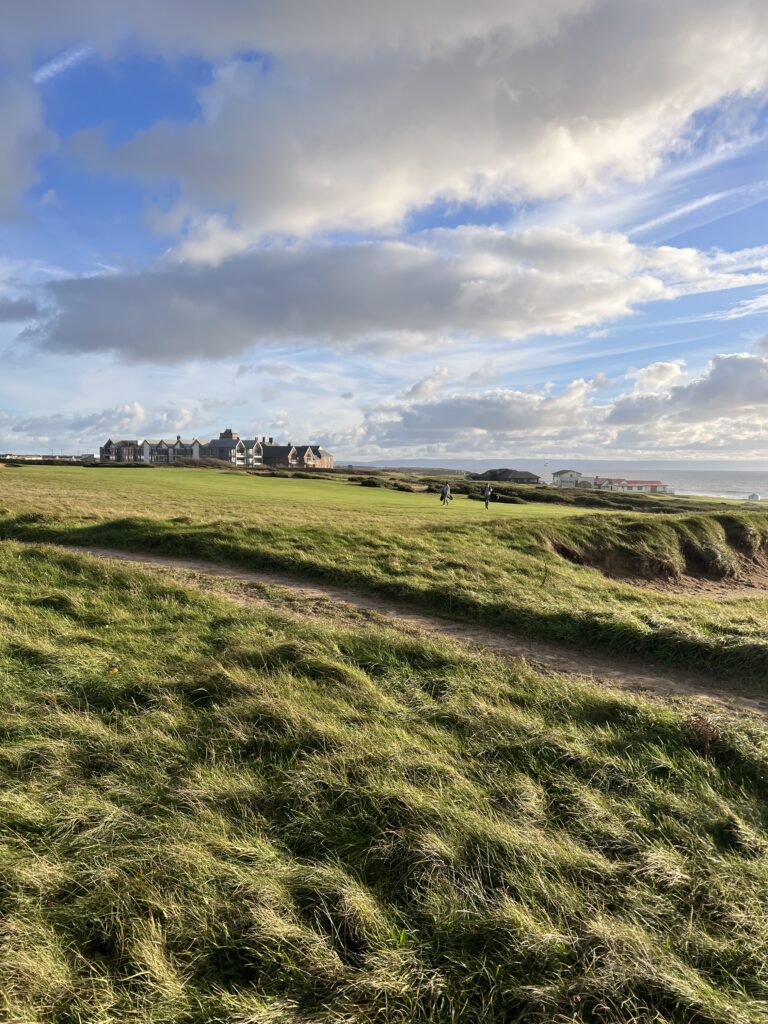
Royal Porthcawl is regularly ranked among the finest golf courses in the world, and it has hosted numerous prestigious championships including the Senior Open, Women’s Open the Amateur Championship, and the Walker Cup. For golfers, a round here is a genuine pilgrimage.
The links course runs along the coastline, with views across the Bristol Channel to Somerset and Devon on clear days. The turf is classic links, tight, fast, and unforgiving of loose shots. Wind is a constant factor, and club selection can vary by three or four clubs depending on conditions. The course demands strategic thinking and precise ball-striking, rewarding those who can keep the ball in play and punishing those who can’t.
Visitors can play at Royal Porthcawl, though booking well in advance is essential, and handicap certificates are required. Green fees reflect the club’s status, but for serious golfers, the experience justifies the cost. Walking the fairways where generations of champions have competed, with the sea alongside and the Welsh hills behind, is memorable.
Even non-golfers can appreciate Royal Porthcawl from the public footpath that runs along the coastline. The combination of manicured links, rugged shoreline, and open sky is beautiful in any weather.
The Esplanade and Town Centre
Porthcawl’s Esplanade curves around the headland from the harbour to Rest Bay, offering a flat, accessible walking route with sea views throughout. The Grand Pavilion, an Edwardian entertainment venue that still hosts concerts and shows, anchors the eastern end. Independent shops, cafés, and pubs line the streets behind.
John Street is the main commercial thoroughfare, home to the kind of shops that have largely disappeared from bigger towns: proper butchers, bakeries, and hardware stores alongside the bucket-and-spade emporia that serve the summer trade. The town hasn’t been overwhelmed by chain retailers, which gives it a distinctive character worth supporting.
The harbour area repays exploration. Porthcawl was never a major port, but the old harbour walls and the lighthouse (known locally as the Lighthouse) at the end of the breakwater are picturesque. Fishermen still land catches here, and crabbing from the harbour walls remains a popular activity for children.
Coney Beach Funfair
Coney Beach Pleasure Park has been a Porthcawl institution for decades, offering traditional fairground rides and amusements. It’s not a theme park—this is British seaside entertainment of the old school, with waltzers, dodgems, a ghost train, and arcade machines that have seen better days but still work.
For families with young children, Coney Beach provides an afternoon’s entertainment without the crowds and costs of larger attractions. For adults of a certain age, it offers nostalgia—the same rides, the same smells of candyfloss and hot dogs, the same slightly chaotic atmosphere that characterised seaside holidays in the 1980s and 1990s.
The funfair operates seasonally, with extended hours during school holidays and weekends. Check opening times before visiting, particularly outside the main summer season.
When to Visit
Porthcawl works in any season, though each brings different experiences. Summer delivers the classic seaside package: crowded beaches, ice cream vans, and long evenings on the Esplanade. This is peak time for families and anyone seeking traditional bucket-and-spade holidays.
Autumn and winter transform the town. The beaches empty, the surf picks up, and Porthcawl reveals its wilder side. Storm-watching from the Esplanade, with waves crashing against the rocks and spray flying over the promenade, is exhilarating. Wrap up warm and embrace the drama.
Spring sees the town waking up—daffodils in the parks, early season visitors testing the water, and the sense of anticipation that precedes the summer rush. This can be an ideal time to visit, with manageable crowds and improving weather.
Getting to Porthcawl
Porthcawl is easily accessible by car, sitting just off the M4 motorway at junction 37. From Cardiff, the drive takes around 30 minutes; from Swansea, roughly the same. Parking is available throughout the town, including large car parks at Sandy Bay and Rest Bay, though these fill quickly on sunny summer days.
Public transport requires a little more planning. The nearest railway station is Bridgend, approximately five miles away, with regular services from Cardiff and Swansea. Bus services connect Bridgend to Porthcawl, making car-free visits feasible if not entirely convenient.
Frequently Asked Questions About Visiting Porthcawl
Where is Porthcawl located?
Porthcawl is a seaside town on the south Wales coast, situated on the Glamorgan Heritage Coast between Cardiff and Swansea. It lies approximately 25 miles west of Cardiff and 20 miles east of Swansea, just off junction 37 of the M4 motorway.
Is Porthcawl beach sandy?
Yes, Sandy Bay and Trecco Bay both feature extensive golden sand beaches. These are among the best sandy beaches in south Wales, offering plenty of space for families, sunbathers, and beach activities.
Can you surf at Porthcawl?
Porthcawl is one of the best surfing destinations in south Wales. Rest Bay is the main surf beach, offering consistent waves suitable for beginners through to experienced surfers. Surf schools operate from the beach, providing lessons and equipment hire.
Can visitors play golf at Royal Porthcawl?
Yes, visitors can play at Royal Porthcawl Golf Club, though advance booking is essential and handicap certificates are required. The course is ranked among the best links courses in the world and has hosted numerous professional championships.
What is there to do in Porthcawl?
Porthcawl offers sandy beaches, surfing at Rest Bay, world-class golf at Royal Porthcawl, traditional fish and chips, Coney Beach funfair, harbour walks, coastal paths along the Glamorgan Heritage Coast, and a characterful town centre with independent shops and cafés.
Is Porthcawl good for families?
Porthcawl is an excellent family destination, with safe sandy beaches, Coney Beach Pleasure Park funfair, crabbing at the harbour, and plenty of ice cream shops and cafés. The town has a traditional British seaside atmosphere that appeals to families with children of all ages.
Where can I get fish and chips in Porthcawl?
Porthcawl has several excellent fish and chip shops. Boostys on John Street is particularly popular with locals and visitors, serving fresh fish in crisp batter with traditional chips.
How far is Porthcawl from Cardiff?
Porthcawl is approximately 25 miles from Cardiff city centre, around 30 minutes by car via the M4 motorway. The nearest train station is Bridgend, which has bus connections to Porthcawl.
When is the best time to visit Porthcawl?
Summer offers classic seaside weather and busy beaches, while autumn and winter bring excellent surfing conditions and dramatic storm-watching opportunities. Spring provides a quieter experience with improving weather before the summer crowds arrive.
Is there parking in Porthcawl?
Yes, Porthcawl has several public car parks including large facilities at Sandy Bay and Rest Bay. Parking can be busy on sunny summer days and bank holidays, so arriving early is advisable during peak times.
What is the Glamorgan Heritage Coast?
The Glamorgan Heritage Coast is a protected stretch of coastline running from Porthcawl to Aberthaw, featuring dramatic cliffs, secluded beaches, and coastal walking paths. Porthcawl sits at the western end of this designated heritage coast.
Does Porthcawl have a train station?
Porthcawl does not have its own train station. The nearest station is Bridgend, approximately five miles away, which has regular services from Cardiff and Swansea. Bus services connect Bridgend to Porthcawl.
