

Article Summary
Ogmore-by-Sea is a beautiful coastal village in the Vale of Glamorgan, offering a dramatic sandy beach framed by limestone cliffs, river estuary walks, and access to some of the finest coastal scenery in south Wales. Known for its sweeping sands, excellent surfing conditions, and proximity to the romantic ruins of Ogmore Castle, this unspoilt stretch of the Glamorgan Heritage Coast provides a perfect escape from nearby Cardiff and the valleys. This guide covers everything visitors need to know about Ogmore-by-Sea beach, the surrounding area, and practical information for planning your visit.
Where the River Meets the Sea
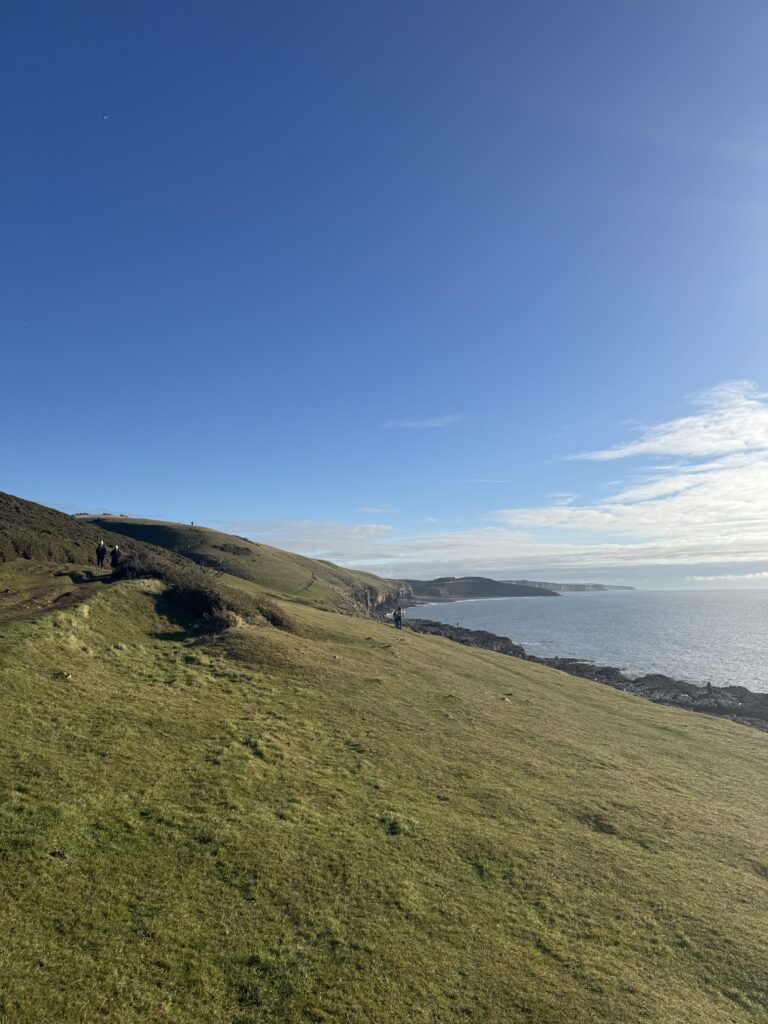
Ogmore-by-Sea occupies one of the most beautiful coastal positions in south Wales, where the River Ogmore completes its journey from the valleys to the sea and the limestone cliffs of the Glamorgan Heritage Coast stretch away in both directions. This is a place of contrasts—the gentle estuary with its stepping stones and grazing ponies giving way to a wild beach exposed to the full force of Atlantic swells; the soft greens of the river meadows meeting the rugged greys and whites of the coastal cliffs.
The village itself is modest, a scattered collection of houses, a pub, and a beach shop serving visitors rather than a developed resort. There are no amusement arcades, no promenades lined with candy floss stalls, no crowded car parks disgorging thousands of day-trippers. Ogmore-by-Sea has retained the unspoilt character that has largely vanished from more accessible coastal destinations, and its relative quietness is a large part of its appeal.
Yet this corner of the Vale of Glamorgan lies within easy reach of Cardiff, Bridgend, and the valleys towns, making it a popular escape for those seeking beach time, coastal walks, or simply fresh air and open space. The beach, the river, the castle ruins, and the dramatic clifftop paths combine to create a destination that rewards a full day’s exploration or serves equally well for a quick evening visit to catch the sunset.
For families, surfers, walkers, and anyone seeking the restorative power of the Welsh coast, Ogmore-by-Sea delivers an experience that lingers in the memory long after the sand has been shaken from shoes and towels.
The Beach
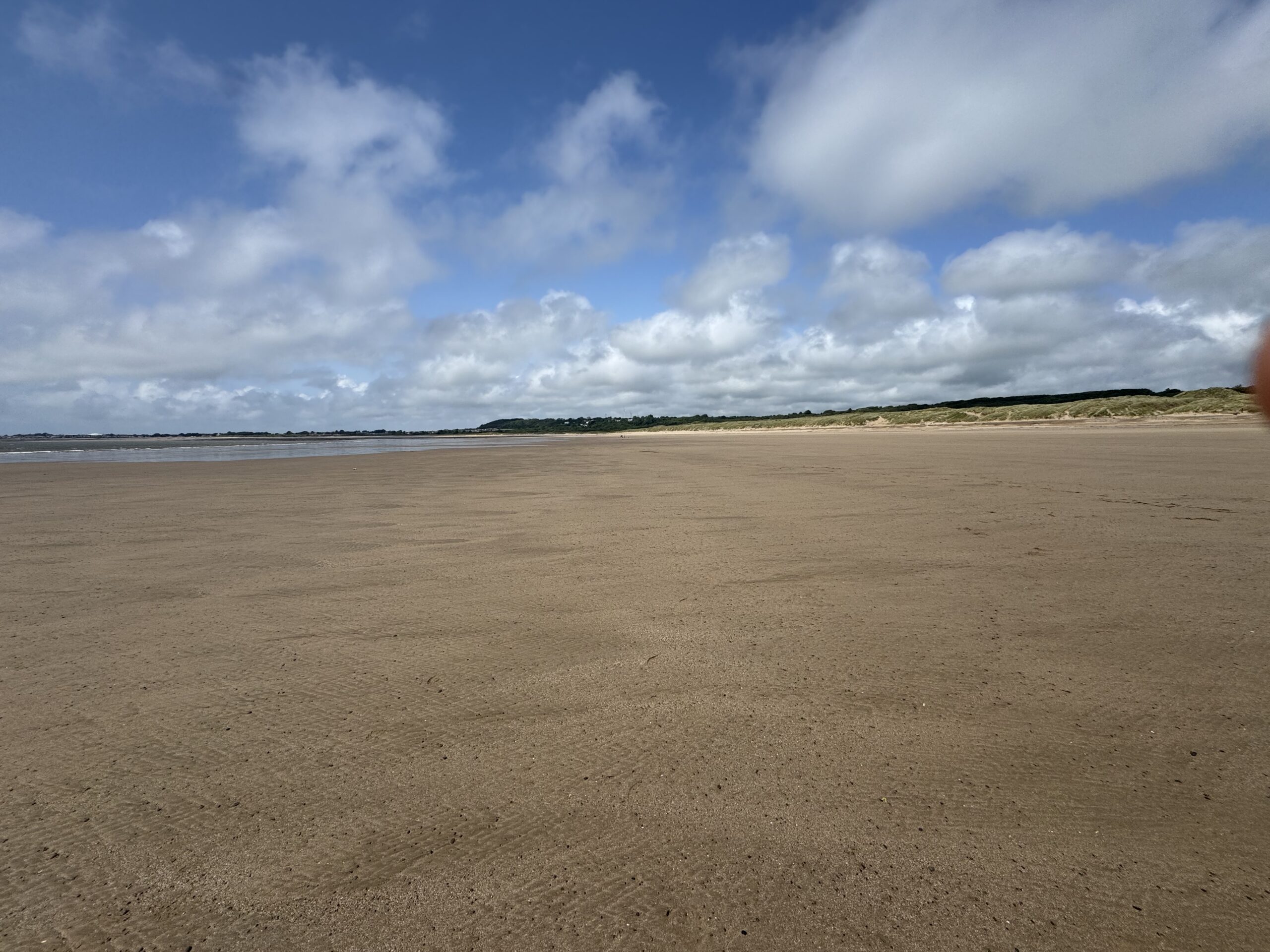
Ogmore-by-Sea beach is a magnificent sweep of sand stretching from the mouth of the River Ogmore southward towards the headland of Trwyn y Witch (Witch’s Point). At low tide, the beach extends for hundreds of metres, revealing vast expanses of firm sand perfect for walking, games, and the kind of space that allows children to run and explore freely.
Character and Conditions
The beach faces southwest into the Bristol Channel, receiving swells that have travelled up the channel from the Atlantic. This exposure gives Ogmore excellent conditions for surfing and bodyboarding, but also means the beach can be subject to strong currents and powerful waves. The tidal range here is substantial—among the highest in the world—and the beach transforms dramatically between high and low water.
At low tide, the sand stretches seemingly endlessly, with rock pools and channels to explore where the retreating water has carved patterns in the sand. The river mouth creates additional interest, with the fresh water of the Ogmore mixing with the salt water of the sea in constantly shifting patterns. Wading birds work the exposed mud and sand, and the whole scene has a wild, elemental quality.
At high tide, the beach shrinks considerably, with waves reaching close to the dunes and cliffs that back the shore. The transformation can catch unwary visitors by surprise, so checking tide times and being aware of the water’s advance is essential, particularly for those walking towards the cliffs or exploring the rock pools.
The Sand Dunes
Behind the beach, an extensive dune system provides habitat for wildlife and space for exploration away from the waterline. The dunes at Ogmore are part of the Merthyr Mawr Warren, one of the largest and most important dune systems in Wales, though the main warren lies across the river to the north.
The dunes immediately behind Ogmore beach are smaller but still significant, their marram-grass-covered slopes providing shelter from the wind and vantage points over the beach. In summer, wildflowers bloom among the dunes, and the sheltered hollows between the dune ridges offer secluded spots for picnics and relaxation.
Rock Pools and Wildlife
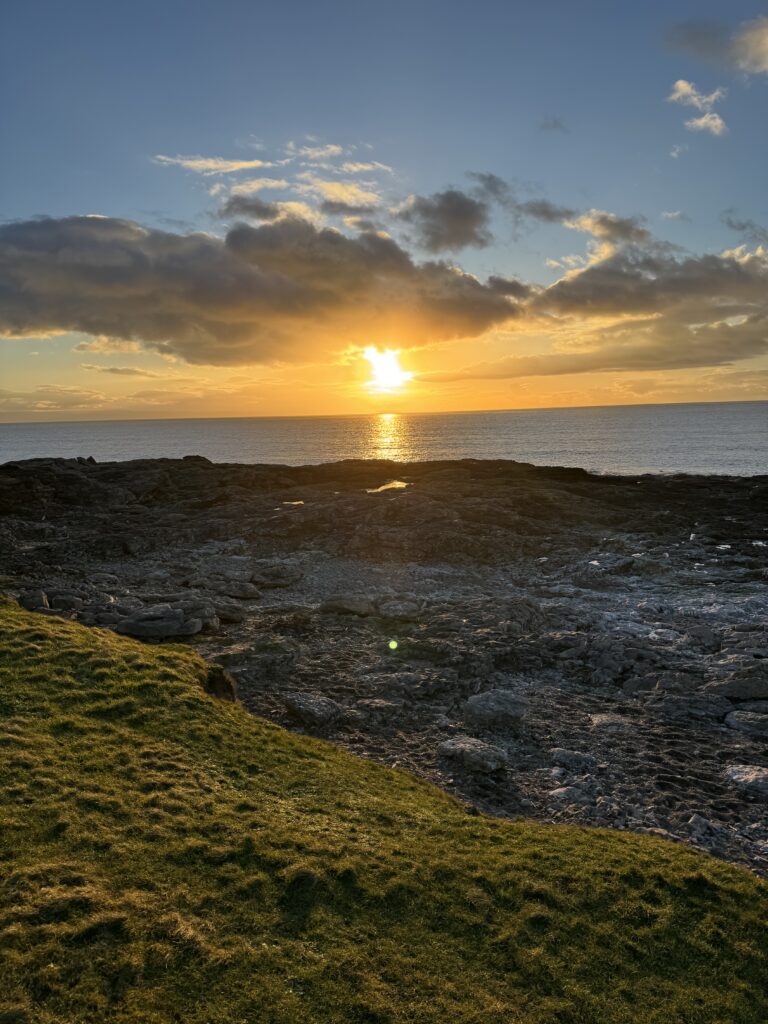
The rocky areas at either end of the beach and exposed at low tide support rich rock pool communities. Crabs, shrimps, anemones, small fish, and various molluscs inhabit these miniature ecosystems, providing endless fascination for children (and adults) willing to peer into the pools and explore carefully.
The beach and surrounding waters support various bird species. Oystercatchers, with their distinctive black and white plumage and orange bills, are perhaps the most visible, their piping calls a constant soundtrack to any beach visit. Gulls of various species wheel overhead, and in winter, wading birds gather on the estuary mudflats.
Grey seals are occasionally spotted offshore, their curious heads bobbing in the waves as they watch the beach. Dolphins and porpoises pass through these waters, though sightings are less reliable than at some Cardigan Bay locations.
Surfing and Water Sports
Ogmore-by-Sea has established itself as one of the better surfing beaches in south Wales, attracting riders from across the region who appreciate its consistent swells and relatively uncrowded waters.
Surfing Conditions
The beach break at Ogmore produces waves that work across a range of conditions, from gentle rollers suitable for beginners to more powerful swells that challenge experienced surfers. The best waves typically arrive between autumn and spring, when Atlantic weather systems send swells up the Bristol Channel.
The beach faces southwest, catching swells from this direction most effectively. Offshore winds from the northeast groom the wave faces into clean, well-formed peaks. Onshore winds from the southwest create messier conditions, though the beach can still produce surfable waves in less-than-ideal winds.
The tidal range significantly affects surfing conditions. Many surfers prefer the middle tides, when the water depth over the sandbars produces the best-shaped waves. High tide can see waves breaking close to the shore in shallow water, while extreme low tides may leave the best sandbanks too far out to be practical.
Surf Schools and Equipment
Surf schools operate in the Ogmore area during the season, offering lessons for beginners and coaching for those looking to improve their skills. Equipment hire is available for those who arrive without their own boards and wetsuits.
Wetsuits are essential year-round. Water temperatures in the Bristol Channel peak at around 17°C in late summer and drop to single figures in winter. Even in summer, extended sessions without a wetsuit risk cold-related problems, and winter surfing demands quality neoprene.
Other Water Activities
Beyond surfing, Ogmore beach offers opportunities for bodyboarding, swimming (with appropriate caution regarding currents and conditions), paddleboarding, and general water play. The river estuary provides calmer water for those seeking gentler paddling conditions, though the tidal currents in the estuary can be surprisingly strong.
The beach is not lifeguarded, so all water users should assess conditions carefully, stay within their abilities, and be aware of the potential hazards of this exposed coastline.
The River Ogmore and Stepping Stones
One of the most distinctive features of Ogmore-by-Sea is the River Ogmore itself, which reaches the sea immediately north of the main beach. The river mouth, with its stepping stones, grazing ponies, and ruined castle, creates a landscape quite different from the open beach and adds significantly to the area’s appeal.
The Stepping Stones
The stepping stones across the River Ogmore have become one of the most photographed features of the area, a line of large flat stones that allow (sometimes) dry-footed crossing of the river at lower tide levels. The stones have been here for centuries, providing a crossing point between Ogmore-by-Sea and the village of Merthyr Mawr on the opposite bank.
Crossing the stepping stones is something of an adventure, particularly when the river is flowing strongly or the tide is making. The stones can be slippery, the gaps between them uneven, and the occasional deeper section catches out those not paying attention. Appropriate footwear and a willingness to get feet wet are advisable.
At higher tide levels and after heavy rain, the stepping stones become impassable, the river flowing too deep and too strong for safe crossing. This adds to the sense of the crossing as a minor adventure—the river deciding whether or not passage is possible on any given day.
The River Meadows
The meadows along the river banks, particularly on the Ogmore-by-Sea side, are grazed by ponies and horses that have become another iconic feature of the area. These semi-wild animals wander freely, adding life and character to the landscape. They are accustomed to people but should be treated with appropriate respect—they are not pets and can be unpredictable.
Walking along the river bank provides a different experience from the beach—the gentle flow of the water, the grazing animals, the castle ruins across the river, and the wooded slopes rising behind. This is a landscape of pastoral beauty that contrasts with the wilder character of the open coast.
The Estuary
Where the river meets the sea, the estuary creates a dynamic environment shaped by the interaction of fresh and salt water, river current and tidal flow. At low tide, extensive mudflats and sandbanks are exposed, attracting feeding birds and creating patterns of channels and pools that change with every tide.
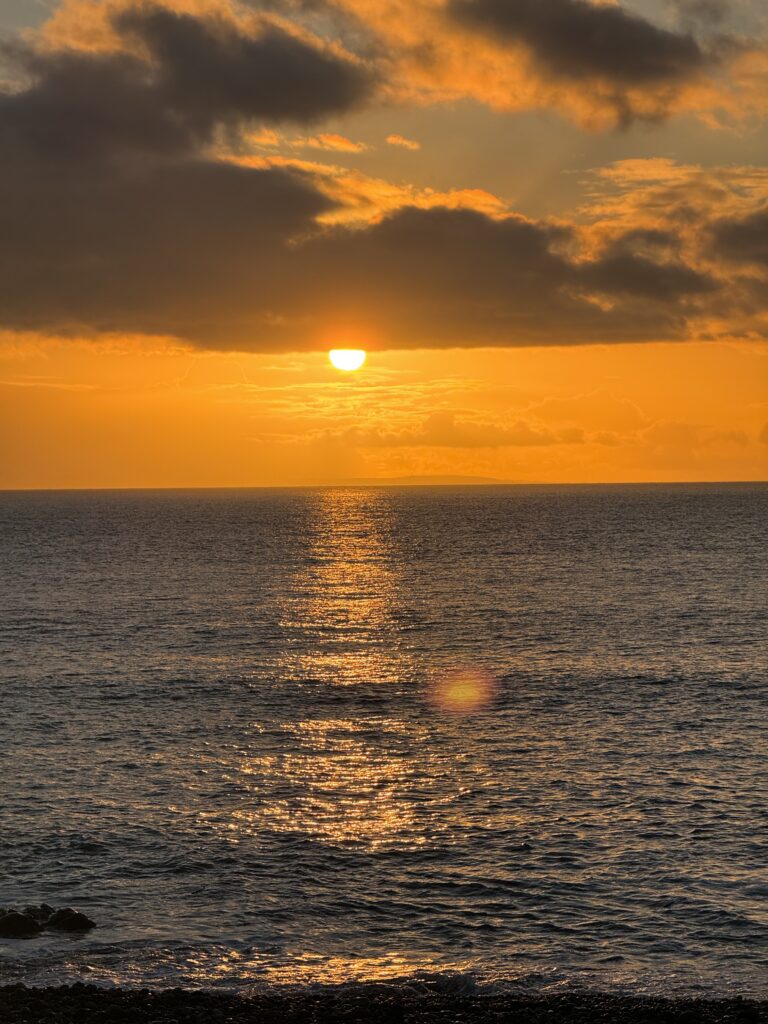
The estuary is not suitable for swimming due to unpredictable currents and the mixing of waters, but it provides excellent opportunities for wildlife watching and photography. The play of light on water and sand, particularly in the golden hours around sunrise and sunset, creates images that draw photographers from across south Wales.
Ogmore Castle
The ruins of Ogmore Castle stand on the eastern bank of the River Ogmore, overlooking the stepping stones and the river meadows. This Norman fortress, though modest in scale compared to the great castles of north Wales, provides an evocative historical dimension to any visit to the area.
History
Ogmore Castle was built in the early twelfth century by William de Londres, one of the Norman lords who carved out territories in the fertile Vale of Glamorgan following the conquest. The castle was designed to control the crossing point of the River Ogmore and to project Norman authority over the surrounding Welsh population.
The original castle was a simple ringwork—a raised platform surrounded by a ditch and bank—with timber buildings providing accommodation and defence. Over the following century, the timber structures were replaced with stone, and the castle took on the form visible in the ruins today.
The castle’s position, commanding the river crossing and the approaches from the coast, gave it strategic importance in the Norman colonisation of Glamorgan. It served as the centre of a lordship, administering the surrounding lands and providing a base for the enforcement of Norman control.
Unlike many Welsh castles, Ogmore seems to have avoided major conflict. No dramatic sieges or battles are recorded in its history, and the castle’s decline appears to have been gradual—a slow fading into obsolescence as military threats diminished and the costs of maintenance exceeded the benefits of occupation.
The Ruins Today
The ruins that survive today include portions of the curtain wall, the remains of a rectangular keep, and various domestic structures. The stonework has been consolidated to prevent further decay, and interpretation panels explain the castle’s history and layout.
The most striking feature is the keep, which retains two storeys and gives a sense of the castle’s original form. The ground floor, likely used for storage, is entered through a doorway at first-floor level—a defensive arrangement requiring a ladder or removable stairs that could be withdrawn in case of attack.
The castle’s position above the river provides excellent views across the stepping stones, the meadows, and towards the beach and sea beyond. It’s easy to understand why the Norman lords chose this spot, commanding as it does the key crossing point and the route between coast and interior.
Visiting the Castle
Ogmore Castle is managed by Cadw and is free to visit. The ruins are accessible at all times, with no admission charge or formal opening hours. A small car park near the castle serves visitors, and interpretation panels provide information about the site’s history.
The castle can be reached on foot from Ogmore-by-Sea via the stepping stones (when passable) or by road via the village of Merthyr Mawr. Combining a beach visit with exploration of the castle makes for a satisfying day’s outing that encompasses both natural beauty and medieval history.
Merthyr Mawr

Across the river from Ogmore-by-Sea lies the village of Merthyr Mawr and its remarkable sand dune system, one of the largest and most important in Wales. This area adds significantly to the attractions of the Ogmore area and deserves exploration in its own right.
Merthyr Mawr Warren
Merthyr Mawr Warren is an extensive dune system designated as a Site of Special Scientific Interest and a National Nature Reserve. The dunes cover approximately 840 acres and include some of the highest dunes in Wales, reaching over 200 feet in places.
The warren supports exceptional biodiversity, with over 1,000 species of flowering plants and ferns recorded, including several rarities. The dune slacks—low-lying areas between the dune ridges—support particularly rich plant communities, with orchids and other specialist species thriving in these sheltered, damp conditions.
The dunes have been used as a filming location for various productions, including scenes representing desert environments in films such as Lawrence of Arabia and Arabian Nights. The scale and character of the dunes, so unexpected in the Welsh landscape, create an atmosphere quite unlike anywhere else in Britain.
Walking in the Dunes
Numerous paths cross the warren, allowing exploration of this remarkable landscape. The walking is unusual—soft sand that shifts beneath your feet, steep dune slopes that challenge the legs, and the disorienting experience of navigating a landscape where landmarks are few and viewpoints constantly change.
The effort is rewarded with views across the dune system, glimpses of the sea through gaps in the dune ridges, and the discovery of secluded hollows where the wind drops and the sun warms. The dunes have a meditative quality, their undulating forms and soft colours creating an environment that encourages contemplation.
Visitors should be aware that the soft sand makes walking tiring, and the sun-exposed dunes can be hot in summer. Carrying water and wearing sun protection is advisable. The dunes are also disorienting, so keeping track of your direction and having a clear plan for returning to your starting point is important.
Merthyr Mawr Village
The village of Merthyr Mawr is one of the prettiest in the Vale of Glamorgan, a collection of thatched cottages clustered around a medieval church. The village has a timeless quality, its buildings and lanes seemingly unchanged for centuries.
St Teilo’s Church dates from the medieval period and contains various features of historical interest. The churchyard, with its ancient yew trees and weathered gravestones, provides a peaceful counterpoint to the wildness of the dunes and coast.
The village is reached via narrow lanes from Bridgend or via the stepping stones from Ogmore-by-Sea (when passable). A car park serves visitors to the village and the dunes.
The Glamorgan Heritage Coast
Ogmore-by-Sea lies on the Glamorgan Heritage Coast, a protected stretch of coastline running from Porthcawl to Aberthaw. This designation recognises the scenic, ecological, and geological importance of the coast and provides a framework for its conservation and management.
Coastal Character
The Glamorgan Heritage Coast is characterised by limestone cliffs, wave-cut platforms, and secluded beaches accessible only at low tide or via steep paths. This is a dramatic coastline, quite different from the sandy bays of Pembrokeshire or the developed resorts of north Wales.
The cliffs reveal geological history spanning hundreds of millions of years, with fossils visible in the exposed rock faces. The coastal erosion that continues today has created sea stacks, arches, and caves that add visual drama and ecological interest.
The heritage coast designation has helped protect this landscape from development, maintaining its wild character in the face of pressure from the nearby urban areas. Walking the clifftop paths, you can forget the proximity of Cardiff and Bridgend and lose yourself in a landscape that feels remote and untamed.
Walking the Heritage Coast
The Wales Coast Path follows the Glamorgan Heritage Coast, providing a well-marked route along the clifftops with access points at various locations. The walking is varied, with clifftop sections offering dramatic views alternating with descents to beaches and coves.
From Ogmore-by-Sea, walkers can head south towards Southerndown and Dunraven Bay, or north towards Porthcawl. The southern route is particularly scenic, passing above Witch’s Point and along cliffs that drop sheer to the sea. The northern route crosses the river mouth and follows the coast towards Newton and beyond.
The terrain is generally moderate, with some steep sections where the path climbs and descends the cliff face. Sturdy footwear is recommended, as the paths can be muddy after rain and some sections involve uneven rocky ground.
Dunraven Bay
Dunraven Bay lies approximately 2 miles south of Ogmore-by-Sea along the coastal path, a beautiful horseshoe-shaped bay backed by cliffs and containing the remains of a Victorian garden. This neighbouring beach makes an excellent addition to an Ogmore visit for those with time for exploration.
The Bay
Dunraven Bay is reached via the Heritage Coast Centre at Southerndown or on foot along the coastal path from Ogmore. The bay features a sandy beach at low tide, rock pools, and dramatic limestone cliffs that glow golden in evening light.
The beach is popular but rarely as busy as more accessible destinations, its relative remoteness (no beachfront parking) limiting visitor numbers. Those who make the effort are rewarded with a beautiful beach that feels like a discovery rather than a destination.
The Walled Garden
Above the beach, the remains of a Victorian walled garden hint at the estate that once occupied this clifftop position. Dunraven Castle, demolished in the 1960s, stood here for centuries, and the walled garden that served it has been partially restored and is maintained by the local council.
The garden walls shelter visitors from the coastal winds and provide a pleasant spot for picnics with views across the bay. Interpretation panels explain the history of the estate and the garden’s features.
Heritage Coast Centre
The Heritage Coast Centre at Southerndown provides information about the Glamorgan Heritage Coast, its ecology, geology, and history. The centre includes a café, making it a useful stop for refreshment during coastal walks.
Wildlife and Nature
The Ogmore area supports diverse wildlife across its varied habitats—beach, dunes, estuary, and cliff.
Birds
The estuary and beach attract various bird species throughout the year. Oystercatchers are perhaps the most visible, their distinctive calls carrying across the sand. Curlews, redshanks, and other waders feed on the exposed mudflats at low tide, while gulls and cormorants are constant presences.
In winter, the estuary hosts increased numbers of wildfowl and waders, with birds moving south to escape harsher conditions further north. Spring and autumn bring migrants passing through, adding variety to the species list.
The cliffs support nesting seabirds in summer, including fulmars that glide on stiff wings along the cliff faces. Ravens patrol the clifftops, their deep croaking calls distinctive against the sound of wind and waves.
Marine Life
Grey seals are occasionally seen offshore, particularly in autumn and winter when they gather at haul-out sites along the coast. The seals breed in caves and on remote beaches, and pups may be visible in late autumn.
The rock pools support the usual array of coastal creatures—crabs, shrimps, anemones, and small fish—providing opportunities for discovery and exploration at low tide. The pools are fragile ecosystems, so visitors should observe the rock pool code: look but don’t touch, replace any rocks that are moved, and leave everything as you found it.
Flora
The dune systems support exceptional plant diversity, including several species of orchid and other specialist plants adapted to the challenging dune environment. The best displays occur in late spring and early summer, when the dune slacks come alive with colour.
The clifftops support maritime grassland communities, with species adapted to salt spray, wind exposure, and thin soils. Thrift, sea campion, and kidney vetch add colour to the cliff edges in spring and summer.
Practical Information for Visitors
Getting to Ogmore-by-Sea
By car: Ogmore-by-Sea is accessed from the B4524, which leaves the A48 near Bridgend. From the M4, take junction 35 and follow the A473 towards Bridgend, then signs for Ogmore-by-Sea. The journey from Cardiff takes approximately 30 minutes. Sat nav postcode: CF32 0PW for the village.
By bus: Bus services connect Ogmore-by-Sea with Bridgend, though frequencies are limited. Check current timetables before planning a car-free visit.
By bicycle: The area is accessible by bicycle from Bridgend and surrounding towns, with quiet lanes providing pleasant riding. The approach from Bridgend via Merthyr Mawr is particularly attractive.
Parking
Several parking options serve visitors to Ogmore-by-Sea:
Beach car park: A car park near the beach provides convenient access to the sand. The car park can fill quickly on sunny weekends and during school holidays, so early arrival is advisable.
Ogmore Castle car park: A small car park near the castle serves visitors to the ruins and the stepping stones area.
Merthyr Mawr car park: For those approaching via the stepping stones or wishing to explore the dunes, parking is available near Merthyr Mawr village.
Parking charges apply at most locations. Cash and card payment options vary, so carrying cash is advisable.
Facilities
Toilets: Public toilets are available near the beach car park.
Refreshments: The Pelican in her Piety pub near the stepping stones serves food and drinks. A beach shop near the car park sells basic refreshments, beach equipment, and ice cream during the season.
Shops: Ogmore-by-Sea has minimal retail facilities. Visitors should obtain supplies in Bridgend or surrounding towns before arriving.
Beach equipment: Basic beach equipment is available from the beach shop. For specialist water sports equipment, shops in Bridgend and Porthcawl offer wider selections.
Beach Safety
Ogmore-by-Sea beach is not lifeguarded. Visitors should be aware of the following:
Tides: The tidal range at Ogmore is extreme, and the beach transforms dramatically between high and low water. Check tide times before visiting and be aware of the incoming tide, particularly when walking towards the cliffs or exploring rock pools.
Currents: The beach is exposed to Atlantic swells, and currents can be strong, particularly near the river mouth and around the headlands. Swimmers should stay within their abilities and avoid water activities in rough conditions.
Cliffs: The limestone cliffs are unstable in places, with regular rockfalls. Stay away from the cliff base and do not climb on the cliff faces.
River crossing: The stepping stones are only passable at lower tide levels and can be slippery. Assess conditions carefully before attempting the crossing, and be prepared to get wet.
Dogs
Dogs are welcome at Ogmore-by-Sea beach year-round, making it popular with dog walkers. There are no seasonal restrictions, though dogs should be kept under control around the grazing ponies and horses in the river meadows.
Best Time to Visit
Summer brings the warmest weather and is the most popular time for beach visits. Expect crowds on sunny weekends and during school holidays. The beach can accommodate large numbers, but parking fills quickly.
Spring and autumn offer pleasant conditions with fewer visitors. These seasons are ideal for walking the coastal path and exploring the dunes. The light can be particularly beautiful for photography.
Winter sees Ogmore at its quietest and most dramatic. Storms bring impressive waves, and the empty beach takes on a wild beauty. Wrap up warmly and embrace the elements.
Tides significantly affect the experience at Ogmore. Low tide reveals the full expanse of the beach and allows access to rock pools and more remote areas. High tide limits beach space but creates more powerful waves for surfing. Check tide times when planning your visit.
Walks from Ogmore-by-Sea
Ogmore-by-Sea provides the starting point for several excellent walks combining beach, riverside, and clifftop terrain.
Beach and Cliff Walk to Dunraven Bay
Distance: Approximately 4 miles round trip Time: 2 to 3 hours Difficulty: Moderate—some steep sections on the cliff path
This walk follows the beach south from Ogmore-by-Sea before climbing onto the cliffs and continuing to Dunraven Bay. Return via the same route or extend to Southerndown and return along inland paths.
From the beach car park, walk south along the sand towards Witch’s Point (Trwyn y Witch). As the beach narrows and cliffs block further progress at beach level, look for the path climbing onto the clifftop. Follow the Wales Coast Path south, enjoying dramatic views along the Heritage Coast.
The path descends to Dunraven Bay, where you can explore the beach, rock pools, and walled garden before returning the way you came.
Stepping Stones and Castle Circuit
Distance: Approximately 2 miles Time: 1 to 1.5 hours Difficulty: Easy—mostly level ground with the stepping stone crossing
This short walk combines the stepping stones, Ogmore Castle, and the river meadows in a circuit that captures the essence of the area.
From the beach car park, walk north along the river bank towards the stepping stones. Cross the river (if water levels permit) and visit Ogmore Castle on the opposite bank. Return via the road bridge or recross the stepping stones, exploring the river meadows on the return.
Merthyr Mawr Dunes Exploration
Distance: Variable—from 1 mile to several miles depending on route Time: 1 to 3 hours Difficulty: Moderate—soft sand makes walking tiring
Cross the stepping stones to reach Merthyr Mawr and explore the extensive dune system. The soft sand and undulating terrain make this more tiring than distance alone suggests, but the unique landscape rewards the effort.
There are no formal marked trails in the dunes, so navigation requires attention. Keep track of your direction and maintain awareness of how to return to your starting point.
Coastal Path to Porthcawl
Distance: Approximately 7 miles one way Time: 3 to 4 hours one way Difficulty: Moderate—some steep sections and soft sand
This linear walk follows the Wales Coast Path north from Ogmore-by-Sea to Porthcawl, crossing the river mouth and following the coast past Newton and Rest Bay. Return by bus or arrange transport at the far end.
The route crosses the stepping stones (or uses the road bridge at lower water levels), traverses the Merthyr Mawr dunes, and follows the clifftop path to Porthcawl. The varied terrain and changing scenery make this one of the finest coastal walks in south Wales.
Nearby Attractions
Ogmore-by-Sea’s location in the Vale of Glamorgan provides access to numerous attractions within easy reach.
Porthcawl
The seaside town of Porthcawl lies approximately 7 miles north of Ogmore-by-Sea, offering traditional resort facilities including sandy beaches, the Nova Centre leisure complex, and Coney Beach funfair. Porthcawl provides a more developed seaside experience for those seeking additional facilities.
Also find our latest article on: Why You Should Visit Porthcawl: A Complete Guide to This Welsh Seaside Gem
Bridgend
The town of Bridgend, approximately 5 miles from Ogmore-by-Sea, offers shopping, restaurants, and services. The McArthurGlen Designer Outlet attracts bargain hunters, while the town centre provides a range of amenities.
Kenfig Nature Reserve
Kenfig Nature Reserve, approximately 8 miles north of Ogmore-by-Sea, protects an important dune system and freshwater lake. The reserve offers excellent wildlife watching, including breeding birds and a diverse flora.
Cowbridge
The market town of Cowbridge, approximately 10 miles east of Ogmore-by-Sea, offers independent shops, restaurants, and a traditional Welsh market town atmosphere. The town makes a pleasant stop for lunch or exploration.
Cardiff
The Welsh capital lies approximately 20 miles east of Ogmore-by-Sea, offering all the attractions of a major city including Cardiff Castle, the National Museum, Cardiff Bay, and extensive shopping and dining options.
Latest Article: Cardiff
St Donat’s Castle and Atlantic College
St Donat’s Castle, approximately 8 miles west of Ogmore-by-Sea, is a medieval castle that now houses Atlantic College, one of the United World Colleges. The castle and grounds are occasionally open for events and tours.
Frequently Asked Questions About Ogmore-by-Sea
Where is Ogmore-by-Sea located?
Ogmore-by-Sea is located in the Vale of Glamorgan, south Wales, approximately 5 miles from Bridgend and 20 miles from Cardiff. It lies on the Glamorgan Heritage Coast where the River Ogmore meets the Bristol Channel.
Is Ogmore-by-Sea Beach sandy?
Yes, Ogmore-by-Sea features a large sandy beach that extends for hundreds of metres at low tide. The beach also includes areas of rock pools and pebbles, particularly towards the headlands.
Can you surf at Ogmore-by-Sea?
Yes, Ogmore-by-Sea is one of the better surfing beaches in south Wales. The beach break produces consistent waves suitable for all abilities, with the best conditions typically between autumn and spring.
What are the stepping stones at Ogmore?
The stepping stones are a line of large flat stones crossing the River Ogmore, providing a traditional crossing point between Ogmore-by-Sea and Merthyr Mawr. The stones are passable at lower tide levels but can be slippery and challenging.
Is there a castle at Ogmore?
Yes, Ogmore Castle is a Norman fortress overlooking the River Ogmore near the stepping stones. The ruins are free to visit and managed by Cadw.
Are dogs allowed on Ogmore-by-Sea Beach?
Yes, dogs are welcome on Ogmore-by-Sea beach year-round with no seasonal restrictions. Dogs should be kept under control around the grazing ponies and horses in the river meadows.
Is Ogmore-by-Sea Beach lifeguarded?
No, the beach is not lifeguarded. Visitors should assess conditions carefully and be aware of strong currents, powerful waves, and the extreme tidal range.
Is there parking at Ogmore-by-Sea?
Yes, car parks serve the beach and castle areas. Parking charges apply, and spaces fill quickly on sunny weekends and during school holidays.
What are the tides like at Ogmore-by-Sea?
Ogmore-by-Sea experiences an extreme tidal range, among the highest in the world. The beach transforms dramatically between high and low water, so checking tide times is essential for planning your visit.
Can you visit Merthyr Mawr dunes from Ogmore?
Yes, Merthyr Mawr Warren is accessible from Ogmore-by-Sea via the stepping stones (when passable). The extensive dune system is one of the largest in Wales and offers excellent walking.
What is the Glamorgan Heritage Coast?
The Glamorgan Heritage Coast is a protected stretch of coastline running from Porthcawl to Aberthaw, including Ogmore-by-Sea. The designation recognises the area’s scenic, ecological, and geological importance.
Is there food available at Ogmore-by-Sea?
The Pelican in her Piety pub serves food and drinks, and a beach shop sells basic refreshments during the season. For wider dining options, nearby Bridgend offers restaurants and cafés.
How far is Ogmore-by-Sea from Cardiff?
Ogmore-by-Sea is approximately 20 miles from Cardiff city centre, around 30-40 minutes by car depending on traffic.
Can you swim at Ogmore-by-Sea?
Swimming is possible but the beach is not lifeguarded. Swimmers should be aware of strong currents, powerful waves, and the extreme tidal range. The water is cold year-round.
What wildlife can you see at Ogmore-by-Sea?
The area supports diverse birdlife including oystercatchers, curlews, and seabirds. Grey seals are occasionally spotted offshore. The dunes support exceptional plant diversity including orchids.
Are there ponies at Ogmore-by-Sea?
Yes, semi-wild ponies and horses graze the river meadows near the stepping stones. They are accustomed to people but should be treated with respect.
How do you get to Dunraven Bay from Ogmore?
Dunraven Bay is approximately 2 miles south of Ogmore-by-Sea, accessible via the Wales Coast Path along the clifftops. The walk takes around 1-1.5 hours each way.
