
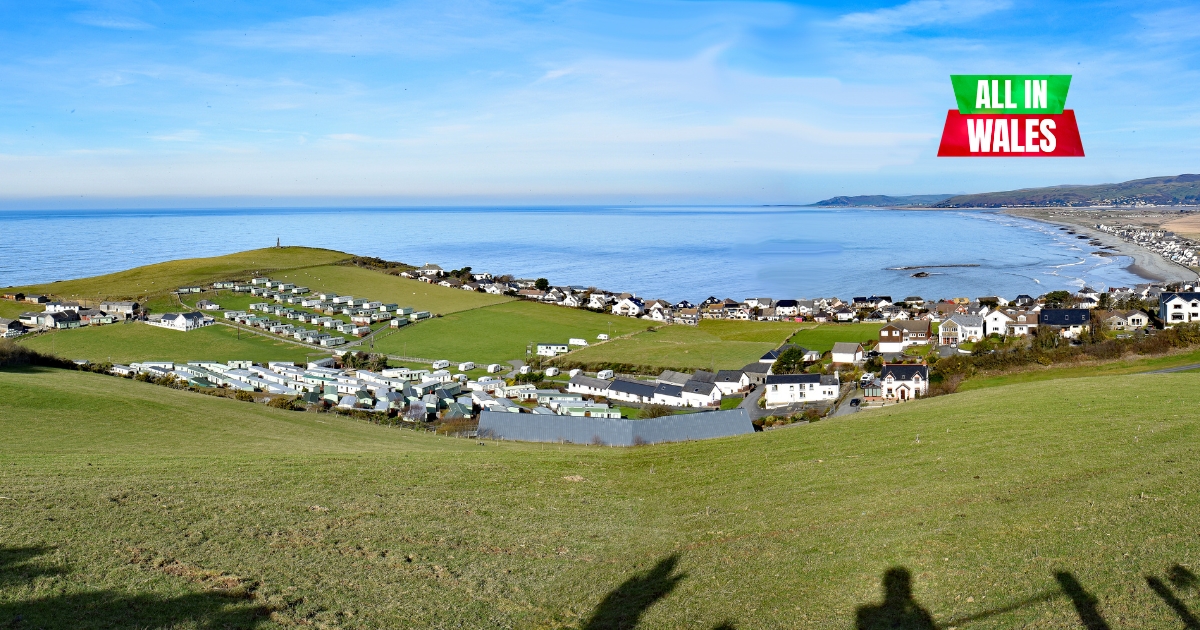

Borth is a unique coastal village on the Cardigan Bay coast of mid Wales, famous for its dramatic three mile beach, prehistoric submerged forest, and unspoilt natural character. Located between Aberystwyth and Machynlleth, this traditional Welsh seaside community offers excellent surfing, world class birdwatching at the nearby Dyfi Estuary, and access to one of the most important dune systems in Wales at Ynyslas. This comprehensive guide covers everything visitors need to know about Borth, from its fascinating geological history and legendary connections to practical information for planning your visit.
Where the Ancient Forest Meets the Sea
Borth stretches along a shingle ridge at the edge of Cardigan Bay, a long ribbon of village facing the full force of the Atlantic weather systems that sweep in from the west. This is a place of big skies and broad horizons, where the beach seems to extend forever and the boundary between land and sea feels provisional and ever shifting.
Unlike the manicured resorts that dot the British coastline, Borth retains a wildness that has largely vanished elsewhere. There are no promenades lined with amusement arcades, no chain restaurants competing for attention, no crowds pushing along congested pavements. Instead, Borth offers the authentic experience of a Welsh coastal community that has resisted the pressures of mass tourism while welcoming those who appreciate its particular character.
The village’s most remarkable feature lies not on the beach but beneath it. At low tide, particularly after storms have shifted the sand, the stumps and roots of an ancient forest emerge from the shore, a prehistoric landscape preserved for four thousand years beneath the waves. These blackened remnants connect Borth to a time when the coastline lay miles further west and forests grew where waves now break.
This submerged forest has fuelled legends for centuries, most notably the tale of Cantre’r Gwaelod, the drowned kingdom said to lie beneath Cardigan Bay. Whether folk memory or pure mythology, the legend gives Borth a mystical dimension that enhances its appeal for visitors attuned to the deeper stories embedded in the Welsh landscape.
For families seeking traditional seaside holidays, surfers chasing Atlantic swells, birdwatchers exploring the internationally important Dyfi Estuary, or anyone wanting to escape the noise of modern life, Borth delivers an experience that lingers in the memory long after the salt has been washed from hair and the sand shaken from shoes.
The Beach
Borth Beach stretches for approximately three miles along the Cardigan Bay coast, from the rocky outcrops below Upper Borth in the south to the mouth of the Dyfi Estuary in the north. This vast expanse of sand and shingle provides the setting for everything from family beach days to serious surfing expeditions.
Character and Conditions
The beach faces west across Cardigan Bay, receiving the full force of Atlantic weather systems that travel thousands of miles before reaching the Welsh coast. This exposure gives Borth its character, with powerful waves, strong winds, and the sense of being at the edge of things that defines the Welsh western seaboard.
At low tide, the beach extends for hundreds of metres, revealing vast flats of firm sand perfect for walking, games, and kite flying. The scale is impressive, providing space that never feels crowded even on the busiest summer days. The gentle gradient creates extensive shallow areas suitable for paddling and safe play.
The tidal range at Borth is substantial, and the beach transforms dramatically between high and low water. At high tide, waves crash against the shingle ridge that protects the village, while at low tide the sea retreats to reveal sand, rock pools, and the famous submerged forest.
Water quality in Cardigan Bay is generally excellent, benefiting from the clean waters of this relatively undeveloped coastline. The bay’s importance for marine wildlife, including dolphins and seals, reflects the quality of its marine environment.
The Southern Beach
The southern section of Borth Beach, nearest the village centre and the main access points, features a mixture of sand and shingle. This is the most accessible part of the beach, with facilities nearby and easy access from the village street.
The shingle ridge that protects the village from the sea is most prominent here, a natural barrier reinforced over the years to guard against flooding. Behind the shingle, the village buildings face the sea, their windows looking out across the water to distant horizons.
The Central Beach
Moving northward, the beach becomes sandier and the dunes more prominent. This central section offers excellent walking, with firm sand at low tide extending towards the distant mountains of Snowdonia visible on the northern horizon.
The sense of space here is remarkable. On quiet days, you may have hundreds of metres of beach to yourself, with only seabirds and the sound of waves for company. The sky seems impossibly vast, and the boundary between sea and sand creates patterns that change with every tide.
The Northern Beach
The northern end of Borth Beach merges into the Dyfi Estuary, where the character changes from open coast to estuarine environment. Sand gives way to saltmarsh and mudflat, and the birdlife becomes increasingly abundant.
This area lies within the Dyfi National Nature Reserve, and access may be restricted during sensitive periods for wildlife. The transition from beach to estuary provides fascinating ecological variety, with different habitats supporting different communities of plants and animals.
The Submerged Forest
Borth’s most remarkable feature lies not on the beach but beneath it. At low tide, particularly after storms have shifted the sand, the stumps and roots of an ancient forest emerge from the shore, providing visible evidence of a prehistoric landscape drowned by rising seas.
The Ancient Forest
The submerged forest dates from the Bronze Age, approximately 4,500 years ago, when sea levels were significantly lower than today. What is now Cardigan Bay was then a wooded lowland, home to communities of early farmers who worked the land and hunted in the forests.
Oak, pine, birch, willow, and alder grew where waves now break. Peat deposits preserve the remains of the plants and animals that lived among the trees, creating an archaeological record of extraordinary richness. The waterlogged, anaerobic conditions prevented decay, leaving tree stumps and root systems intact for millennia.
As sea levels rose following the last Ice Age, the forest was gradually inundated. The trees died and fell, but their remains were preserved beneath layers of sand and peat. Today, these remains emerge when tide and weather conditions align, revealing the ghost of a landscape that vanished four thousand years ago.
Walking Among the Stumps
Walking among the submerged forest is an eerie and moving experience. The stumps, blackened by millennia underwater, are clearly recognisable as trees. You can see the grain of the wood, the patterns of roots spreading into the ancient soil. Some stumps stand waist high while others are barely visible above the sand.
The forest extends for a considerable distance along the beach, revealing itself gradually as you walk. The extent of visible remains varies with conditions, with more stumps exposed after storms have scoured away overlying sand. Spring tides, which produce lower low tides, also reveal more of the ancient forest.
The stumps are fragile and protected as a scheduled ancient monument. Visitors should look but not touch, and certainly not remove any material. Photography is welcome, and the forest makes a fascinating subject in all conditions, from bright sunshine to moody overcast skies.
Visiting the Submerged Forest
To see the submerged forest, plan your visit around the tides. The forest is visible at low tide, particularly during spring tides when the water retreats furthest. Tide tables are available online and from local businesses.
The forest is most prominent after storms, which scour away the overlying sand that normally conceals the remains. However, some stumps are visible at most low tides, and patient searching will usually reveal evidence of the ancient woodland.
The best areas for viewing vary with conditions, but the central section of the beach often produces good sightings. Walking the tideline as the water retreats allows you to spot emerging stumps before they become surrounded by other visitors.
The Legend of Cantre’r Gwaelod
The submerged forest at Borth has fuelled legends for centuries, most notably the tale of Cantre’r Gwaelod, the drowned kingdom said to lie beneath the waters of Cardigan Bay.
The Legend
According to Welsh mythology, a great kingdom once occupied the lowlands that are now Cardigan Bay. This fertile realm, known as Cantre’r Gwaelod (the Lowland Hundred), was protected from the sea by embankments and sluice gates that held back the waters.
The kingdom prospered under a series of rulers, its people working the rich farmland and enjoying the peace of their sheltered realm. But the land’s safety depended on the vigilance of those who maintained the sea defences, particularly the keeper of the sluice gates.
The most common version of the legend blames a keeper named Seithennin, who was charged with watching the gates and ensuring they remained closed against high tides. One night, during a great feast, Seithennin became drunk and neglected his duties. The sea poured through the unattended gates, flooding the kingdom and drowning its inhabitants.
Only those who fled to higher ground survived. The kingdom vanished beneath the waves, its towers and halls preserved in the cold depths. According to tradition, the bells of Cantre’r Gwaelod’s churches can still be heard on stormy nights, ringing beneath the sea as a warning to the living.
Historical Basis
Like many legends, the story of Cantre’r Gwaelod may contain a kernel of historical truth. The coastline of Cardigan Bay has changed dramatically over the millennia, and communities have certainly been displaced by rising seas.
The submerged forest at Borth provides tangible evidence that land once existed where sea now covers all. Archaeological discoveries of prehistoric tools and structures in the intertidal zone confirm that people lived and worked in areas now underwater.
Whether any specific flood event lies behind the legend remains unknown. The story may preserve folk memory of gradual encroachment, accumulated over generations and eventually crystallised into a single dramatic narrative. Or it may be pure mythology, a morality tale about negligence and its consequences attached to a landscape feature that demanded explanation.
Whatever its origins, the legend enriches the experience of Borth. Standing on the beach at low tide, watching the ancient forest emerge from the sand, it is easy to imagine the drowned kingdom lying somewhere beyond the horizon, its bells still ringing in the depths.
Surfing and Water Sports
Borth has established itself as one of the better surfing destinations on the Welsh coast, attracting wave riders who appreciate its consistent swells and relatively uncrowded waters.
Surfing Conditions
The beach break at Borth produces waves that work across a range of conditions, from gentle rollers suitable for beginners to more powerful swells that challenge experienced surfers. The beach faces west into the prevailing Atlantic swells, receiving waves that have travelled thousands of miles across open ocean.
The best waves typically arrive between autumn and spring, when Atlantic low pressure systems send swells rolling into Cardigan Bay. Winter surfing at Borth can be excellent, with powerful waves and empty lineups for those willing to brave the cold water. Summer brings smaller, gentler waves better suited to beginners and longboarders.
The beach break character means that sandbars shift constantly, and the quality of waves varies accordingly. Local knowledge helps in finding the best peaks, and the small community of regular surfers is generally welcoming to visitors who show respect for the lineup.
Learning to Surf
For beginners, Borth offers excellent conditions for learning to surf:
Borth Surf School and other operators provide lessons for complete beginners through to coaching for improving surfers. Equipment hire is available for those who arrive without their own boards and wetsuits.
The gentle gradient of the beach creates extensive whitewater zones where beginners can practise standing up without the intimidation of larger waves further out. The relatively uncrowded conditions compared to more famous surf beaches allow learners space to make mistakes without constantly dodging other surfers.

Equipment and Water Temperature
Wetsuits are essential year round at Borth. Water temperatures in Cardigan Bay rarely exceed the mid teens Celsius even in high summer, and drop to single figures in winter. A good wetsuit significantly extends comfortable surf time and is essential for safety in cooler months.
Surf shops in the area provide equipment hire and sales. For those travelling without gear, hiring locally is straightforward and relatively affordable.
Other Water Activities
Beyond surfing, Borth Beach offers opportunities for various water activities:
Bodyboarding provides an accessible alternative to surfing, with shorter learning curves and lower equipment costs.
Stand up paddleboarding is popular on calmer days, particularly in the early morning before the wind picks up.
Sea swimming attracts both casual bathers and serious open water swimmers. The beach is not lifeguarded, so swimmers should assess conditions carefully.
Kayaking and canoeing allow exploration of the coastline and estuary from the water.
All water users should be aware of the potential hazards of this exposed coastline, including strong currents, powerful waves, and the significant tidal range.
Ynyslas and the Dyfi National Nature Reserve
At the northern end of Borth Beach, the landscape transitions into one of the most important nature conservation sites in Wales. Ynyslas, a peninsula of sand dunes extending into the Dyfi Estuary, forms part of the Dyfi National Nature Reserve and UNESCO Dyfi Biosphere.
The Dune System
The dune system at Ynyslas is one of the finest in Wales, a dynamic landscape shaped by wind and tide over thousands of years. Mobile dunes near the beach give way to more stable vegetated dunes inland, and the succession of habitats supports remarkable biodiversity.
The dunes cover approximately 850 acres and include some of the highest dunes in Wales. Walking through this landscape feels like entering another world, the soft sand and undulating forms creating an environment quite unlike anywhere else in Britain.
The dune slacks, low lying areas between dune ridges where the water table approaches the surface, support particularly rich plant communities. In summer, these areas can be carpeted with wildflowers, including several species of orchid. The fen orchid, one of Britain’s rarest plants, has been recorded here.
The Estuary
The Dyfi Estuary, where the River Dyfi meets the sea, is internationally important for wading birds and wildfowl. At low tide, vast mudflats provide feeding grounds for thousands of birds that gather here during migration and winter.
Species commonly seen include oystercatchers, curlews, redshanks, dunlins, and various other waders. In winter, the estuary hosts significant numbers of wigeon, teal, and other wildfowl. The spectacle of thousands of birds feeding and roosting against the backdrop of the Welsh hills is one of the great wildlife experiences of the British coast.
The estuary is designated as a Site of Special Scientific Interest, Special Protection Area, and Ramsar wetland of international importance. These designations recognise both the ecological value of the habitat and the international significance of the bird populations it supports.
The Visitor Centre
A visitor centre at Ynyslas provides information about the reserve and its wildlife. Displays explain the ecology of the dunes and estuary, and staff can advise on current wildlife sightings and the best places to observe different species.
The centre includes a small shop selling books, guides, and nature related products. Toilet facilities are available, and the centre serves as a useful starting point for exploring the reserve.
Opening times vary seasonally, so checking before visiting is advisable. The reserve itself is accessible at all times, though some areas may be restricted during sensitive periods for wildlife.
Walking in the Reserve
Numerous paths cross the dune system, allowing exploration of this remarkable landscape:
The Boardwalk Trail provides accessible walking across the dunes to the beach, suitable for visitors with limited mobility.
The Wildlife Trail visits key habitats and viewing points, with interpretation along the way.
Informal paths through the dunes allow more exploratory walking, though navigation can be challenging in this disorienting landscape.
The soft sand makes walking tiring, and the exposed dunes can be hot in summer. Carrying water and wearing sun protection is advisable. The dunes can also be disorienting, so keeping track of your direction and maintaining awareness of how to return to your starting point is important.
The Dyfi Osprey Project
The Dyfi Osprey Project, based at Cors Dyfi nature reserve a few miles from Borth, offers the chance to watch breeding ospreys during the spring and summer months. This has become one of the premier wildlife watching experiences in Wales.
The Ospreys
Ospreys returned to breed in Wales in 2011 after an absence of centuries, and the Dyfi nest has become a major focus for conservation and public engagement. The birds arrive from their African wintering grounds in March or April, breed through the spring and summer, and depart again in late summer.
The nest is monitored by live cameras that beam images to the visitor centre and to viewers worldwide. Watching the birds fish, feed their young, and go about their daily lives provides intimate insight into osprey behaviour that would be impossible to observe otherwise.
The success of the Dyfi project has helped establish ospreys as breeding birds in Wales, with additional pairs now nesting at other sites. The project combines conservation, research, and public education in a model that has attracted international recognition.
Visiting the Project
The 360 Observatory at Cors Dyfi provides the main viewing facility, with live camera feeds, telescopes, and knowledgeable staff who can explain osprey behaviour and answer questions.
The reserve also offers walking trails through wetland, woodland, and grassland habitats, providing opportunities to see other wildlife beyond the ospreys. Kingfishers, otters, and various bird species may be encountered by patient observers.
The project operates seasonally, typically from April to September when the ospreys are present. Checking opening times and current osprey activity before visiting is advisable.
The Village
Borth village stretches along the coast for approximately a mile, its buildings strung along the High Street that runs parallel to the beach. The settlement has a linear character quite different from the clustered villages typical of inland Wales, shaped by the narrow strip of land between the hills and the sea.
Character and Atmosphere
The village has a pleasingly unpolished character. This is not a resort that has been developed and sanitised for tourism but rather a working Welsh community that happens to have a beach. The buildings are a mixture of styles and ages, from Victorian houses built during the railway era to twentieth century bungalows and the occasional older cottage.
The High Street offers the services visitors need without excessive commercialisation. A general store supplies groceries and beach essentials. Fish and chip shops provide the quintessential seaside meal. Cafes serve tea, coffee, and home cooked food. Pubs offer refreshment and conviviality after a day on the beach.
Welsh is widely spoken in Borth, and the language adds texture to the experience of the village. Signs are bilingual, conversations switch between languages, and the Welsh character of the community is evident in ways large and small.
The Animalarium
The Animalarium, located at the northern end of the village, provides a family attraction focused on animal welfare and conservation. Housing rescued and rehomed animals from around the world, it offers an alternative to beach based activities and supports important conservation work.
The collection includes various species that have been rescued from unsuitable conditions or can no longer survive in the wild. The emphasis is educational, helping visitors understand the needs of different animals and the importance of conservation.
St Matthew’s Church
St Matthew’s Church, located in Upper Borth, provides a focal point for the village’s spiritual life. The church dates from the nineteenth century and contains features of historical and architectural interest.
The churchyard offers peaceful contemplation and views across the surrounding landscape. Memorial stones record the names of village residents across the generations, connecting the present community with its past.
Upper Borth and Lower Borth
The village divides informally into Upper Borth on the higher ground to the south and Lower Borth nearer to sea level at the northern end. Upper Borth tends to be quieter and more residential, while Lower Borth contains more of the commercial premises serving visitors.
The distinction reflects the geography of the site, with the land rising towards the cliffs at the southern end and dropping to the vulnerable low ground near the estuary. The 2014 storms, which caused significant flooding in Lower Borth, highlighted the different exposures of the two areas.
Walking and Wildlife
Beyond the beach and dunes, Borth offers excellent opportunities for walking and wildlife watching in the surrounding landscape.
The Wales Coast Path
The Wales Coast Path passes through Borth as part of its 870 mile route around the Welsh coastline. The Ceredigion section of the path is one of the finest in Wales, combining coastal drama with relatively gentle terrain.
Southward from Borth, the coast path climbs onto the cliffs that lead towards Aberystwyth. The walking here is spectacular, with views across Cardigan Bay and inland to the Cambrian Mountains. The path passes through farmland and along cliff tops, offering a different perspective on the coast from the beach level experience.
Northward from Borth, the path crosses the Dyfi Estuary by bridge and continues towards Aberdyfi and the southern fringes of Snowdonia. This section combines coastal walking with the estuarine landscape, offering abundant birdwatching opportunities.
Circular Walks
Several circular walks start from Borth:
The Borth to Tre’r Ddol circuit combines coastal and inland walking, passing through farmland and woodland before returning via quiet lanes.
The Ynyslas circular explores the dune system before returning along the beach, though timing around tides is important for this route.
Shorter walks along the beach, through the village, and into the surrounding hills suit visitors seeking gentler exercise.
Birdwatching
The Borth area provides exceptional birdwatching:
The Dyfi Estuary hosts internationally important populations of wading birds and wildfowl, particularly during migration and winter.
The beach and dunes support various coastal species including oystercatchers, ringed plovers, and skylarks.
Cors Dyfi offers the chance to see ospreys, kingfishers, and various wetland species.
Red kites soar over the surrounding countryside, a common sight across mid Wales following successful conservation efforts.
Marine Wildlife
Grey seals are regularly seen offshore, their curious heads bobbing in the waves as they watch the beach.
Dolphins are present in Cardigan Bay, and sightings from the Borth area are possible, though more reliable further south around New Quay.
Basking sharks visit Cardigan Bay in summer, their large dorsal fins occasionally visible from the shore.
The Railway
Borth station sits on the Cambrian Coast Line, one of the most scenic railway journeys in Britain. The line runs from Shrewsbury through mid Wales to Aberystwyth, with a branch continuing along the coast to Pwllheli.
The Journey
Arriving at Borth by train is a pleasure in itself. The line hugs the coast for much of its route, offering views across Cardigan Bay that drivers, focused on the road, must miss.
The approach to Borth passes along the edge of the Dyfi Estuary, with the village appearing as a line of buildings stretched along the shore. The station itself sits in the centre of the village, within easy walking distance of the beach and local facilities.
Services
Services run several times daily, connecting Borth with:
Aberystwyth (approximately 15 minutes) to the south, with connections to other destinations in Wales.
Machynlleth (approximately 20 minutes) to the north, gateway to the Dyfi Valley and mid Wales.
Shrewsbury (approximately 2 hours) to the east, with connections to the wider national rail network.
The Cambrian Coast Line services continue north from Machynlleth along the coast to Pwllheli, providing one of the finest railway journeys in Wales.
Car Free Visiting
For visitors without cars, the railway makes Borth accessible in a way that many comparable coastal locations are not. Combined with the Wales Coast Path, it allows for linear walks that end at a different station from where they began, avoiding the need to retrace your steps.
The T2 TrawsCymru bus service also connects Borth with Aberystwyth and destinations to the north, providing additional car free options.
Practical Information for Visitors
Getting to Borth
By train: Borth station is served by Transport for Wales services on the Cambrian Coast Line. Trains run from Shrewsbury, Birmingham (with changes), and connecting services from elsewhere. The journey from Shrewsbury takes approximately 2 hours, from Aberystwyth approximately 15 minutes.
By car: Borth lies on the B4353 coast road between Aberystwyth and Machynlleth. From the A487 trunk road, follow signs for Borth at Tre’r Ddol (from the north) or at Bow Street (from the south). The village is approximately six miles north of Aberystwyth. Sat nav postcode: SY24 5JA.
By bus: The T2 TrawsCymru service connects Borth with Aberystwyth and Machynlleth, with onward connections to other destinations. Check current timetables before travelling.
Parking
Parking is available in the village, including a car park near the beach at the northern end. Street parking is possible along the High Street, though spaces can be limited during busy periods.
The car park at Ynyslas serves visitors to the dunes and nature reserve, a short drive or longer walk from Borth village.
During summer weekends and school holidays, arriving early is advisable as parking can be challenging when the village is busy.
Accommodation
Borth offers a range of accommodation:
Bed and breakfasts and guesthouses provide traditional hospitality, often in characterful Victorian buildings.
Self catering cottages and apartments suit those preferring independence.
Caravan and camping sites in and around the village provide affordable options for those with touring caravans, motorhomes, or camping equipment.
Holiday parks offer family oriented accommodation with on site facilities.
Booking ahead is advisable during summer and school holidays. Outside peak season, accommodation is generally readily available.
Eating and Drinking
The village offers several options for eating and drinking:
Cafes serve breakfast, lunch, and refreshments throughout the day, often featuring local produce.
The Victoria Inn and other pubs provide meals and drinks in traditional settings.
Fish and chip shops offer the classic beach meal.
The general store supplies provisions for self catering visitors.
For more extensive dining options, Aberystwyth is approximately six miles south and offers a wider range of restaurants and cuisines.
Facilities
Toilets are available near the beach and at the Ynyslas visitor centre.
Beach equipment including buckets, spades, and basic supplies is available from the village shops.
Medical services are limited in Borth. The nearest hospital is Bronglais General Hospital in Aberystwyth, approximately 6 miles south.
Banks and ATMs are available in Aberystwyth rather than Borth itself.
Beach Safety
Borth Beach is not lifeguarded. Visitors should be aware of:
Tides: The extreme tidal range means conditions change significantly between high and low water. Be aware of the incoming tide, particularly when walking out onto the sand at low water or exploring the submerged forest.
Currents: The beach is exposed to Atlantic swells, and currents can be strong, particularly near the river mouth and during certain tidal states.
Waves: Conditions can become powerful, particularly after storms and during autumn and winter swells.
Weather: Conditions can change quickly on the Welsh coast. Watch for approaching weather systems and be prepared to leave the beach if conditions deteriorate.
Dogs
Dogs are welcome at Borth Beach year round, making it popular with dog walkers. There are no seasonal restrictions, and the extensive beach provides ample space for dogs to exercise.
Dogs should be kept under control around wildlife, particularly in the Ynyslas dunes and around the estuary where ground nesting birds may be present.
Best Time to Visit
Summer
Summer (June to August) brings the warmest weather and longest days, ideal for beach activities and swimming. The village is busiest during school holidays, and accommodation should be booked well in advance.
Sea temperatures peak in late summer, making August and early September the most comfortable months for swimming and water sports. However, wetsuits remain advisable for extended time in the water.
Autumn
Autumn (September to November) offers excellent surfing conditions as Atlantic swells increase. The crowds diminish, and the landscape takes on golden and russet tones as vegetation changes.
Birdwatching improves through autumn as migrant species arrive at the estuary. The combination of fewer visitors and increasing wildlife makes autumn an attractive time for nature oriented visitors.
Winter
Winter (December to February) transforms Borth into a dramatic, elemental landscape. Storms provide spectacular wave watching, and the beach takes on a wild beauty quite different from summer.
Birdwatching reaches its peak in winter, with huge numbers of waders and wildfowl gathering on the estuary. The submerged forest is often more visible after winter storms scour the beach.
Accommodation is readily available, and the village offers a retreat from the bustle of everyday life. Some facilities may operate reduced hours.
Spring
Spring (March to May) sees the return of migratory birds and the emergence of wildflowers in the dunes. The beach is quiet before the summer season begins, and the surrounding countryside comes alive with new growth.
The ospreys return to Cors Dyfi in spring, providing a compelling reason to visit for wildlife enthusiasts. Longer days and improving weather make this an attractive shoulder season.
Nearby Attractions
Aberystwyth
The largest town in mid Wales, Aberystwyth lies six miles south of Borth and offers:
Shops, restaurants, and services extending the options available in Borth.
The National Library of Wales, one of the copyright libraries of the United Kingdom.
Aberystwyth Cliff Railway, the longest electric cliff railway in Britain.
The University and its cultural and educational offerings.
Constitution Hill with panoramic views from the summit.
Why you need to visit Aberystwyth
Machynlleth
The ancient capital of Wales lies approximately ten miles north of Borth:
Parliament House, where Owain Glyndwr held the first Welsh parliament in 1404.
The Centre for Alternative Technology, Europe’s leading eco centre demonstrating sustainable living.
MOMA Machynlleth, contemporary art in a converted chapel.
Weekly market continuing a tradition dating back over 700 years.
Devil’s Bridge
A spectacular gorge and waterfall system lies inland from Aberystwyth:
Three bridges spanning the gorge, built over 800 years.
Dramatic waterfalls accessible via steep paths.
The Vale of Rheidol Railway, a narrow gauge heritage line from Aberystwyth.
Ynys hir RSPB Reserve
This Royal Society for the Protection of Birds reserve lies across the Dyfi Estuary from Borth:
Excellent birdwatching in varied habitats including woodland, saltmarsh, and wetland.
Walking trails through beautiful scenery.
Visitor facilities including hides and information.
Taliesin and the Dyfi Valley
The villages and landscape of the Dyfi Valley offer:
Quiet exploration away from the coast.
Welsh speaking communities maintaining traditional culture.
Walking and cycling in gentle valley terrain.
Frequently Asked Questions About Borth
Where is Borth located?
Borth is located on the Cardigan Bay coast of mid Wales, in Ceredigion. The village lies approximately six miles north of Aberystwyth and ten miles southwest of Machynlleth.
What is the submerged forest at Borth?
The submerged forest is the preserved remains of trees that grew approximately 4,500 years ago, before rising sea levels flooded the area. The stumps and roots of oak, pine, birch, and other trees emerge from the sand at low tide, providing visible evidence of the prehistoric landscape.
When can you see the submerged forest?
The submerged forest is visible at low tide, particularly during spring tides and after storms have scoured away the overlying sand. Check tide tables and plan your visit for low water to maximise chances of seeing the ancient stumps.
Is Borth Beach sandy?
Borth Beach features a mixture of sand and shingle. The southern section near the village has more shingle, while the central and northern sections become sandier. At low tide, extensive sandy areas are exposed.
Is Borth good for surfing?
Yes, Borth is one of the better surfing beaches in mid Wales. The beach break produces consistent waves suitable for all abilities, with the best conditions typically between autumn and spring. Surf schools operate during the season.
Are dogs allowed on Borth Beach?
Dogs are welcome on Borth Beach year round with no seasonal restrictions. The beach is popular with dog walkers, and the extensive sand provides ample space for exercise.
Is there parking at Borth?
Yes, parking is available in the village including a car park near the beach. Street parking is also possible. During busy periods, spaces can be limited, so early arrival is advisable.
Does Borth have a train station?
Yes, Borth station is served by Transport for Wales services on the Cambrian Coast Line. Trains connect Borth with Aberystwyth, Machynlleth, Shrewsbury, and the wider rail network.
What is Ynyslas?
Ynyslas is a sand dune peninsula at the northern end of Borth Beach, forming part of the Dyfi National Nature Reserve. The dunes support exceptional wildlife including rare plants and breeding birds. A visitor centre provides information about the reserve.
What is Cantre’r Gwaelod?
Cantre’r Gwaelod is a legendary drowned kingdom said to have occupied Cardigan Bay before being flooded due to the negligence of a gatekeeper named Seithennin. The submerged forest at Borth has been linked to this legend, possibly preserving folk memory of ancient coastal changes.
Can you swim at Borth?
Swimming is possible at Borth Beach, but there are no lifeguards. The beach is exposed to Atlantic swells, and currents can be strong. Swimmers should assess conditions carefully and be aware of the extreme tidal range.
What wildlife can you see at Borth?
The area supports diverse wildlife including wading birds and wildfowl on the Dyfi Estuary, grey seals and dolphins offshore, red kites overhead, and rare plants including orchids in the dunes. The nearby Cors Dyfi nature reserve hosts breeding ospreys.
How far is Borth from Aberystwyth?
Borth is approximately six miles north of Aberystwyth, around 15 minutes by car or train on the Cambrian Coast Line.
Is Borth Beach lifeguarded?
No, Borth Beach does not have lifeguard cover. Visitors should take responsibility for their own safety and be aware of tides, currents, and changing conditions.
What facilities are there at Borth?
Borth village has public toilets, a general store, cafes, pubs, fish and chip shops, and accommodation including B&Bs and holiday cottages. The village is not heavily commercialised but offers essential services for visitors.
Can you walk to Aberystwyth from Borth?
Yes, the Wales Coast Path connects Borth to Aberystwyth via a clifftop route of approximately seven miles. The walk takes around three to four hours and offers spectacular views across Cardigan Bay.
Is there a nature reserve near Borth?
Yes, the Dyfi National Nature Reserve lies at the northern end of Borth Beach, encompassing the Ynyslas dunes and part of the Dyfi Estuary. The reserve is internationally important for wildlife and is part of the UNESCO Dyfi Biosphere.
What is the best time to visit Borth?
Summer offers the warmest weather for beach activities. Autumn and winter bring the best surfing conditions and dramatic coastal scenery. Spring is excellent for wildflowers and migrating birds. Each season has its own character and appeal.
