

Article Summary
Cardiff Castle is a historic fortress and Gothic Revival mansion in the heart of the Welsh capital, spanning nearly 2,000 years of history from Roman times to the Victorian era. This guide covers the castle’s remarkable history, its lavish Victorian interiors created for the Marquess of Bute, and practical information for planning your visit including what to see, tour options, and tips for making the most of this unmissable Welsh attraction.
A Castle at the Heart of Wales
Cardiff Castle stands in the centre of the Welsh capital, its medieval walls and fairy-tale towers rising above the busy streets of a modern city. For nearly two millennia, this site has been a place of power, defence, and display—from Roman garrison to Norman stronghold to Victorian fantasy. Today it ranks among the most visited attractions in Wales, drawing visitors who come to explore its layered history and marvel at some of the most extravagant interiors in Britain.
What makes Cardiff Castle exceptional is the way it condenses so much history into a single site. Within these walls you can walk on Roman foundations, climb a Norman keep, and wander through apartments decorated with such opulence that they would make a Renaissance prince blush. Few places in Britain offer such a vivid journey through time, and fewer still do so in the heart of a thriving capital city.
The Roman Fortress
The story of Cardiff Castle begins with the Romans, who established a fort here around 55 AD during their conquest of Wales. The location was strategic—a crossing point on the River Taff, close to the Bristol Channel, and positioned to control movement along the south Wales coastal plain.
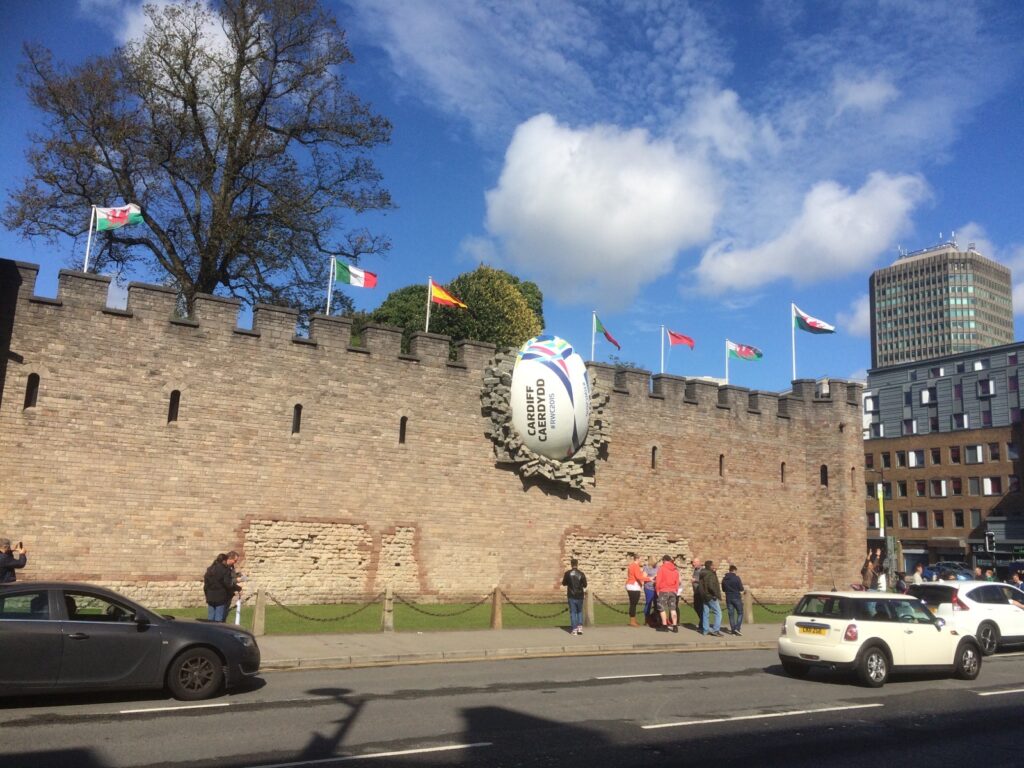
The Romans built and rebuilt their fortifications here over the following three centuries. The walls you see today along the southern and western sides of the castle grounds follow the lines of the Roman defences, reconstructed in the Victorian period but standing on original foundations. Archaeological excavations have revealed the remains of Roman gateways, barracks, and other structures beneath the castle grounds.
By the late third century, the Romans had constructed a substantial stone fort here, part of a chain of coastal defences against seaborne raiders. When the legions withdrew from Britain in the early fifth century, they left behind walls that would shape the site’s development for the next 1,500 years.
The Norman Conquest and Medieval Castle
The Normans arrived in south Wales in the 1080s, and William the Conqueror himself may have visited the site of Cardiff Castle in 1081. The Norman lord Robert Fitzhamon established a new fortress here around 1091, using the old Roman walls as the outer defences and raising a great motte—an artificial mound—in one corner of the enclosure.
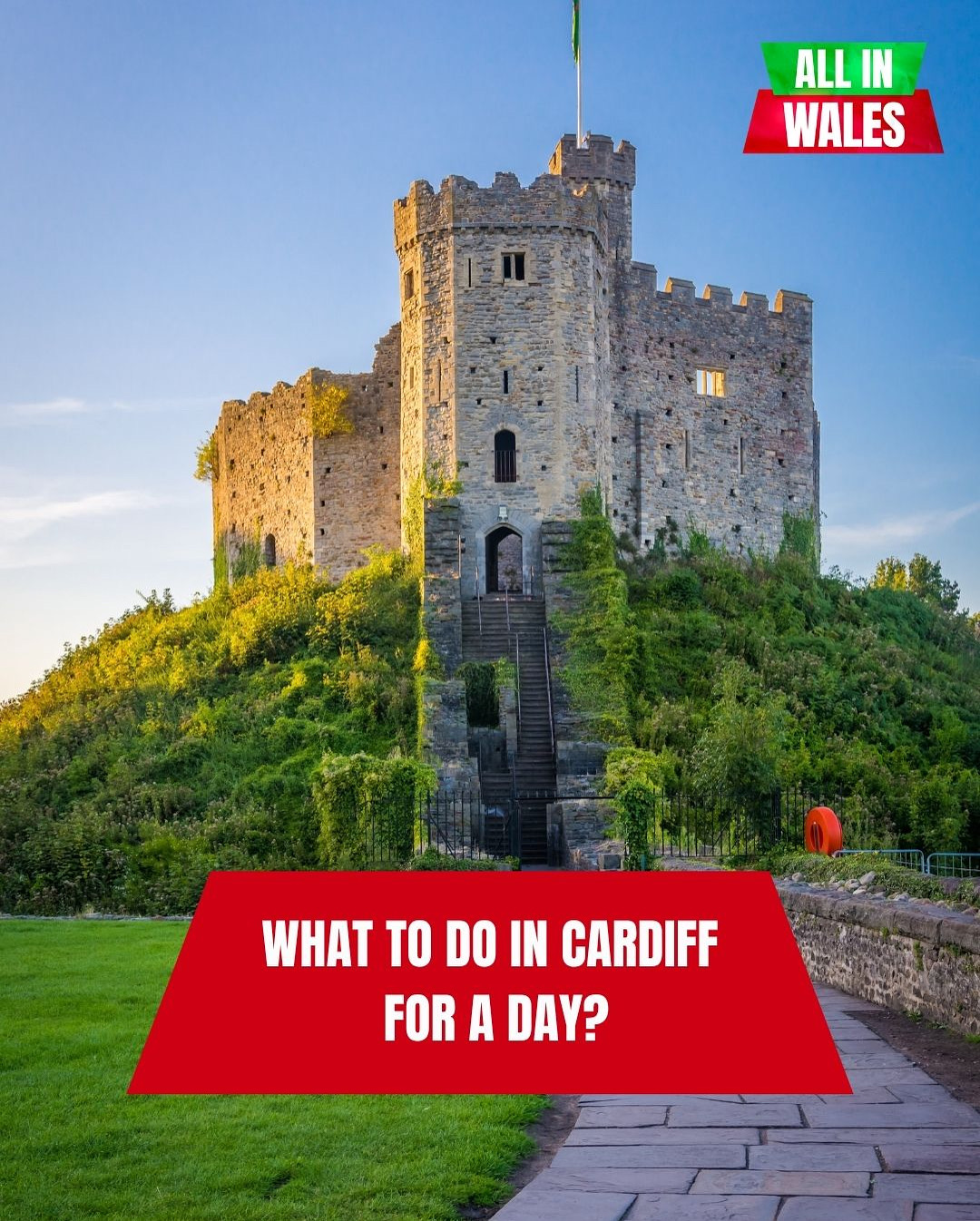
The motte at Cardiff Castle remains one of the finest examples in Wales. Topped by a twelve-sided stone shell keep built in the twelfth century, it dominates the castle grounds and offers commanding views across the city. Climbing the steep steps to the keep is one of the highlights of any visit, rewarding the effort with panoramic views and a tangible connection to the medieval past.
Through the medieval period, Cardiff Castle served as the administrative centre of the Lordship of Glamorgan. It passed through various hands—the de Clare family, the Despensers, the Beauchamps, the Nevilles—as fortunes rose and fell in the turbulent politics of medieval Wales and England. The castle was besieged, captured, and rebuilt multiple times.
The Black Tower and the octagonal tower that flanks the main entrance date from this medieval period, though both were substantially altered in later centuries. The medieval domestic ranges that once stood within the walls have largely disappeared, replaced by the Victorian mansion that now dominates the site.
The Herbert and Stuart Periods
By the Tudor period, Cardiff Castle had passed to the Herbert family, who would hold it for over two centuries. The castle’s military importance declined as Wales was integrated more fully into the English state, and the Herberts gradually transformed the fortress into a more comfortable residence.
The Civil War brought a final burst of military activity. Cardiff Castle was held for the King, besieged by Parliamentary forces, and eventually surrendered in 1645. The conflict left the castle damaged, and the Herberts undertook repairs and improvements through the later seventeenth century.
In 1766, the castle passed by marriage to John Stuart, Lord Mountstuart, who would become the first Marquess of Bute. This Scottish aristocratic family would transform Cardiff Castle—and the city of Cardiff itself—beyond recognition.
The Bute Family and the Transformation of Cardiff
The Bute family’s influence on Cardiff cannot be overstated. They developed the docks that made Cardiff one of the world’s great coal-exporting ports, and the wealth that flowed from that trade funded an extraordinary programme of building and patronage.
The first Marquess began improvements to the castle, engaging the architect Henry Holland and the landscape designer Capability Brown to modernise the buildings and grounds. But it was the second and third Marquesses who would create the Cardiff Castle we see today.
John Crichton-Stuart, the second Marquess of Bute, was reputed to be the richest man in the world at his death in 1848. He continued the development of the docks and began transforming the castle’s medieval apartments into something grander. His son, the third Marquess, would take this transformation to extraordinary lengths.
William Burges and the Victorian Fantasy
The third Marquess of Bute inherited his title at just six months old, along with a fortune that made him one of the wealthiest men in Victorian Britain. He was also brilliant, eccentric, deeply religious—he converted to Catholicism—and passionate about history, architecture, and the Middle Ages.
In 1865, the young Marquess met the architect William Burges, and the two men discovered a shared obsession with medieval art and Gothic architecture. Their collaboration at Cardiff Castle, which continued until Burges’s death in 1881, produced one of the most remarkable interiors in Britain.
Burges transformed the castle’s western apartments into a Gothic fantasy of astonishing richness. Every surface is decorated—carved, painted, gilded, or inlaid with precious materials. The effect is overwhelming, a total work of art that draws on medieval manuscripts, Islamic design, classical mythology, and Victorian romanticism.
The Clock Tower, completed in 1873, contains a bachelor bedroom, a winter smoking room, and a summer smoking room stacked vertically and connected by a spiral stair. Each room pursues its theme with obsessive detail. The winter smoking room features a chimneypiece depicting the tale of Chaucer’s Pardoner, while the summer smoking room is decorated with scenes of love and courtship.
The Banqueting Hall, the Library, the Arab Room, and the Chaucer Room each offer their own visual feast. Burges designed everything—furniture, light fittings, door handles, fireplace tools—to create unified environments of extraordinary intensity. Whether you find the results magnificent or excessive (or both), they are unforgettable.
The Castle in the Twentieth Century
The Bute family’s connection with Cardiff weakened through the twentieth century. The coal trade declined, the docks fell quiet, and the family’s centre of gravity shifted elsewhere. In 1947, the fifth Marquess of Bute gave Cardiff Castle to the city, along with the surrounding parkland that now forms Bute Park.
The castle has been in public ownership ever since, managed first by Cardiff City Council and now by Cardiff Council. Extensive restoration work has preserved and revealed the Victorian interiors, while archaeological investigations have deepened understanding of the castle’s earlier phases.
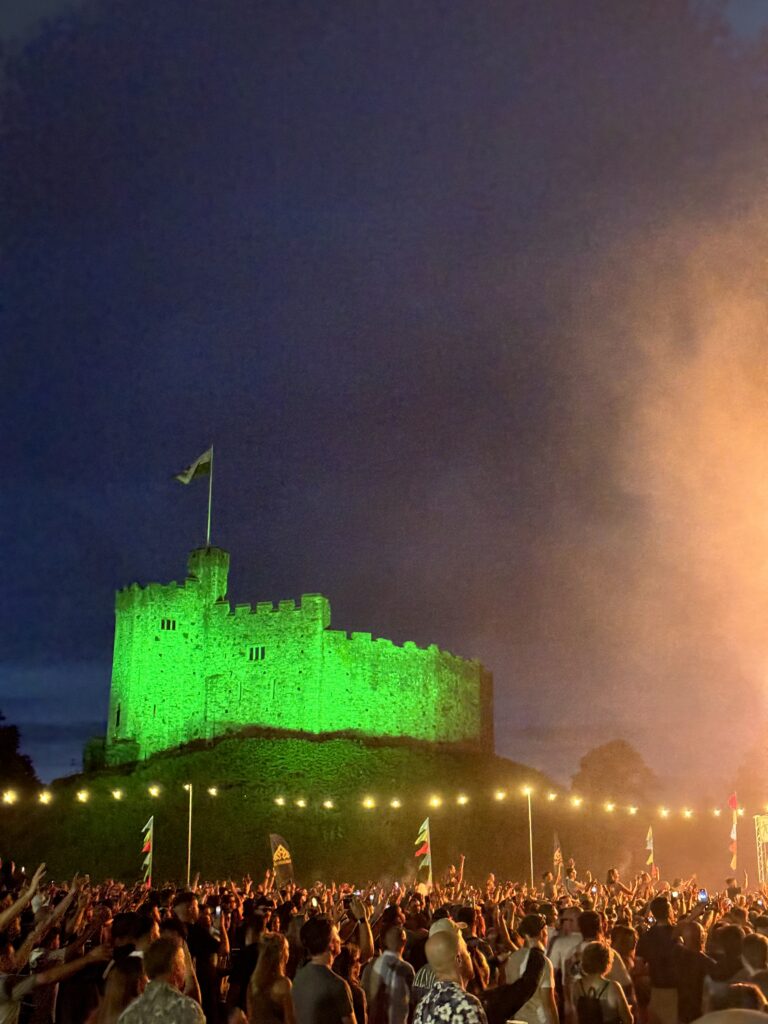
Today Cardiff Castle hosts events ranging from concerts in the grounds to medieval banquets in the state apartments. The castle grounds, open to the public free of charge, serve as a green lung in the city centre, a place where office workers eat lunch and tourists photograph the peacocks that strut across the lawns.
What to See at Cardiff Castle
The Castle Apartments
The Victorian apartments created by Burges for the third Marquess of Bute are the castle’s unmissable highlight. Access is by guided tour, included with some ticket types or available as an upgrade. The tour takes visitors through the sequence of rooms—the Library, the Banqueting Hall, the Arab Room, the Nursery, and others—with guides explaining the symbolism and craftsmanship of each space.
Allow at least an hour for the house tour, longer if you want to absorb the detail. Photography is permitted, though the richness of the interiors is difficult to capture. Every visit reveals something new—a carved mouse in a corner, a hidden face in the tilework, a joke in Latin inscribed above a door.
The Norman Keep
The twelfth-century shell keep on its Norman motte offers the castle’s best views and a powerful sense of medieval history. The climb is steep—approximately 50 steps up the motte and more within the keep itself—but the reward is a panorama across Cardiff, from the city centre to Cardiff Bay, the Bristol Channel, and the hills beyond.
Inside the keep, interpretation panels explain the castle’s Norman history. The walls themselves are atmospheric, weathered stone enclosing an open courtyard where defenders once gathered.
The Castle Walls and Battlements
A wall walk allows visitors to explore the castle’s defences, passing through towers and along battlements with views into the castle grounds and out across the city. The walk includes displays on the castle’s military history and the various phases of construction.
The Wartime Tunnels
During the Second World War, tunnels within the castle walls served as air raid shelters, protecting thousands of Cardiff residents during bombing raids. These tunnels have been restored and opened to visitors, with displays recreating the wartime experience including sound effects and period furnishings.
The Grounds and Interpretation Centre
The castle grounds include the Firing Line museum, dedicated to the military history of Wales and the Welsh soldier. The interpretation centre provides context for the castle’s long history, with models, timelines, and archaeological finds.
The grounds themselves reward exploration, from the Animal Wall along Castle Street (featuring carved stone animals designed by Burges) to the peacocks wandering the lawns and the views back to the Gothic towers.
Why You Should Visit Cardiff Castle
History Spanning Two Millennia
Few sites in Britain offer such a compressed journey through history. Within Cardiff Castle’s walls you can trace the story of Wales from Roman conquest through Norman occupation, medieval lordship, Civil War siege, and Victorian reinvention. Each layer remains visible, creating a palimpsest of extraordinary richness.
The Finest Victorian Gothic Interiors in Britain
The apartments created by William Burges for the Marquess of Bute rank among the most remarkable interiors anywhere. Whether you appreciate them as works of art, as expressions of Victorian romanticism, or simply as spectacles of excess, they demand to be seen. Nothing quite prepares you for the intensity of colour, detail, and imagination on display.
A Welsh Story
Cardiff Castle tells the story of Wales—its conquest, its resistance, its industrial transformation, and its emergence as a modern nation. The Bute family’s wealth came from Welsh coal, dug by Welsh miners, shipped from Welsh docks. The castle they built with that wealth now belongs to the Welsh people. Visiting Cardiff Castle is an encounter with Welsh history in its most concentrated form.
Accessibility and Location
Standing in the heart of Cardiff, the castle could hardly be more accessible. It’s a short walk from Cardiff Central station, surrounded by shops and restaurants, and adjacent to the green spaces of Bute Park. Whether you have two hours or a full day, Cardiff Castle fits easily into any visit to the Welsh capital.
Events and Experiences
Beyond regular visits, Cardiff Castle hosts concerts, festivals, and special events throughout the year. Christmas at the castle is particularly popular, with the grounds transformed by festive decorations and seasonal markets. Medieval banquets in the state apartments offer an evening experience unlike anything else in Wales.
Planning Your Visit
Tickets and Tours
Cardiff Castle offers several ticket options. Standard admission includes access to the grounds, the Norman keep, the castle walls, and the wartime tunnels. The House Tour, which visits the Victorian apartments, is available as an upgrade or included with premium tickets. Booking online in advance is recommended, particularly for the House Tour.
Opening Hours
The castle is open daily throughout the year, with seasonal variations in hours. Summer typically sees extended opening times, while winter hours are shorter. Check the castle’s website for current information before visiting.
How Long to Allow
A thorough visit to Cardiff Castle takes three to four hours, including the House Tour, the Norman keep, the wall walk, and the wartime tunnels. Visitors with less time can see the highlights in two hours, though the richness of the site rewards a longer stay.
Accessibility
The castle grounds and some areas of the castle are accessible to wheelchair users, though the Norman keep and parts of the wall walk involve steps. The House Tour includes stairs between floors. Staff can advise on accessible routes, and a virtual tour of the apartments is available for those unable to manage the stairs.
Getting There
Cardiff Castle is centrally located, a ten-minute walk from Cardiff Central railway station and adjacent to several bus routes. Parking is available in nearby city centre car parks. The castle’s address is Castle Street, Cardiff, CF10 3RB.
Combining with Other Attractions
Cardiff Castle sits at the northern end of Cardiff’s main shopping streets and at the entrance to Bute Park, making it easy to combine with other city centre activities. The National Museum Cardiff is a fifteen-minute walk away, while Cardiff Bay—with the Senedd, Wales Millennium Centre, and waterfront restaurants—is accessible by bus, train, or a pleasant walk through Bute Park and along the Taff Trail.
Frequently Asked Questions About Cardiff Castle
Where is Cardiff Castle located?
Cardiff Castle is located in the heart of Cardiff city centre, on Castle Street. It stands adjacent to the main shopping district and at the entrance to Bute Park, approximately a ten-minute walk from Cardiff Central railway station.
How old is Cardiff Castle?
Cardiff Castle’s history spans nearly 2,000 years. The Romans first built a fort on the site around 55 AD, the Normans constructed the motte and keep in the late eleventh and twelfth centuries, and the Victorian Gothic apartments were created between 1868 and 1881.
Who built the Victorian apartments at Cardiff Castle?
The Victorian apartments were designed by the architect William Burges for John Crichton-Stuart, the third Marquess of Bute. Their collaboration, beginning in 1865, produced some of the most elaborate Gothic Revival interiors in Britain.
Can you go inside Cardiff Castle?
Yes, visitors can explore the castle grounds, climb the Norman keep, walk the castle walls, and visit the wartime tunnels with standard admission. The lavish Victorian apartments are accessible via guided House Tour, included with premium tickets or available as an upgrade.
How long does it take to visit Cardiff Castle?
A comprehensive visit including the House Tour, Norman keep, wall walk, and wartime tunnels takes three to four hours. Visitors with limited time can see the main highlights in approximately two hours.
Is Cardiff Castle worth visiting?
Cardiff Castle is one of the most significant historic sites in Wales, combining Roman foundations, a Norman keep, and extraordinary Victorian Gothic interiors. It regularly ranks among the top attractions in Wales and offers a unique journey through Welsh history.
What is the best time to visit Cardiff Castle?
Cardiff Castle is open year-round and offers different experiences in each season. Summer provides the longest opening hours and best weather for exploring the grounds, while winter brings festive events and smaller crowds. Weekday mornings are typically quietest.
Is Cardiff Castle accessible for wheelchair users?
The castle grounds and some interior spaces are accessible to wheelchair users, though the Norman keep and sections of the wall walk involve steps. The House Tour includes stairs between floors. Staff can advise on accessible routes and alternative options.
Can you visit Cardiff Castle for free?
The castle grounds are not free to enter, though the adjacent Bute Park is open to all. However, Cardiff residents can obtain a Castle Key card offering unlimited free entry. Various discount schemes and family tickets are available.
What events are held at Cardiff Castle?
Cardiff Castle hosts concerts, festivals, Christmas markets, and special events throughout the year. The grounds have welcomed major musical acts, while the state apartments offer medieval banquets and exclusive evening experiences.
Who owns Cardiff Castle today?
Cardiff Castle has been owned by the people of Cardiff since 1947, when the fifth Marquess of Bute gifted the castle and Bute Park to the city. It is managed by Cardiff Council.
Is there parking at Cardiff Castle?
Cardiff Castle does not have its own car park, but several public car parks are located nearby in the city centre. The castle is easily accessible by public transport, including a short walk from Cardiff Central station.
Can you walk on the walls at Cardiff Castle?
Yes, a wall walk allows visitors to explore sections of the castle’s medieval defences, passing through towers and along battlements with views across the castle grounds and the city.
What is the Animal Wall at Cardiff Castle?
The Animal Wall runs along Castle Street outside the castle grounds. Designed by William Burges and completed after his death, it features carved stone animals including lions, seals, bears, and apes. The wall has become one of Cardiff’s most recognisable landmarks.
Are there guided tours at Cardiff Castle?
Yes, guided House Tours take visitors through the Victorian apartments and are the only way to see these lavish interiors. Tours run regularly throughout the day and are included with premium tickets or available as an upgrade to standard admission.
