

Article Summary
Bala Lake, known in Welsh as Llyn Tegid, is the largest natural lake in Wales, stretching for four miles through the stunning landscape of southern Snowdonia. Famous for its rare fish species, excellent watersports, and the historic narrow-gauge railway that runs along its shore, Bala Lake offers visitors a perfect blend of natural beauty, outdoor adventure, and Welsh culture. This guide covers the lake’s fascinating geology, wildlife, legends, and practical information for planning your visit to this remarkable corner of Wales.
The Great Lake of Snowdonia
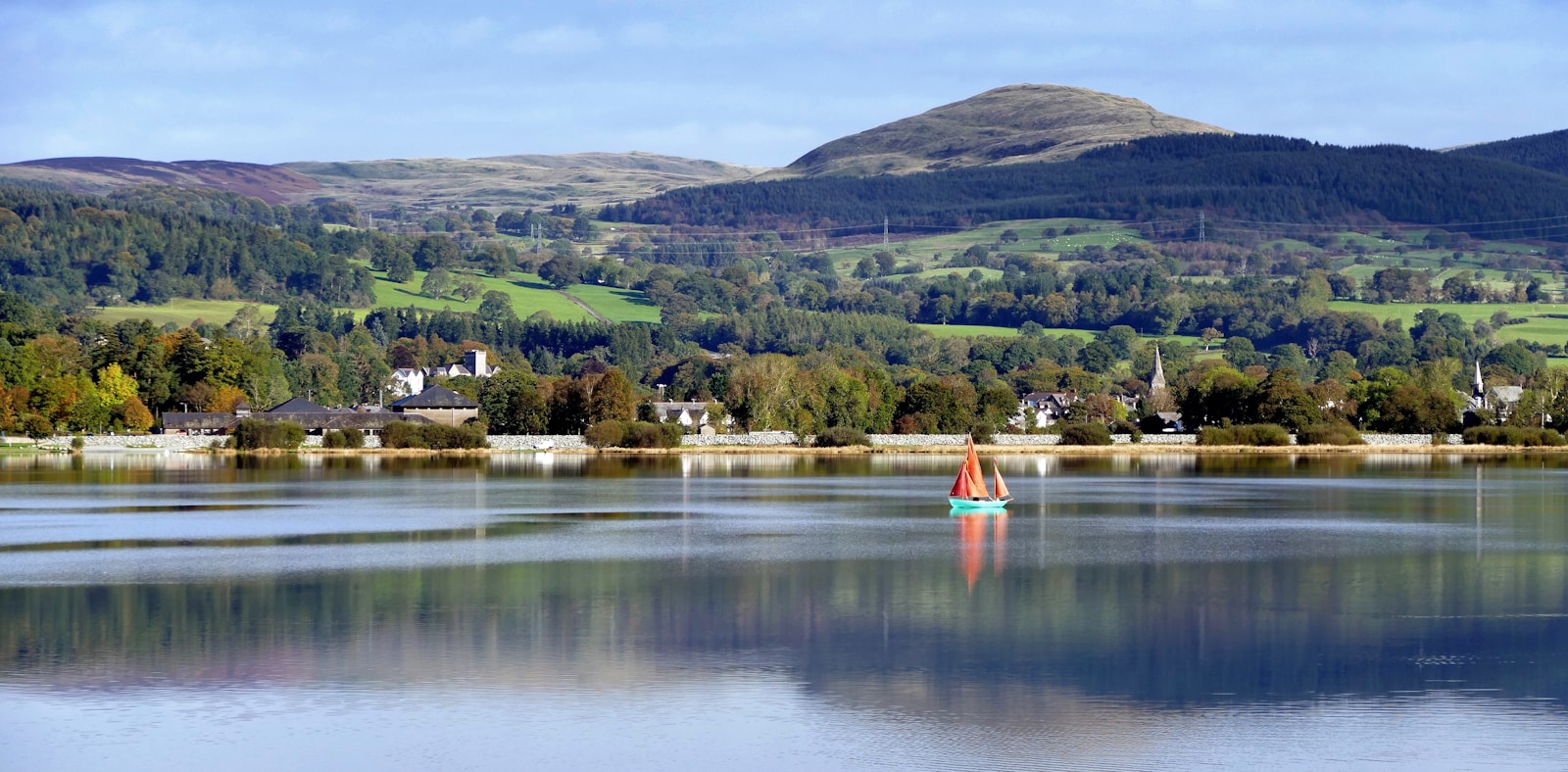
Bala Lake lies cradled in a glacial valley at the southern edge of Snowdonia National Park, a vast sheet of water that dominates the landscape of Merionethshire. At four miles long and nearly a mile wide at its broadest point, this is the largest natural body of freshwater in Wales—a distinction that has shaped the history, culture, and economy of the surrounding area for millennia.
The Welsh name, Llyn Tegid, translates roughly as “Lake of Beauty” or “Tegid’s Lake,” depending on interpretation, and either reading captures something essential about this place. The lake sits in a valley of exceptional loveliness, framed by the peaks of the Aran mountains to the south and the Arenig range to the north. On calm days, the surrounding hills reflect perfectly in the still water; on wilder days, waves whipped up by the prevailing winds create conditions that challenge even experienced sailors.
The market town of Bala, known in Welsh as Y Bala, sits at the northeastern end of the lake where the River Dee begins its long journey towards Chester and the Irish Sea. This small but historic town serves as the gateway to the lake and provides the services and facilities that visitors require. Together, the lake and town form one of the most important destinations in mid-Wales, drawing visitors who come for watersports, walking, fishing, history, and the simple pleasure of being in a beautiful place.
Also check out: The Ultimate Snowdon (Yr Wyddfa) Climb: Which Trail Will You Take? Interactive Map
Geology and Formation
Bala Lake owes its existence to the ice ages that sculpted the landscape of Wales over hundreds of thousands of years. During the last glaciation, which ended approximately 10,000 years ago, a massive glacier occupied the valley, grinding and gouging the bedrock to create the deep basin that the lake now fills.
The glacier flowed northeast down the valley, following the line of a geological fault that had already created a natural weakness in the rock. The ice deepened and widened this valley, creating the characteristic U-shaped profile visible today. At the glacier’s maximum extent, ice thousands of feet thick covered even the surrounding peaks, and the grinding action of rock embedded in the ice scoured the valley floor to considerable depth.
As the climate warmed and the glacier retreated, meltwater filled the basin it had created. Deposits of glacial debris—moraines—partially dammed the northeastern end of the valley, helping to retain the water and establishing the lake’s present dimensions. The result was the largest natural lake in Wales, approximately four miles long, three-quarters of a mile wide, and over 140 feet deep at its deepest point.
The lake sits at an elevation of approximately 530 feet above sea level, making it one of the higher sizeable lakes in Wales. This altitude, combined with its exposure to westerly winds funnelling down the valley, gives Bala Lake its characteristic temperament—prone to sudden squalls that can transform mirror-calm water into challenging conditions within minutes.
The River Dee, one of the principal rivers of Wales and the English border country, flows through the lake from its source on the slopes of Dduallt to the south. The river enters at the southwestern end and exits at the northeastern corner, beginning its journey towards Llangollen, Chester, and the Irish Sea. This through-flow helps maintain the lake’s water quality and supports its exceptional ecology.
The Gwyniad: A Unique Welsh Fish
Bala Lake is home to one of the rarest fish in Britain—the gwyniad, a species found nowhere else in the world. This remarkable creature has evolved in isolation since the end of the last ice age, adapting to the specific conditions of Llyn Tegid and diverging from its ancestors to become a distinct species unique to this one Welsh lake.
The gwyniad belongs to the whitefish family, related to the vendace of the English Lake District and the powan of Scottish lochs. These fish are relicts of the ice age, populations that became isolated in deep, cold lakes as glaciers retreated and have survived in their separate refugia ever since. Each population has evolved independently, and scientists now recognise several as distinct species.
The gwyniad is a silvery fish, typically growing to around 12 inches in length, that lives in the deep, cold waters of the lake. It feeds primarily on zooplankton, small crustaceans, and other invertebrates, rarely coming close to the surface. This deepwater habit, combined with its specific habitat requirements, has made the gwyniad vulnerable to environmental changes.
The species faces significant conservation challenges. Ruffe, an invasive fish species accidentally introduced to the lake, competes with gwyniad for food and may prey on their eggs. Changes in water quality and temperature pose additional threats. Conservation efforts are underway to protect this irreplaceable species, including research into captive breeding and potential translocation to create backup populations.
For visitors, the gwyniad is unlikely to be seen—the fish lives too deep and is too shy for casual observation. But knowing that this unique species swims in the waters below adds a dimension to any visit to Bala Lake. The gwyniad is a living link to the ice age, a survivor that has persisted in this valley for ten thousand years, and its continued existence depends on the protection of the lake that is its only home.
Legends of Llyn Tegid
Like many Welsh lakes, Bala Lake is steeped in legend and folklore. The most famous story tells of a drowned palace beneath the waters, a tale that connects Llyn Tegid to the broader Welsh tradition of submerged kingdoms and lost lands.
According to the legend, a prosperous town once stood where the lake now lies. The ruler of this town was a cruel and wicked prince who oppressed his people and ignored the laws of hospitality. One night, a stranger came to the town seeking shelter, but was turned away by every household except that of a poor harper who shared his meagre food and offered his floor for sleeping.
As thanks for this kindness, the stranger—who was in fact a supernatural being—warned the harper to flee the valley before dawn. The harper gathered his family and climbed to safety on the hillside. As the sun rose, a great flood engulfed the town, drowning the prince and all who had shown cruelty to strangers. Only the harper and his family survived, and the lake that formed over the drowned town has remained ever since.
Variants of this legend connect the flood to the carelessness of a well-keeper who forgot to cover a magical well, allowing its waters to overflow and fill the valley. Others associate the lake with Tegid Foel, a figure from Welsh mythology who was said to be the husband of the enchantress Ceridwen and father of the legendary poet Taliesin. The name Llyn Tegid may derive from this mythological connection.
The legend of the drowned town belongs to a widespread tradition of flood myths found across Wales and beyond. Similar stories attach to Llangorse Lake in the Brecon Beacons and to Cardigan Bay, where the lost kingdom of Cantre’r Gwaelod is said to lie beneath the waves. These legends may preserve folk memories of genuine environmental changes—rising sea levels and flooding events that displaced communities in prehistoric times.
Whether or not any kernel of historical truth lies beneath the legend, the story enriches the experience of Llyn Tegid. Standing on the shore and looking across the vast expanse of water, it is easy to imagine a drowned world beneath the surface, its towers and halls preserved in the cold depths.
The Bala Lake Railway
The Bala Lake Railway runs along the southern shore of the lake, a narrow-gauge heritage line that offers one of the most scenic railway journeys in Wales. Originally built to serve the slate quarries of the region, the railway now carries tourists who come to experience steam travel through this spectacular landscape.
The original railway along this route opened in 1868 as part of the standard-gauge Bala to Dolgellau line, providing transport links for local industry and passengers. The line closed in 1965 as part of the Beeching cuts that stripped rural Britain of much of its railway network. For several years, the trackbed lay abandoned, the infrastructure gradually deteriorating.
In 1972, a group of enthusiasts reopened a section of the route as a narrow-gauge heritage railway, laying new track to a gauge of one foot eleven and a half inches. The Bala Lake Railway has operated ever since, growing and developing to become one of the established heritage railways of Wales.
The line runs for approximately four and a half miles along the lake shore, from Llanuwchllyn at the southwestern end to Bala at the northeastern end. Trains are hauled by historic steam locomotives, small but characterful engines that were built for industrial railways across Britain and have found new life on preserved lines.
The journey offers constantly changing views across the lake to the mountains beyond. Passengers can alight at intermediate halts to explore the shoreline, perhaps combining a walk along the lake with a train journey back to their starting point. The rhythm of steam travel—the chuffing of the locomotive, the clank of couplings, the whistle echoing across the water—creates an experience quite different from modern transport.
The railway operates a seasonal timetable, with the most frequent services during school holidays and summer weekends. Special events, including Thomas the Tank Engine days, Santa specials, and enthusiast galas, punctuate the calendar. For families with children, the railway provides a memorable introduction to heritage steam travel.
Watersports and Recreation
Bala Lake has established itself as one of the premier inland watersports venues in Britain, offering conditions suitable for sailing, windsurfing, kayaking, canoeing, and stand-up paddleboarding. The combination of reliable winds, clean water, and stunning scenery attracts participants from across the country.
Sailing
The lake’s size and wind patterns make it excellent for sailing. Prevailing southwesterly winds funnel down the valley, creating consistent conditions that can nevertheless turn challenging when squalls develop. The National White Water Centre and various local clubs offer sailing instruction and facilities, and regattas and competitions take place throughout the season.
Dinghy sailing is the most common form, with the lake suitable for a wide range of classes. Keelboat sailing is more limited due to launch facilities, but smaller cruising boats do use the lake. The relatively sheltered water compared to coastal venues makes Bala Lake popular with those learning to sail or developing their skills.
Windsurfing and Kitesurfing
The reliable winds that serve sailors also attract windsurfers and kitesurfers. Bala Lake has hosted national and international windsurfing competitions, and the sport has a strong following here. The water is less crowded than many coastal venues, and the mountain backdrop adds visual drama to any session on the water.
Beginners can learn in the more sheltered bays, while experienced riders tackle the more exposed stretches where wind and waves build. Local centres offer instruction and equipment hire, making the sport accessible to those without their own gear.
Kayaking and Canoeing
The lake provides excellent kayaking and canoeing, from gentle paddles along the shoreline to more ambitious crossings and circumnavigations. The clean water and beautiful surroundings make simply being on the lake a pleasure, and the four-mile length offers scope for extended trips.
The River Dee above and below the lake adds further paddling opportunities. The whitewater section below Bala, running through the town and beyond, attracts kayakers seeking moving water, while the gentler stretches suit those preferring calmer conditions.
Stand-Up Paddleboarding
Paddleboarding has grown rapidly in popularity, and Bala Lake offers ideal conditions. The relatively sheltered water suits beginners, while the lake’s size provides scope for longer expeditions. Early mornings, before the wind rises, often bring mirror-calm conditions perfect for paddleboarding.
Swimming
Open water swimming takes place in the lake, though swimmers should be aware of the cold water temperatures and the potential for boats and other watercraft. The lake’s depth means that water temperatures remain low even in summer, and wetsuits are advisable for all but the briefest dips.
Organised swimming events take place during the season, including long-distance swims along the lake’s length. These events attract serious open water swimmers from across Britain.
Fishing
Bala Lake supports populations of pike, perch, trout, eels, and other species, making it a destination for coarse and game anglers. Fishing from boats and from the shore is possible, subject to obtaining the appropriate permits and licences.
The gwyniad is fully protected and must not be targeted or taken. Anglers are encouraged to familiarise themselves with the identification of this protected species to ensure accidental captures are returned unharmed.
Walking Around the Lake
A footpath circuits the lake, offering walkers the chance to experience Llyn Tegid from every angle. The full circuit covers approximately 14 miles and takes most of a day to complete, but shorter sections can be walked using the Bala Lake Railway or starting points along the route.
The Eastern Shore
The path along the eastern shore runs close to the B4403 road, making it less tranquil than the western section but more accessible. Views across the lake to the Aran mountains dominate this stretch, with the peaks of Aran Fawddwy and Aran Benllyn rising dramatically above the far shore.
The terrain is generally easy, following field paths and quiet lanes through the agricultural land that borders the lake. Bala town provides facilities at the northeastern end, including cafés, pubs, and shops for refreshment.
The Western Shore
The western shore offers a wilder walking experience. The Bala Lake Railway runs along much of this section, and walkers can combine train and foot travel for varied itineraries. The path passes through woodland and along the lake shore, with intimate views across the water.
Llanuwchllyn, at the southwestern end of the lake, provides an alternative starting point with limited facilities including a pub and small shops. This quiet village has strong Welsh cultural associations, having been home to the nineteenth-century writer and scholar Owen Morgan Edwards, founder of the influential Welsh-language magazine Cymru.
The Aran Mountains
For more ambitious walkers, the Aran range rising above the lake’s western shore offers challenging mountain days. Aran Fawddwy, at 2,970 feet, is the highest peak in Wales south of Snowdon, and the ridge walk connecting it with Aran Benllyn ranks among the finest in the country.
The mountains can be approached from Llanuwchllyn or from other starting points around the lake. The terrain is rough and conditions can change rapidly, so appropriate equipment and mountain skills are essential. The reward for the effort is views extending across much of Wales, from the coast of Cardigan Bay to the peaks of central Snowdonia.
Bala Town
The market town of Bala, sitting at the lake’s northeastern end, serves as the natural base for exploring the area. This is one of the most thoroughly Welsh towns in Wales, where the Welsh language predominates and Welsh culture thrives.
History and Character
Bala’s origins lie in the medieval period, when it developed as a market town serving the surrounding agricultural land. The town received a charter in 1324 and has held markets ever since. The long High Street, unusually wide and straight for a Welsh town, reflects this market function and gives Bala its distinctive character.
The town has strong associations with Welsh Nonconformity, the religious movement that shaped Welsh culture from the eighteenth century onwards. Thomas Charles, one of the founders of the British and Foreign Bible Society, lived and worked in Bala, and his statue stands in the High Street. The story of Mary Jones, who walked barefoot from Llanfihangel-y-Pennant to Bala to purchase a Bible from Thomas Charles, became one of the foundational narratives of the Bible Society movement.
More recently, Bala has been associated with Welsh language activism. Cymdeithas yr Iaith Gymraeg, the Welsh Language Society, draws support from this strongly Welsh-speaking area, and the town has consistently supported efforts to protect and promote the language.
Facilities and Services
Bala offers the services visitors require, including accommodation ranging from hotels and guesthouses to self-catering cottages. Shops supply groceries, outdoor equipment, and general goods. Restaurants, cafés, and pubs provide refreshment, with several establishments offering meals featuring local produce.
The town has a leisure centre with swimming pool, useful on days when weather makes outdoor activities less appealing. Banks, a post office, and other services make Bala practical as a base for extended stays.
Events and Festivals
Bala hosts events throughout the year, including an agricultural show, eisteddfodau (cultural festivals), and sporting competitions. The town’s strong Welsh identity ensures that many events have a distinctively Welsh character, providing visitors with opportunities to experience Welsh culture in authentic settings.
Practical Information for Visitors
Getting to Bala Lake
By car: Bala lies on the A494 between Dolgellau and Ruthin, approximately 18 miles from Dolgellau and 25 miles from Llangollen. From the A5, turn south at Corwen onto the A494. From the south, the A494 connects with the A470 near Dolgellau. Sat nav postcode for Bala: LL23 7SR.
By bus: Bus services connect Bala with Wrexham, Barmouth, and other towns, though frequencies are limited. The T3 TrawsCymru service provides the main long-distance connection. Check current timetables before travelling.
By train: The nearest railway stations are Ruabon (on the Shrewsbury to Chester line) and Barmouth (on the Cambrian Coast Line), both approximately 18 miles from Bala. Bus connections from these stations are available but infrequent.
Parking
Parking is available in Bala town centre, including a main car park near the lake shore. Additional parking is available at Llanuwchllyn for those starting walks or railway journeys from the southwestern end of the lake. Parking at watersports venues may be subject to charges.
Accommodation
Bala and the surrounding area offer a range of accommodation options:
Hotels and guesthouses in Bala town provide traditional hospitality, with options ranging from historic coaching inns to smaller bed and breakfasts.
Self-catering cottages in the countryside around the lake suit those preferring independence, with properties ranging from converted farm buildings to modern holiday homes.
Camping and caravan sites around the lake cater to those preferring outdoor accommodation, with facilities ranging from basic to fully serviced.
Hostels and bunkhouses provide budget options for walkers, cyclists, and outdoor enthusiasts.
Booking ahead is advisable during summer, school holidays, and when major events are taking place.
Eating and Drinking
Bala town offers cafés, restaurants, and pubs serving a range of cuisine. Local specialities include Welsh lamb and other products from the surrounding farms. Several establishments cater to outdoor enthusiasts, offering hearty meals suited to active days.
Llanuwchllyn has more limited options, with a pub and café providing refreshment near the southwestern end of the lake.
For picnics and self-catering, shops in Bala supply groceries and local produce. The lake shore offers numerous spots for outdoor eating with memorable views.
Weather and Conditions
Bala Lake sits in a valley that funnels weather systems from the southwest, creating conditions that can change rapidly. Visitors should be prepared for:
Wind: The lake is known for its winds, which can arise suddenly and create challenging conditions for watersports. What starts as a calm day can become windy by afternoon.
Rain: This is Wales, and rain is always possible. Waterproof clothing is advisable whatever the forecast suggests.
Temperature: The lake’s elevation means temperatures are typically cooler than lowland areas. Water temperatures remain cold year-round, and wetsuits are essential for extended immersion.
Mountain weather: Those venturing onto the surrounding hills should be equipped for conditions significantly worse than those in the valley. The Aran mountains in particular demand respect.
Best Time to Visit
Summer brings the warmest weather and longest days, ideal for watersports, walking, and general exploration. This is the busiest season, and accommodation should be booked in advance.
Autumn offers beautiful colours as the surrounding forests and hillsides change. Watersports continue for those equipped for cooler conditions, and walking can be excellent.
Winter brings quiet to the lake, with few visitors and limited facilities. The surrounding mountains may be snow-covered, creating dramatic scenery but demanding appropriate equipment and skills.
Spring sees the landscape coming alive with new growth. Lambing season brings activity to the surrounding farms, and the lake begins to welcome returning visitors.
Frequently Asked Questions About Bala Lake
Where is Bala Lake located?
Bala Lake is located in southern Snowdonia National Park in Gwynedd, north Wales. The market town of Bala sits at the northeastern end of the lake, approximately 18 miles from Dolgellau and 25 miles from Llangollen.
How big is Bala Lake?
Bala Lake is the largest natural lake in Wales, measuring approximately four miles long and three-quarters of a mile wide. At its deepest point, the lake reaches over 140 feet. The lake sits at an elevation of approximately 530 feet above sea level.
What is the Welsh name for Bala Lake?
The Welsh name for Bala Lake is Llyn Tegid, which translates roughly as “Lake of Beauty” or “Tegid’s Lake.” The name may derive from Tegid Foel, a figure from Welsh mythology associated with the enchantress Ceridwen.
What is the gwyniad?
The gwyniad is a species of whitefish found only in Bala Lake—the only place in the world where it exists. This ice age relict has evolved in isolation for approximately 10,000 years and is now a protected species facing conservation challenges.
Can you swim in Bala Lake?
Yes, swimming is permitted in Bala Lake, though swimmers should be aware of cold water temperatures, boat traffic, and the lack of lifeguards. Wetsuits are advisable, and swimmers should assess conditions carefully before entering the water.
Is Bala Lake good for watersports?
Yes, Bala Lake is one of the premier inland watersports venues in Britain, popular for sailing, windsurfing, kayaking, canoeing, and stand-up paddleboarding. The lake’s size and reliable winds create excellent conditions, and several centres offer instruction and equipment hire.
What is the Bala Lake Railway?
The Bala Lake Railway is a narrow-gauge heritage railway running along the southern shore of the lake for approximately four and a half miles. Steam locomotives haul trains between Llanuwchllyn and Bala, offering scenic journeys with views across the lake.
Can you walk around Bala Lake?
Yes, a footpath circuits the lake, covering approximately 14 miles. The full circuit takes most of a day, but shorter sections can be walked using the railway or various access points. The western shore offers wilder walking, while the eastern shore is more accessible.
Can you fish in Bala Lake?
Yes, fishing is permitted in Bala Lake for species including pike, perch, and trout, subject to obtaining appropriate permits and licences. The gwyniad is fully protected and must not be targeted or taken.
What is the legend of Bala Lake?
According to legend, a cruel prince’s town once stood where the lake now lies. After the townspeople refused hospitality to a stranger, the valley was flooded as punishment, drowning all except a kind harper who had been warned to flee. The lake formed over the submerged town.
Is there parking at Bala Lake?
Yes, parking is available in Bala town centre near the lake shore, at Llanuwchllyn at the southwestern end, and at various watersports venues around the lake. Some car parks may charge fees.
How deep is Bala Lake?
Bala Lake reaches a maximum depth of over 140 feet (approximately 42 metres), making it one of the deeper lakes in Wales. This depth contributes to the cold water temperatures that persist year-round.
What mountains are near Bala Lake?
The Aran mountains rise above the lake’s western shore, including Aran Fawddwy (2,970 feet), the highest peak in Wales south of Snowdon. The Arenig range lies to the north. Both offer excellent hill walking with views across the lake and beyond.
Is Bala Lake in Snowdonia National Park?
Yes, Bala Lake lies within Snowdonia National Park (Eryri), in the southern part of the park. The lake and surrounding area are protected as part of this national park designation.
What facilities are there at Bala Lake?
Bala town offers accommodation, restaurants, cafés, shops, and services. The lake has watersports centres, the heritage railway, and various access points for walking and recreation. Facilities at Llanuwchllyn are more limited.
How do you pronounce Llyn Tegid?
Llyn Tegid is pronounced approximately as “THLIN TEG-id” in Welsh, with the “ll” being the distinctive Welsh lateral fricative sound (similar to placing the tongue for “l” and blowing).
What is the River Dee’s connection to Bala Lake?
The River Dee flows through Bala Lake, entering at the southwestern end and exiting at the northeastern corner near Bala town. The lake forms part of the Dee’s course from its source in the mountains to the sea near Chester.
