

Article Summary
Talacre Beach is a stunning stretch of golden sand on the north Wales coast, famous for its iconic Victorian lighthouse, expansive dunes, and family-friendly atmosphere. Located near Prestatyn in Flintshire, this Blue Flag beach offers excellent conditions for walking, wildlife watching, and traditional seaside activities. This guide covers everything visitors need to know about Talacre Beach, from its fascinating history and natural environment to practical information for planning your visit.
A Beach With Character
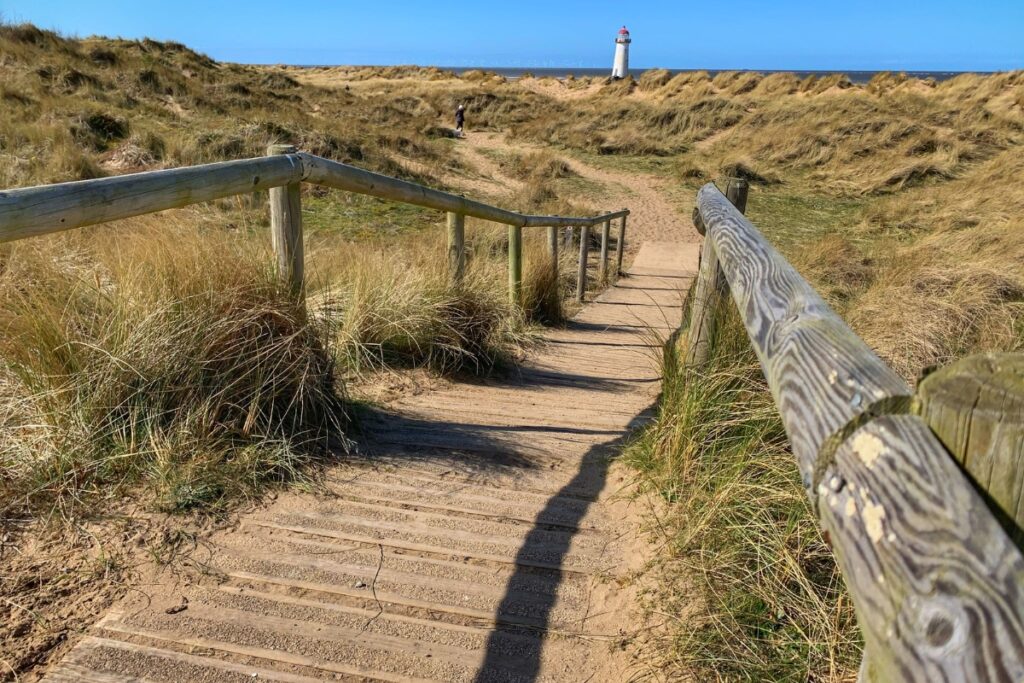
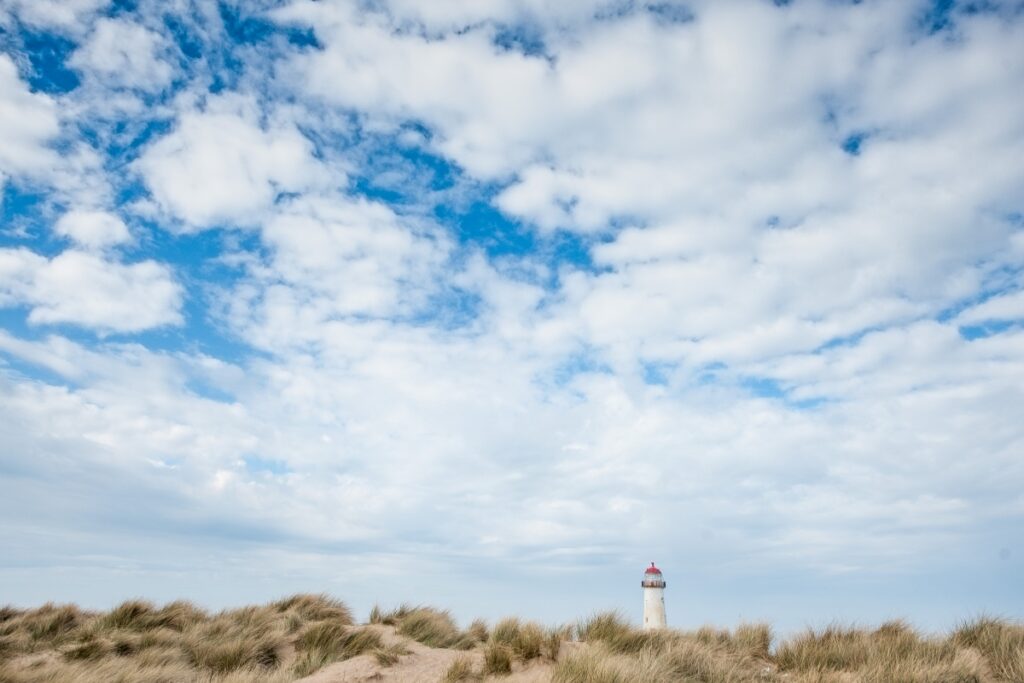
Talacre Beach stretches along the Point of Ayr, the northernmost tip of mainland Wales, where the Dee Estuary meets Liverpool Bay. This is a beach of big skies and broad horizons, where miles of golden sand extend towards the sea at low tide and the iconic white lighthouse stands sentinel against the elements.
Unlike the more developed resorts further along the north Wales coast, Talacre retains a wilder, more natural character. The beach is backed by an extensive dune system rather than promenades and amusement arcades, and the atmosphere is one of space and fresh air rather than candyfloss and slot machines. Families come here for bucket-and-spade holidays of the traditional kind, birdwatchers come for the exceptional wildlife, and walkers come for the sense of escape that only a big beach can provide.
The lighthouse, marooned on the sand since the sea retreated from its original position, has become one of the most photographed landmarks in Wales. It appears on countless postcards and Instagram feeds, a photogenic reminder of the coast’s maritime heritage and the ever-shifting relationship between land and sea.
The Point of Ayr: Geography and Setting
Talacre Beach occupies the Point of Ayr, a low-lying promontory that marks where the north Wales coast turns southward into the Dee Estuary. This geographical position gives the beach its distinctive character—facing north across Liverpool Bay towards the Irish Sea, with views extending to the wind farms that now populate these waters.
The beach itself is remarkably flat, with hard-packed sand that extends for hundreds of metres at low tide. This gentle gradient makes Talacre particularly suitable for families with young children, as the water remains shallow for a considerable distance from the shore. The tidal range here is substantial, and visitors arriving at low tide may find the sea seemingly distant, a silver line on the horizon beyond an expanse of rippled sand.
Behind the beach, the dune system provides a natural buffer against the sea. These dunes, some rising to considerable height, are dynamic landscapes shaped by wind and weather. Marram grass anchors the sand, and the hollows between dunes shelter a surprising diversity of plant and animal life.
To the east, the Dee Estuary opens out towards the Wirral Peninsula and the distant outline of Liverpool. This vast tidal inlet, where the River Dee meets the sea, is one of the most important estuaries for wildlife in Britain. The mudflats and saltmarshes of the estuary support internationally significant populations of wading birds and wildfowl, and Talacre Beach provides a grandstand view of this remarkable natural theatre.
The Talacre Lighthouse
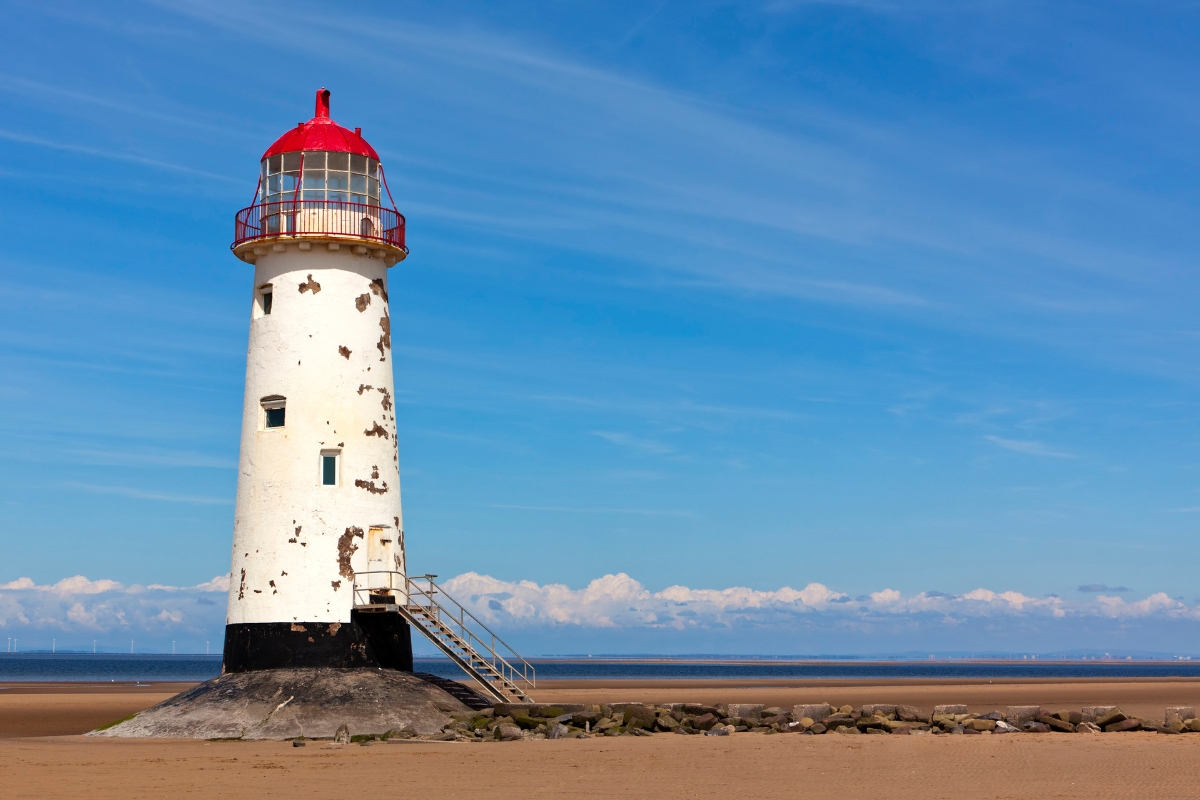
The Point of Ayr Lighthouse, universally known as Talacre Lighthouse, is the defining landmark of this stretch of coast. Built in 1776, it guided ships navigating the treacherous sandbanks of the Dee Estuary for over a century before being decommissioned in 1883.
The lighthouse originally stood at the water’s edge, its light warning mariners of the dangers that lurked beneath these shallow waters. But the coastline here is constantly changing, shaped by the interplay of tides, currents, and sediment. Over the decades, sand accumulated around the lighthouse, and the sea retreated, leaving the tower stranded on the beach some distance from the current shoreline.
This accident of coastal geomorphology has given Talacre its most distinctive feature. The white-painted lighthouse, standing alone on the sand with the dunes behind and the sea before, presents an image of romantic isolation. At high tide, waves may lap around its base; at low tide, it rises from an expanse of wet sand that perfectly reflects the sky.
The lighthouse is Grade II listed, recognising its historical and architectural significance. Though the interior is not open to the public, the exterior has been restored and maintained, ensuring that this beloved landmark will continue to grace the beach for generations to come.
Photographers flock to Talacre to capture the lighthouse in every condition—silhouetted against fiery sunsets, shrouded in sea mist, reflected in tidal pools, or standing crisp against blue summer skies. The lighthouse has become an emblem of the north Wales coast, reproduced on everything from tourist brochures to tea towels.
A History of the Coast
The Point of Ayr has been shaped by human activity as well as natural forces. The lighthouse is the most visible reminder of the area’s maritime heritage, but the coast here has a longer and more complex history.
The Dee Estuary was once a major commercial waterway, linking the port of Chester to the Irish Sea. Ships carrying goods to and from one of medieval England’s most important cities navigated these waters, and the sandbanks and channels of the estuary were intimately known to generations of pilots and sailors.
As the estuary silted up over the centuries, Chester’s importance as a port declined, but maritime traffic continued. The lighthouse at Talacre was one of several aids to navigation established to guide vessels through these difficult waters. Coal from the nearby Point of Ayr Colliery was shipped from wharves along this coast, adding industrial traffic to the mix.
The Point of Ayr Colliery, which operated from 1884 to 1996, was the last deep coal mine in north Wales. At its peak, it employed hundreds of miners who extracted coal from seams extending beneath the seabed. The colliery has now been demolished and the site remediated, but older visitors to Talacre may remember the pithead structures that once dominated the skyline behind the dunes.
The holiday trade came relatively late to Talacre compared to nearby resorts like Rhyl and Prestatyn. The beach remained a quieter, more natural destination, attracting visitors who preferred its unspoilt character to the busier alternatives along the coast. Caravan parks developed behind the dunes from the mid-twentieth century onwards, providing accommodation for families seeking affordable seaside holidays.
Today, Talacre balances its roles as a natural environment of significant ecological importance and a popular visitor destination. The beach, the dunes, and the estuary beyond support wildlife of international significance while continuing to welcome the families, walkers, and day-trippers who have come here for generations.
Wildlife and Nature
Talacre Beach and its surrounding habitats support an exceptional diversity of wildlife, earning recognition through multiple conservation designations. The Dee Estuary is a Site of Special Scientific Interest, a Special Protection Area, and a Ramsar wetland of international importance. Talacre sits at the edge of this ecological treasure house.
Birdlife
The birdwatching opportunities at Talacre are outstanding, particularly during migration seasons and winter. The Dee Estuary supports vast numbers of wading birds and wildfowl that feed on the rich mudflats exposed at low tide.
Oystercatchers, with their striking black and white plumage and orange bills, are perhaps the most visible species, their piping calls a constant soundtrack to any beach visit. Curlews probe the sand with their long curved bills, seeking invertebrates hidden beneath the surface. Redshanks, dunlins, knots, and sanderlings move in flocks along the tideline, alternately feeding and taking flight in swirling, synchronised displays.
Winter brings huge numbers of wildfowl to the estuary. Pintail, wigeon, teal, and shelduck gather in flocks that may number thousands. Pink-footed geese arrive from their Arctic breeding grounds, their skeins crossing the sky in wavering V-formations and their calls carrying across the marshes.
The dunes and grasslands behind the beach support different species. Skylarks sing overhead in spring and summer, their trilling songs delivered from high in the air. Meadow pipits and stonechats inhabit the rougher ground, while kestrels hover on the breeze, hunting for small mammals.
Little terns, one of Britain’s rarest breeding seabirds, have nested at Talacre in recent years. These delicate birds, scarcely larger than starlings, are extremely vulnerable to disturbance, and conservation efforts have sought to protect their nesting sites from the unintentional impacts of visitors and predators.
Flora
The dune system at Talacre supports plant communities adapted to the challenging conditions of this coastal environment. Marram grass dominates the mobile dunes, its deep roots binding the sand and allowing the dunes to build and stabilise. Behind the foredunes, a richer flora develops in the shelter of the established dune ridges.
In summer, the dune slacks—the low-lying areas between dune ridges where the water table approaches the surface—can be carpeted with wildflowers. Orchids, including marsh helleborine and early marsh orchid, thrive in these damp, lime-rich conditions. Yellow rattle, bird’s-foot trefoil, and wild thyme add splashes of colour to the grassland.
Sea holly, with its distinctive blue-grey spiny leaves, grows in the more exposed areas, while sea spurge and Portland spurge colonise the bare sand. These specialised plants have evolved to tolerate salt spray, drought, and the constant movement of their sandy substrate.
Marine Life
The waters off Talacre support their own community of marine life. Grey seals are regularly seen offshore, their curious heads bobbing above the waves as they watch the beach. The sandbanks and shallow waters provide feeding grounds for various fish species, which in turn attract larger predators.
Jellyfish, including the harmless moon jellyfish and the more impressive barrel jellyfish, wash up on the beach periodically, particularly in late summer. While these strandings can be disconcerting, they are a natural phenomenon and a reminder of the marine world just beyond the breakers.
The Beach Experience
Swimming and Paddling
Talacre Beach has held Blue Flag status, recognising its water quality, safety, and environmental management. The shallow gradient makes it excellent for paddling, and swimming is popular during the warmer months.
The beach is lifeguarded during peak season, typically from late May to early September. Lifeguard coverage is concentrated in the main bathing area near the beach access points. As with any beach, swimmers should be aware of currents and tides, and families with children should supervise them at all times.
The water temperature in Liverpool Bay rarely exceeds the mid-teens Celsius even in high summer, so wetsuits are advisable for extended swimming. On hot days, the shallow water warms more quickly than deeper areas, making paddling and splashing particularly pleasant.
Walking
Talacre Beach offers excellent walking in several directions. The beach itself provides miles of firm sand, perfect for long strolls along the tideline. At low tide, the walk towards the lighthouse and beyond can extend for considerable distances, with the hard sand making for easy going even for those less steady on their feet.
The dunes provide a different walking experience, with sandy paths winding through the marram grass and offering views across the beach and estuary. The terrain is more challenging than the beach, with soft sand and uneven surfaces, but the rewards include wildflowers in season and the sense of exploring a wilder landscape.
The Wales Coast Path passes through Talacre, part of its 870-mile route around the entire Welsh coastline. Walkers following the path can continue eastward towards Prestatyn or westward along the estuary shore. The path provides a well-marked route for those wishing to extend their walk beyond the immediate beach area.
Traditional Beach Activities
Talacre is a beach for traditional seaside pleasures. The firm sand is ideal for sandcastle building, cricket, football, and frisbee. Kite flying is popular, with reliable breezes coming off the Irish Sea. Rockpools near the groins and at the eastern end of the beach provide opportunities for children to discover crabs, shrimps, and small fish.
The beach is dog-friendly, though restrictions may apply during the summer season in designated areas. Outside the peak months, dogs and their owners have the run of the sand, and the beach is popular with local dog walkers year-round.
Facilities and Amenities
Talacre Beach is relatively uncommercialised compared to nearby resorts, which is part of its appeal. However, basic facilities are available to support visitors.
Parking
Car parking is available at the main beach access point, with charges applying during peak periods. The car park can fill quickly on sunny weekends and during school holidays, so early arrival is advisable at busy times. Additional parking may be available at the nearby holiday parks, though this is primarily for their guests.
Food and Drink
A café operates near the beach entrance during the season, serving hot drinks, snacks, and ice cream. The nearby Presthaven and Talacre Beach holiday parks have their own facilities, some of which may be accessible to day visitors.
For more substantial meals, the village of Talacre and the larger towns of Prestatyn and Holywell offer pubs, restaurants, and takeaways. Fish and chips, the classic beach accompaniment, is available from several establishments in the area.
Toilets
Public toilet facilities are available near the car park. These may have seasonal opening hours, so visitors outside peak season should check availability.
Shops
There is no significant retail provision at the beach itself. Those needing beach equipment, groceries, or other supplies should visit Prestatyn, approximately three miles to the west, which has supermarkets and a full range of shops.
When to Visit
Summer
Summer is peak season at Talacre, when families flock to the beach for holidays and day trips. The advantages are obvious: the longest days, the warmest weather, and the best chance of sunshine. Lifeguards patrol the beach, the café is open, and the atmosphere is lively.
The disadvantages are equally apparent: crowds, traffic, and competition for parking. On sunny weekends and during school holidays, the beach can become busy, though its size means there is usually space for everyone.
Spring and Autumn
The shoulder seasons offer an attractive compromise between weather and crowds. Spring brings lengthening days, migrant birds, and wildflowers in the dunes. Autumn delivers spectacular skies, the drama of early storms, and the arrival of overwintering birds from the Arctic.
The beach is quieter during these months, and visitors can enjoy a greater sense of space and solitude. However, facilities may operate on reduced hours or not at all, and the weather is less predictable.
Winter
Winter transforms Talacre into a landscape of elemental power. Storms sweep in from the Irish Sea, driving waves against the shore and sending spray flying from the breakers. The lighthouse stands stark against grey skies, and the beach takes on a wild beauty quite different from its summer character.
Birdwatching reaches its peak in winter, as huge flocks of waders and wildfowl gather on the estuary. Wrapped up against the cold, visitors can witness one of the great wildlife spectacles of the British Isles.
Winter walking at Talacre is invigorating, though appropriate clothing and footwear are essential. The beach is exposed to the wind, and conditions can change rapidly.
Getting to Talacre Beach
By Car
Talacre is located off the A548 coast road between Prestatyn and Flint. From the A55 North Wales Expressway, take junction 31 and follow signs towards Talacre and the beach. The postcode for satellite navigation is CH8 9RD.
The journey from Chester takes approximately 30 minutes, from Liverpool around 50 minutes, and from Manchester approximately an hour and a quarter.
By Public Transport
The nearest railway station is Prestatyn, approximately three miles from Talacre Beach. Prestatyn is served by regular trains on the North Wales Coast Line, with connections from Chester, Crewe, and stations throughout north Wales.
From Prestatyn station, local bus services run towards Talacre, though services may be infrequent. Taxis are available at the station for those preferring a direct transfer.
By Bicycle
The area around Talacre is relatively flat, making cycling a practical option. National Cycle Route 5 passes nearby, and quiet lanes connect Talacre with Prestatyn and other local communities.
Nearby Attractions
Prestatyn
Prestatyn, three miles west of Talacre, offers a more traditional seaside resort experience with shops, restaurants, and facilities. The town marks the northern end of Offa’s Dyke Path, the long-distance trail following the ancient earthwork along the Welsh-English border.
Holywell
Holywell, known as the Lourdes of Wales, lies inland from Talacre and is home to St Winefride’s Well, a pilgrimage site that has attracted visitors for over 1,300 years. The well and its chapel are beautifully preserved and merit a visit.
Flint Castle
Flint Castle, approximately eight miles east of Talacre, was the first of the chain of fortresses built by Edward I during his conquest of Wales. The castle’s unusual plan, including the isolated great tower or donjon, makes it an interesting stop for history enthusiasts.
Greenfield Valley Heritage Park
Greenfield Valley, near Holywell, offers woodland walks, industrial heritage, and family-friendly attractions. The valley was once a centre of copper and brass working, and the remains of mills and other structures punctuate the riverside path.
Frequently Asked Questions About Talacre Beach
Where is Talacre Beach located?
Talacre Beach is located on the north Wales coast in Flintshire, at the Point of Ayr where the Dee Estuary meets Liverpool Bay. It lies approximately three miles east of Prestatyn and is accessed via the A548 coast road.
Is Talacre Beach sandy?
Yes, Talacre Beach features miles of golden sand with a gentle gradient. The hard-packed sand is ideal for walking, and at low tide the beach extends for hundreds of metres towards the sea.
What is the lighthouse at Talacre Beach?
The Point of Ayr Lighthouse, commonly known as Talacre Lighthouse, was built in 1776 to guide ships through the Dee Estuary. It was decommissioned in 1883 and now stands stranded on the beach due to coastal changes. The Grade II listed lighthouse is one of the most photographed landmarks in Wales.
Can you go inside Talacre Lighthouse?
No, the interior of Talacre Lighthouse is not open to the public. However, visitors can walk to the lighthouse across the beach and photograph its distinctive exterior.
Is Talacre Beach good for families?
Yes, Talacre Beach is excellent for families. The shallow gradient makes it safe for paddling, the firm sand is perfect for sandcastles and beach games, and lifeguards patrol during the summer season. The beach has held Blue Flag status for water quality and facilities.
Can you swim at Talacre Beach?
Yes, swimming is popular at Talacre Beach during warmer months. The beach is lifeguarded during peak season, typically from late May to early September. As with all beaches, swimmers should be aware of tides and currents.
Is there parking at Talacre Beach?
Yes, car parking is available near the main beach access point, with charges applying during peak periods. The car park can fill quickly on busy days, so early arrival is recommended during summer and school holidays.
Are dogs allowed on Talacre Beach?
Dogs are welcome at Talacre Beach, though restrictions may apply in designated areas during the summer season. Outside peak months, dogs have access to the entire beach.
Is there a café at Talacre Beach?
A café operates near the beach entrance during the season, serving refreshments and snacks. The nearby holiday parks also have facilities. For more extensive dining options, Prestatyn is approximately three miles away.
What wildlife can you see at Talacre Beach?
Talacre Beach and the adjacent Dee Estuary support exceptional wildlife including wading birds, wildfowl, and seals. Notable species include oystercatchers, curlews, pink-footed geese, and occasionally little terns. The dunes host skylarks, meadow pipits, and various wildflowers including orchids.
How far is Talacre Beach from Prestatyn?
Talacre Beach is approximately three miles east of Prestatyn, a drive of around ten minutes via the A548 coast road.
What is the best time to visit Talacre Beach?
Summer offers the warmest weather and lifeguard coverage, though the beach is busiest. Spring and autumn provide quieter conditions with good weather and excellent birdwatching. Winter brings dramatic scenery and peak birdwatching but requires warm clothing.
Is Talacre Beach on the Wales Coast Path?
Yes, the Wales Coast Path passes through Talacre as part of its 870-mile route around the Welsh coastline. Walkers can continue along the path towards Prestatyn or eastward along the Dee Estuary.
Can you see the sunset at Talacre Beach?
Yes, Talacre Beach faces north and northwest, providing excellent views of sunsets over Liverpool Bay, particularly in summer when the sun sets further to the northwest. The lighthouse silhouetted against sunset colours is a popular photographic subject.
Is there a caravan park at Talacre?
Yes, several holiday parks including Presthaven Sands and Talacre Beach Resort are located near the beach, offering caravan and camping accommodation for visitors seeking longer stays.
Also worth checking out the following in North Wales:
The Ultimate Snowdon (Yr Wyddfa) Climb: Which Trail Will You Take? Interactive Map
Why you need to visit the Great Orme
