

Article Summary
Prestatyn Beach is a popular family-friendly destination on the north Wales coast, offering three miles of sandy shoreline backed by dunes and a traditional seaside resort atmosphere. Famous as the northern terminus of the Offa’s Dyke Path and home to the award-winning Nova Centre, Prestatyn combines classic British seaside appeal with excellent facilities and easy access to the stunning Welsh countryside. This guide covers everything visitors need to know about Prestatyn Beach, from its history and attractions to practical information for planning your visit.
A Gateway to Wales
Prestatyn occupies a privileged position on the north Wales coast, where the hills that have accompanied the traveller from England finally yield to the Irish Sea. For centuries, this has been a place of arrival and departure—a threshold between worlds. Today, that liminal quality persists. Prestatyn marks the end of Offa’s Dyke Path, the conclusion of a 177-mile journey along the Welsh-English border. It sits at the point where the North Wales Coast Line meets the sea, bringing visitors from Liverpool, Manchester, and beyond. And it serves as a gateway to the beaches, mountains, and castles that make north Wales one of Britain’s great holiday destinations.
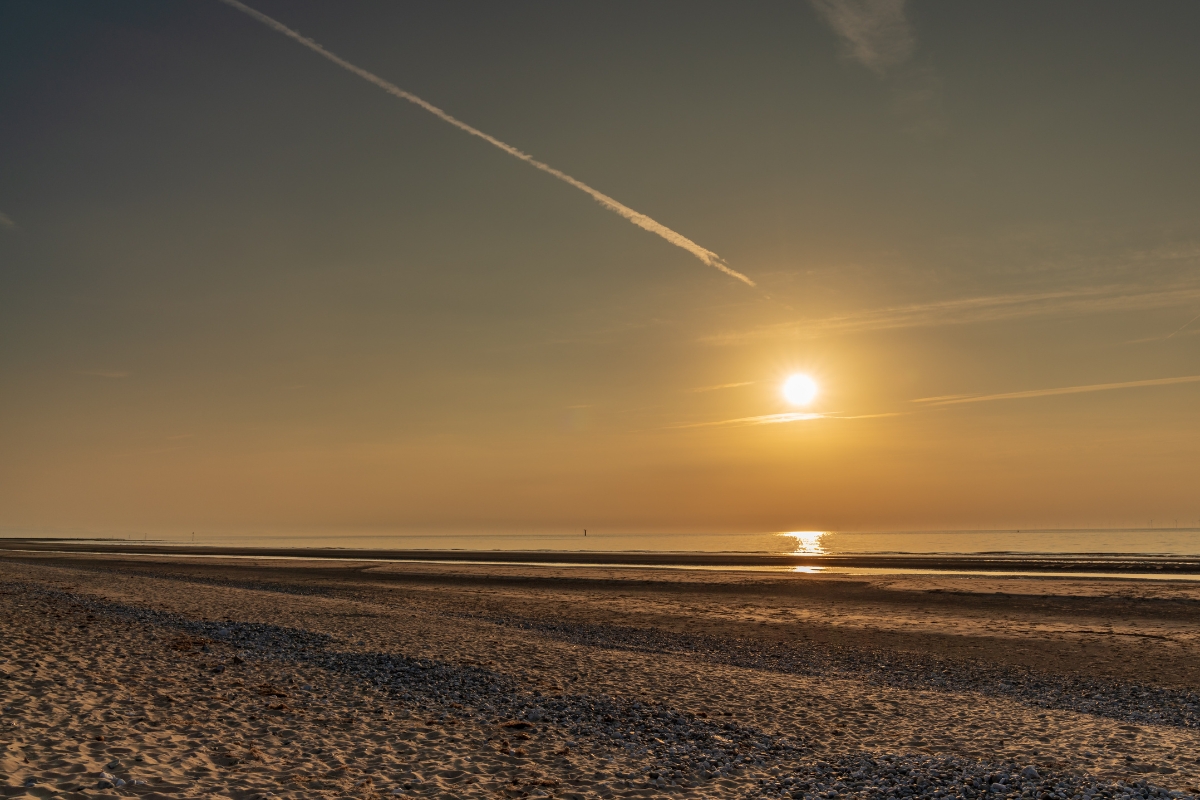
The beach itself stretches for approximately three miles, a broad sweep of sand backed by an extensive dune system and facing north across Liverpool Bay towards the distant Lancashire coast. This is classic British seaside territory—buckets and spades, fish and chips, amusement arcades, and the particular pleasure of sand between your toes. But Prestatyn offers more than nostalgia. Recent investment has created modern facilities, the surrounding countryside provides walking and cycling opportunities, and the town retains enough character to reward those who venture beyond the beach.
Unlike the more famous resorts of Llandudno and Rhyl to the west, Prestatyn has a quieter, more family-oriented atmosphere. The crowds are smaller, the pace gentler, and the sense of a real community going about its business beneath the holiday veneer more evident. For families seeking a traditional seaside holiday without the intensity of larger resorts, Prestatyn hits a comfortable balance.
The Beach
Prestatyn’s beach extends for approximately three miles along the coast, from Barkby Beach in the east to the boundary with Rhyl in the west. The character varies along this length, offering different experiences depending on where you choose to settle.
Central Beach
The central section, nearest the town centre and the Nova Centre, is the most developed and accessible part of the beach. This is where most visitors congregate, drawn by the proximity of facilities, the ease of access, and the lifeguard coverage during summer months.
The sand here is golden and fine, sloping gently towards the sea. At low tide, the beach extends for hundreds of metres, creating vast expanses of space for games, sandcastle building, and general seaside activities. The gentle gradient makes paddling safe and enjoyable, with shallow water extending a considerable distance from the shore.
A promenade runs behind this section of beach, providing a level walking route and separating the sand from the town. The promenade has been refurbished in recent years, with seating areas, viewing points, and access ramps making the beach welcoming for visitors of all abilities.
Barkby Beach
To the east, Barkby Beach offers a quieter experience. This section lies beyond the main concentration of facilities and attracts those seeking more space and tranquillity. The sand and conditions are similar to the central beach, but the atmosphere is more relaxed.
Barkby Beach backs onto the Gronant Dunes, an extensive dune system that extends towards the Point of Ayr and Talacre. This proximity to natural habitat gives the eastern beach a wilder character, and the dunes themselves provide opportunities for walking and wildlife watching.
Access to Barkby Beach is via car parks and paths from the residential areas behind. The walk from the town centre takes fifteen to twenty minutes, or parking is available closer to hand.
Ffrith Beach
West of the central beach, Ffrith Beach continues towards Rhyl. This section offers similar sandy conditions and is popular with locals who prefer to avoid the busiest areas. The beach is backed by holiday parks and residential areas, with access points at various locations along its length.
The boundary with Rhyl is unmarked on the sand itself, and walkers can continue westward along an unbroken stretch of beach extending for several more miles.
The Dunes and Nature
Behind Prestatyn’s beach, and particularly to the east, an extensive dune system provides habitat for wildlife and opportunities for exploration quite different from the beach itself.
Gronant Dunes
The Gronant Dunes stretch from Prestatyn towards Talacre and the Point of Ayr, forming one of the most important dune systems in Wales. This dynamic landscape, shaped by wind and tide over thousands of years, supports plant and animal communities found in few other places.
The dunes are designated as a Site of Special Scientific Interest, recognising their ecological value. Marram grass dominates the mobile dunes near the beach, its deep roots binding the sand and allowing the dunes to build and stabilise. Behind the foredunes, a richer flora develops, including species adapted to the challenging conditions of drought, salt spray, and shifting substrate.
In summer, the dune slacks—low-lying areas between dune ridges where the water table approaches the surface—can support exceptional displays of wildflowers. Orchids, including marsh helleborine and early marsh orchid, thrive in these damp, lime-rich conditions. Butterflies, including the increasingly rare grayling, breed on the dunes, while skylarks sing overhead.
Little terns, one of Britain’s rarest breeding seabirds, have attempted to nest in this area. These vulnerable birds are easily disturbed, and conservation efforts seek to protect potential nesting sites during the breeding season. Visitors should observe any signs and avoid marked areas during spring and summer.
Prestatyn Hillside
To the south of the town, the Prestatyn Hillside Local Nature Reserve covers slopes that rise towards the Clwydian Range. This mosaic of grassland, scrub, and woodland supports different wildlife from the dunes, including numerous butterfly species and breeding birds.
Footpaths cross the hillside, providing walking opportunities with views across the town and coast. The paths connect with the longer routes of the Clwydian Range, offering possibilities for extended walks into the hills.
Offa’s Dyke Path
Prestatyn holds a special place in the hearts of long-distance walkers as the northern terminus of Offa’s Dyke Path, one of Britain’s great National Trails. The 177-mile route follows the line of the ancient earthwork built by King Offa of Mercia in the eighth century, tracing the border between Wales and England from the Severn Estuary to the Irish Sea.
The path officially ends—or begins, depending on your direction—at the Offa’s Dyke Path Marker on the promenade near the Nova Centre. This sculptural waymark, featuring the acorn symbol of National Trails, provides a fitting conclusion for walkers who have spent two weeks or more traversing some of the finest countryside in Britain.
For many walkers, reaching Prestatyn is an emotional moment. The journey from Sedbury Cliffs near Chepstow has taken them through the Wye Valley, across the hills of Powys, along the ridges of the Clwydian Range, and finally down to the sea. The sight of the beach and the knowledge that the walk is complete brings a mixture of elation and melancholy that only long-distance walkers fully understand.
The town has embraced its role as trail terminus. Accommodation providers are accustomed to the needs of weary walkers, pubs and restaurants welcome muddy boots, and the Offa’s Dyke Centre provides information and celebrates the history and geography of the border country.
Visitors not undertaking the full trail can still experience something of the Offa’s Dyke Path by walking the final section from Prestatyn Hillside. The descent into town offers views across Liverpool Bay and a taste of the terrain that characterises much of the route.
The Nova Centre
The Nova Centre, Prestatyn’s modern leisure complex, has transformed the town’s seaside facilities since its opening. Located on the seafront adjacent to the central beach, the centre provides attractions and amenities that extend the appeal of Prestatyn beyond traditional beach activities.
The centre houses a swimming pool complex, including water slides and features that appeal to families with children. On days when the sea is too cold or the weather too poor for beach swimming, the pool provides an alternative that keeps children entertained and parents sane.
Additional facilities include a cinema, bowling alley, and various food and drink outlets. The combination creates a leisure destination that works regardless of weather, addressing the fundamental challenge of the British seaside holiday—that the British climate cannot be relied upon.
The architecture of the Nova Centre is contemporary and has attracted mixed reactions from visitors. Some appreciate the modern facilities and view the building as a positive addition to the seafront. Others prefer the traditional seaside aesthetic and find the centre’s appearance jarring. Whatever the architectural verdict, the facilities themselves have proved popular and have helped Prestatyn compete with other destinations for family visitors.
The High Street and Town Centre
Prestatyn town centre lies a short walk inland from the beach, connected by the High Street that runs from the seafront towards the railway station and beyond. The town centre provides the shops and services that support both the local community and visiting holidaymakers.
The High Street offers a mixture of national chains and independent retailers. Supermarkets supply groceries for self-catering visitors, while smaller shops sell beach equipment, gifts, and local products. Charity shops, a feature of many British high streets, provide hunting grounds for bargain-seekers.
Cafés and takeaways cluster along the High Street and around the seafront, serving the traditional British seaside repertoire of fish and chips, ice cream, and tea. Pubs provide refreshment and evening entertainment, with several establishments offering meals alongside drinks.
The town has a weekly market, continuing a tradition that predates the seaside resort. The market provides an opportunity to purchase local produce and browse stalls selling everything from clothing to household goods.
The overall impression is of a working town that happens to have a beach, rather than a purpose-built resort. This gives Prestatyn a more authentic character than some seaside destinations, where the holiday infrastructure dominates to the exclusion of normal life.
History of Prestatyn
Prestatyn’s history extends far beyond its relatively recent development as a seaside resort. The area has been inhabited for thousands of years, and traces of this long occupation survive in the landscape and archaeological record.
Prehistoric and Roman Prestatyn
Archaeological evidence reveals human presence in the Prestatyn area from prehistoric times. The caves and hillsides of the surrounding landscape provided shelter for early inhabitants, and artefacts from various periods have been recovered by archaeologists.
The Romans established a presence here, with a bathhouse discovered near the modern town centre providing evidence of settlement during the occupation. The site, excavated in the twentieth century, revealed the remains of a substantial bathing complex suggesting a settlement of some importance. The bathhouse remains are not currently accessible to visitors, but the discovery underlines the long history of habitation in this favourable coastal location.
The Roman road from Chester to Caernarfon passed through or near modern Prestatyn, and the area would have been known to the legions and merchants who travelled this route along the north Wales coast.
Medieval and Early Modern Prestatyn
In the medieval period, Prestatyn was a small agricultural settlement, unremarkable among the many similar communities of the north Wales coast. The area was affected by the conflicts between Welsh princes and English kings that characterised this turbulent era.
The building of Offa’s Dyke in the eighth century, though occurring some distance to the east, established the border zone that would shape the region’s history. Prestatyn lay on the Welsh side of this boundary, part of the territories that would be conquered by Edward I in the thirteenth century but would retain their Welsh character through the centuries that followed.
The town remained small through the early modern period, its economy based on agriculture and fishing. The hills behind provided grazing for sheep, the sea yielded its harvest, and life continued in patterns that had persisted for generations.
The Coming of the Railway and Resort Development
Prestatyn’s transformation into a seaside resort began with the arrival of the railway in 1848. The Chester and Holyhead Railway opened a station in the town, connecting this previously remote corner of Wales with the industrial cities of northwest England.
The Victorians had discovered the health benefits of sea bathing and sea air, and the railway allowed the working classes of Liverpool and Manchester to reach the coast for day trips and holidays. Prestatyn, with its sandy beach and accessibility, was well positioned to benefit from this new demand.
Development accelerated through the late nineteenth and early twentieth centuries. Hotels and boarding houses sprang up to accommodate visitors. A promenade was constructed along the seafront. Amenities catering to holidaymakers appeared along the High Street. Prestatyn took on the character of a seaside resort that it retains today.
The holiday camp movement of the mid-twentieth century brought further development. Prestatyn Sands Holiday Centre (originally a Pontins camp) and other holiday parks provided affordable accommodation for working-class families, democratising the seaside holiday and bringing thousands of visitors each summer.
The decline of the traditional British seaside holiday in the late twentieth century, as cheap flights opened up Mediterranean alternatives, affected Prestatyn as it did resorts across the country. But the town has adapted, investing in new facilities like the Nova Centre and marketing itself to families seeking the particular pleasures of the British coast.
Walking and Cycling
Beyond the beach itself, Prestatyn offers excellent opportunities for walking and cycling in the surrounding countryside.
Offa’s Dyke Path
As the terminus of this National Trail, Prestatyn serves as a natural base for walking sections of the route. The path climbs onto the Clwydian Range immediately south of the town, offering dramatic ridge walking with views across the Vale of Clwyd to Snowdonia.
Day walks might include the ascent to Prestatyn Hillside and the viewpoints above the town, or more ambitious expeditions along the ridge towards Moel Famau, the highest point in the Clwydian Range. The path is well-marked and maintained, suitable for reasonably fit walkers with appropriate equipment.
The Wales Coast Path
The Wales Coast Path passes through Prestatyn as part of its 870-mile route around the entire Welsh coastline. From Prestatyn, the path continues eastward towards Talacre and the Point of Ayr, or westward towards Rhyl and beyond.
The coastal walking in this area is relatively gentle, following the beach, promenade, and paths behind the dunes. The terrain suits walkers of most abilities, and the linear nature of the path allows for one-way walks using public transport for the return journey.
Cycling
The North Wales Coast provides excellent cycling, with relatively flat terrain along the coastal strip and more challenging rides into the hills behind. National Cycle Route 5 passes through the area, providing a traffic-free or quiet route suitable for family cycling.
The Clwydian Range and Dee Valley Area of Outstanding Natural Beauty offers mountain biking opportunities for those seeking more challenging terrain. Trails through the forests and across the hills attract riders from across the region.
Nearby Attractions
Prestatyn’s location makes it an excellent base for exploring north Wales and the border country. Numerous attractions lie within easy reach.
Talacre Beach and Lighthouse
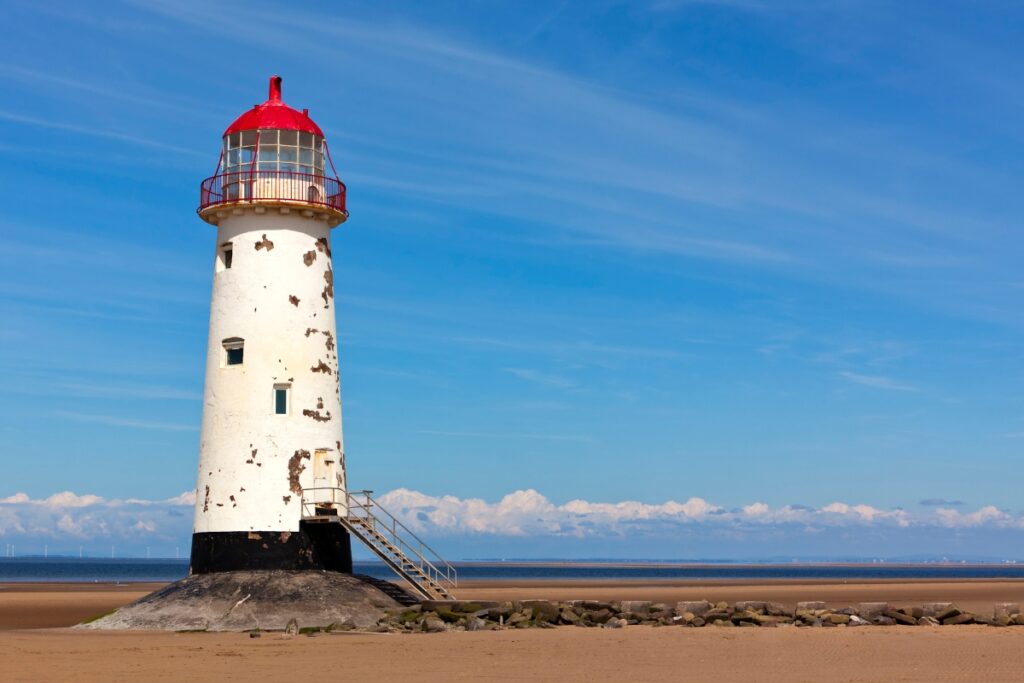
The neighbouring beach at Talacre, approximately five miles east, offers a wilder coastal experience and the photogenic Point of Ayr Lighthouse. The two beaches can be combined in a day’s exploration, with walking routes connecting them via the dunes.
Also check out:Talacre Beach: A Complete Guide to North Wales Golden Coast
Rhuddlan Castle
This thirteenth-century castle, built by Edward I as part of his conquest of Wales, lies approximately four miles west of Prestatyn. The impressive ruins stand beside the River Clwyd and merit a visit for those interested in Welsh history and medieval military architecture.
St Asaph Cathedral
The smallest ancient cathedral in Britain, St Asaph lies approximately six miles from Prestatyn. This modest but beautiful building has been a place of worship for over 1,400 years and houses treasures including a first edition of the William Morgan Bible, which translated the scriptures into Welsh.
The Clwydian Range
The hills rising behind Prestatyn form part of the Clwydian Range and Dee Valley Area of Outstanding Natural Beauty. Walking, cycling, and general exploration of this scenic upland is easily accessible from the town.
Rhyl
The larger resort of Rhyl lies immediately to the west, offering additional attractions including the SeaQuarium and various seaside amusements. The contrast between Rhyl’s busier atmosphere and Prestatyn’s quieter character allows visitors to choose their preferred experience.
Also check out: Things to do in Rhyl – Unlock Hidden Attractions & Local Favourites on the Welsh Coast
Bodelwyddan Castle
This Victorian Gothic mansion, approximately eight miles from Prestatyn, houses a collection of portraits from the National Portrait Gallery and offers grounds and gardens for exploration.
Practical Information for Visitors
Getting to Prestatyn
By train: Prestatyn station lies on the North Wales Coast Line, with regular services from Chester, Crewe, Manchester, Liverpool, and stations throughout north Wales. The station is centrally located, a short walk from both the High Street and the beach.
By car: Prestatyn is accessed from the A548 coast road or from the A55 North Wales Expressway, leaving at junction 28 and following signs to the town. From Chester, the journey takes approximately 30 minutes. From Liverpool, allow around 50 minutes. From Manchester, the drive takes approximately an hour and a quarter. Sat nav postcode: LL19 7EY for the town centre.
By bus: Bus services connect Prestatyn with Rhyl, Chester, and other towns along the coast. The main bus stops are located in the town centre near the High Street.
Parking
Parking is available at several locations in Prestatyn:
Central Beach car park provides convenient access to the main beach and the Nova Centre. Charges apply, and the car park can fill quickly on sunny days during peak season.
High Street car parks serve the town centre and provide alternative options when beach parking is full.
Barkby Beach has its own car park for those preferring the quieter eastern beach.
Arriving early is advisable during summer weekends and school holidays when demand is highest.
Accommodation
Prestatyn offers a range of accommodation options:
Hotels and guesthouses in the town centre and along the seafront provide traditional hospitality, from budget options to more comfortable establishments.
Holiday parks including Prestatyn Sands offer self-catering accommodation in caravans and chalets, often with on-site facilities including swimming pools, entertainment, and dining options.
Self-catering cottages and apartments are available in the town and surrounding area for those preferring independent accommodation.
Bed and breakfasts offer a more personal experience, with local hosts providing accommodation and often valuable advice about the area.
Booking ahead is advisable during peak season, particularly for school holidays and sunny weekends.
Eating and Drinking
Prestatyn offers numerous options for eating and drinking:
Fish and chips remain the quintessential seaside meal, available from several establishments in the town centre and near the beach.
Cafés along the High Street and seafront serve breakfast, lunch, light meals, and refreshments throughout the day.
Pubs provide meals alongside drinks, with several establishments offering family-friendly dining.
The Nova Centre houses various food outlets serving visitors to the leisure complex.
Takeaways offer the full range of British options including Chinese, Indian, and pizza alongside traditional fish and chips.
For more extensive dining options, Rhyl lies immediately to the west and offers additional restaurants and eateries.
Beach Facilities
Lifeguards patrol the central beach during the summer season, typically from late May to early September. Flags indicate the patrolled area and water conditions.
Toilets are available at the Nova Centre and at other locations along the promenade.
Beach equipment including buckets, spades, windbreaks, and inflatables can be purchased from shops on the High Street and near the seafront.
Dogs are restricted from parts of the beach during the summer season. Check signage for current regulations and designated dog-friendly areas.
Weather and Conditions
Prestatyn’s beach faces north across Liverpool Bay, exposed to winds from that direction but sheltered from the prevailing southwesterlies. Conditions can vary significantly:
Summer typically brings the warmest and calmest conditions, ideal for beach activities. Sea temperatures reach their peak in August but remain cool by Mediterranean standards—wetsuits are advisable for extended swimming.
Wind can arise at any time of year, creating conditions that may discourage beach sitting but delight kite-flyers and windsurfers.
Tides significantly affect the beach experience. Low tide exposes vast expanses of sand, while high tide reduces the beach width considerably. Tide times are available locally and online.
Best Time to Visit
Summer (June to August) offers the warmest weather, lifeguard coverage, and longest days. This is peak season, with the highest visitor numbers and busiest facilities.
Spring (April to May) brings improving weather and fewer crowds. The beach and surrounding countryside are pleasant for walking, though sea temperatures remain cold.
Autumn (September to October) offers quieter conditions and often good weather. The summer crowds have departed, but facilities remain open.
Winter (November to March) sees Prestatyn at its quietest. Many seasonal facilities close, but the beach and surrounding area remain accessible for bracing walks.
Frequently Asked Questions About Prestatyn Beach
Where is Prestatyn Beach located?
Prestatyn Beach is located on the north Wales coast in Denbighshire, approximately five miles east of Rhyl and 20 miles west of Chester. The beach lies on Liverpool Bay, facing north towards the Lancashire coast.
Is Prestatyn Beach sandy?
Yes, Prestatyn Beach features approximately three miles of golden sand with a gentle gradient. At low tide, the beach extends for hundreds of metres, providing ample space for beach activities.
Is Prestatyn Beach good for families?
Yes, Prestatyn Beach is excellent for families. The gentle gradient makes it safe for paddling, lifeguards patrol during summer, and the Nova Centre provides indoor facilities for when the weather is less favourable. The quieter atmosphere compared to larger resorts suits families with young children.
Is there lifeguard cover at Prestatyn Beach?
Yes, lifeguards patrol the central beach during the summer season, typically from late May to early September. Flags indicate the patrolled area and current conditions.
What is the Nova Centre?
The Nova Centre is Prestatyn’s modern leisure complex located on the seafront. It houses a swimming pool with water features, a cinema, bowling alley, and various food and drink outlets, providing entertainment regardless of weather.
What is Offa’s Dyke Path?
Offa’s Dyke Path is a 177-mile National Trail following the Welsh-English border from the Severn Estuary to Prestatyn. The trail ends (or begins) at a marker on Prestatyn’s promenade, making the town a destination for long-distance walkers.
Can you walk the Wales Coast Path at Prestatyn?
Yes, the Wales Coast Path passes through Prestatyn as part of its 870-mile route around Wales. From Prestatyn, the path continues east towards Talacre or west towards Rhyl, with relatively gentle coastal walking in both directions.
Is there parking at Prestatyn Beach?
Yes, parking is available at the Central Beach car park near the Nova Centre, as well as at other locations in the town centre and at Barkby Beach. Charges apply, and car parks can fill quickly during peak times.
Does Prestatyn have a train station?
Yes, Prestatyn station is served by regular trains on the North Wales Coast Line, with connections to Chester, Liverpool, Manchester, and stations throughout north Wales. The station is centrally located, a short walk from the beach.
Are dogs allowed on Prestatyn Beach?
Dogs are restricted from parts of the beach during the summer season. Check local signage for current regulations and designated dog-friendly areas, typically at Barkby Beach and other sections away from the main beach.
What are the Gronant Dunes?
The Gronant Dunes are an extensive dune system stretching east from Prestatyn towards Talacre. Designated as a Site of Special Scientific Interest, the dunes support important wildlife including rare plants, butterflies, and breeding birds.
How far is Prestatyn from Rhyl?
Prestatyn is approximately three miles east of Rhyl town centre. The two towns are connected by road, rail, and the continuous beach that runs along this stretch of coast.
What facilities are there at Prestatyn Beach?
Facilities include the Nova Centre with swimming pool, cinema, and bowling; cafés and restaurants; fish and chip shops; public toilets; beach equipment shops; and accommodation ranging from hotels to holiday parks.
Can you swim at Prestatyn Beach?
Yes, swimming is popular at Prestatyn Beach. Lifeguards patrol the central beach during summer, and the gentle gradient creates suitable conditions for bathing. Sea temperatures are cool, and wetsuits are advisable for extended swimming.
What is the best time to visit Prestatyn Beach?
Summer offers the warmest weather and fullest facilities, though this is also the busiest period. Spring and autumn provide quieter conditions with pleasant weather for walking. Winter suits those seeking bracing coastal walks away from the crowds.
How far is Prestatyn from Chester?
Prestatyn is approximately 20 miles from Chester, around 30 minutes by car via the A55 and A548. Regular train services connect the two towns in approximately 25 minutes.
Is there a market in Prestatyn?
Yes, Prestatyn holds a weekly market in the town centre, offering local produce, clothing, household goods, and general merchandise.
What castles are near Prestatyn?
Rhuddlan Castle lies approximately four miles west of Prestatyn. This impressive thirteenth-century fortress, built by Edward I, offers a glimpse into the military history of the Welsh-English border.
Can you cycle at Prestatyn?
Yes, Prestatyn offers excellent cycling opportunities. National Cycle Route 5 passes through the area, and the relatively flat coastal terrain suits family cycling. More challenging routes are available in the Clwydian Range to the south.
