


Inside Cardiff’s Iconic Venue That Has Hosted Legends, Champions, and Unforgettable Moments
Rising majestically from the heart of Cardiff, the Principality Stadium stands as one of the most impressive and distinctive sporting venues in the world. With its iconic retractable roof piercing the Welsh skyline and its location nestled right in the city centre, this architectural marvel is far more than just a stadium. It’s a symbol of Welsh pride, a cathedral of sport, and a venue that has witnessed some of the most dramatic and emotional moments in sporting and entertainment history. Let me take you on a journey through this remarkable building that has become synonymous with Cardiff itself.
A Stadium Born from Ambition
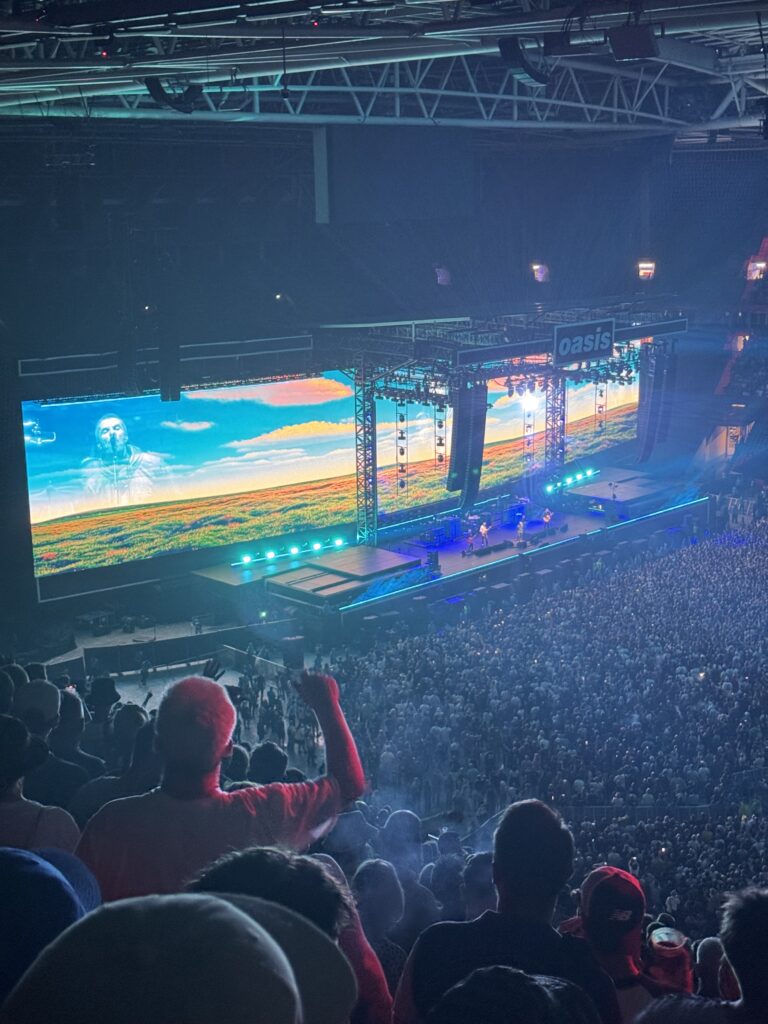
The Principality Stadium, originally known as the Millennium Stadium, is the national stadium of Wales, located in Cardiff with a retractable roof and serving as the home of the Wales national rugby union team. But to understand its significance, we need to travel back to the late 1990s when Wales was preparing to host one of rugby’s greatest spectacles.
By 1995, it was decided that the Welsh Rugby Union would host the 1999 Rugby World Cup, and the existing National Stadium at Cardiff Arms Park was deemed unfit for the job. The old stadium, with its capacity of just 53,000 and outdated facilities, simply couldn’t accommodate the ambitions of a nation ready to showcase itself on the world stage.
Construction of the stadium began in 1997 and was completed in 1999 at a total cost of £114 million, though other sources suggest the final figure reached £168 million. The National Stadium was demolished and in its place rose something truly spectacular. The stadium was built just in time to see Wales Rugby beat the South Africa Springboks for the first time in June 1999, marking an auspicious beginning for what would become one of the world’s greatest sporting venues.
The design brief given to Populous, the architectural firm behind the project, was ambitious yet simple: build the most atmospheric rugby stadium in the world on an extremely tight site in the centre of Cardiff, in time for the 1999 Rugby World Cup. They delivered something that exceeded all expectations.
Architectural Marvel: A Stadium Like No Other

What makes the Principality Stadium truly special is its groundbreaking design. With a total seating capacity of 73,931, it is the largest stadium in Wales and the fourth largest stadium in the United Kingdom by total capacity. But size alone doesn’t tell the full story.
The stadium features a fully retractable roof, the first of its kind in the UK, and is at the leading edge as a multi purpose, multi faceted event venue. It is the second largest stadium in the world with a fully retractable roof. This technological marvel allows the venue to transform from an open air arena bathed in Welsh sunshine to an enclosed cauldron of noise at the touch of a button. The roof can open or close in just 20 minutes and is supported by four imposing 90 meter high masts that have become iconic features of Cardiff’s skyline.
The stadium is made up of 56,000 tonnes of concrete and 200,000 nuts and bolts, a beacon of strength and industry that dominates the Cardiff landscape. Architecturally, the stadium is spectacular. It doesn’t just dominate the Cardiff skyline, it IS the Cardiff skyline. It’s impossible to ignore. Wherever you are in Cardiff, you catch a glimpse of its angular corners, those spires punching through the clouds, peeping out above rooftops or silhouetted against the setting sun.
The design philosophy behind the stadium was to create an atmosphere unlike any other. The atmosphere at the Principality Stadium is the result of a combination of unique design features, with the biggest factor being the retractable roof, specially insulated to maximise its acoustic effect so that the roar of the crowd reverberates around the seating bowl. The bowl itself resembles a ravine, with steep tiers surrounding the pitch, giving every seat excellent sight lines and putting spectators right on top of the action.
The result? Even with the roof open for the Six Nations in 2015, the stadium was still recorded as the loudest venue in the tournament, with an average noise level of 92 decibels. When that roof closes, the sound becomes absolutely deafening, creating an intimidating fortress that has seen many visiting teams crumble under the pressure.
Rugby’s Greatest Theatre
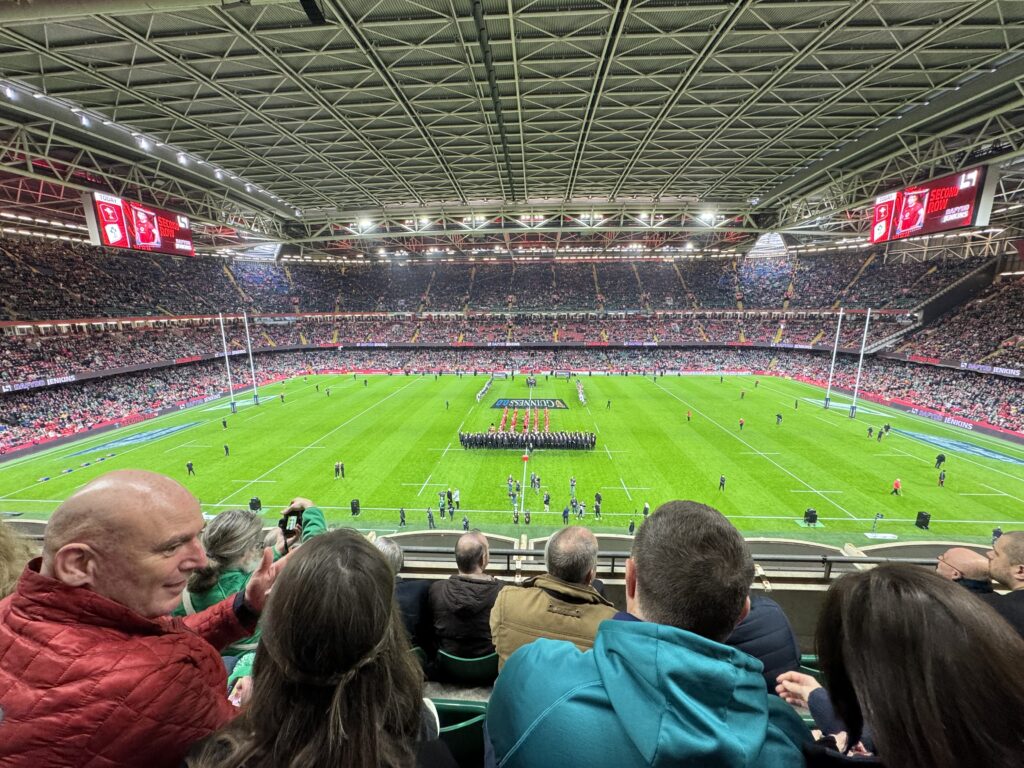
Rugby is in the DNA of the Principality Stadium, and it has witnessed some of the sport’s most memorable moments. The Welsh Rugby Union hosted the 1999 Rugby World Cup with the Final being played at the stadium, launching the venue onto the global stage in spectacular fashion.
The stadium has hosted two Rugby World Cups and witnessed three Welsh Grand Slam successes in the Six Nations. In 2005, Wales celebrated its first Grand Slam in 27 years when defeating Ireland in the final match of the 2005 Six Nations, then repeated the feat in 2008 when Wales defeated France in the final. For Welsh fans, these moments are seared into their collective memory, times when the entire nation united in celebration beneath that iconic roof.
In 2001, Wales and Australia played the world’s first indoor rugby match when the roof was closed for their Autumn clash in November. It was a groundbreaking moment that showcased the stadium’s versatility and set a precedent for future indoor sporting events.
In 2013, the England rugby team traveled to the Principality Stadium for their final match of the Six Nations Championship, aiming to complete their first tournament Grand Slam in a decade. Instead, they lost 30 to 3, a scoreline which gave the trophy to Wales on points difference. Many commentators suggested that the young England team were overwhelmed by the intense atmosphere generated beneath the closed roof of the stadium.
The stadium has also been a temporary home to other rugby competitions. The venue hosted the EPCR Challenge Cup Final from 2003 to 2005, and continues to be selected for major European rugby finals, cementing its reputation as one of the continent’s premier rugby venues.
Football’s Welsh Home Away from Home
While rugby may be its first love, the Principality Stadium has played a crucial role in football history as well. The stadium hosted FA Cup, League Cup and Football League playoff finals while Wembley Stadium was being redeveloped between 2001 and 2006, as well as football matches during the 2012 Summer Olympics.
Six FA Cup Finals were staged at the stadium, including the 125th FA Cup Final between Liverpool and West Ham, which ended in a classic 3 to 3 draw and went to penalties. The FA Cup Final between Arsenal and Liverpool in 2001 was the first FA Cup Final to be played in Cardiff, confirming its status as a World Class venue where it achieved its 5 star UEFA rating.
The FA Community Shield of 2001 between Manchester United and Liverpool became the first football match played under a closed roof in the UK, another historic first for the innovative venue.
But perhaps the pinnacle of its football hosting duties came in 2017. Listed as a category four stadium by UEFA, the stadium was chosen as the venue for the 2017 UEFA Champions League Final, which took place on 3 June 2017. It was played between Italian side Juventus and Spanish side and title holders Real Madrid, in a repeat of the 1998 final. It would also be the first European Cup final held under a closed roof.
Real Madrid won the match 4 to 1 to secure their 12th title in this competition, with goals from Cristiano Ronaldo scoring twice, along with Casemiro and Marco Asensio, while Mario Mandzukic scored for Juventus. The attendance was 65,842, and the match saw Real Madrid become the first team in the Champions League era to successfully defend their title.
The Champions League final showcased Cardiff and Wales to a global audience of hundreds of millions, with the stadium providing a stunning backdrop for one of football’s greatest occasions. Former Wales international Ian Rush, who won the European Cup with Liverpool in 1981 and 1984, served as the ambassador for the final, bringing a perfect Welsh connection to the event.
Beyond Sport: A Premier Entertainment Venue
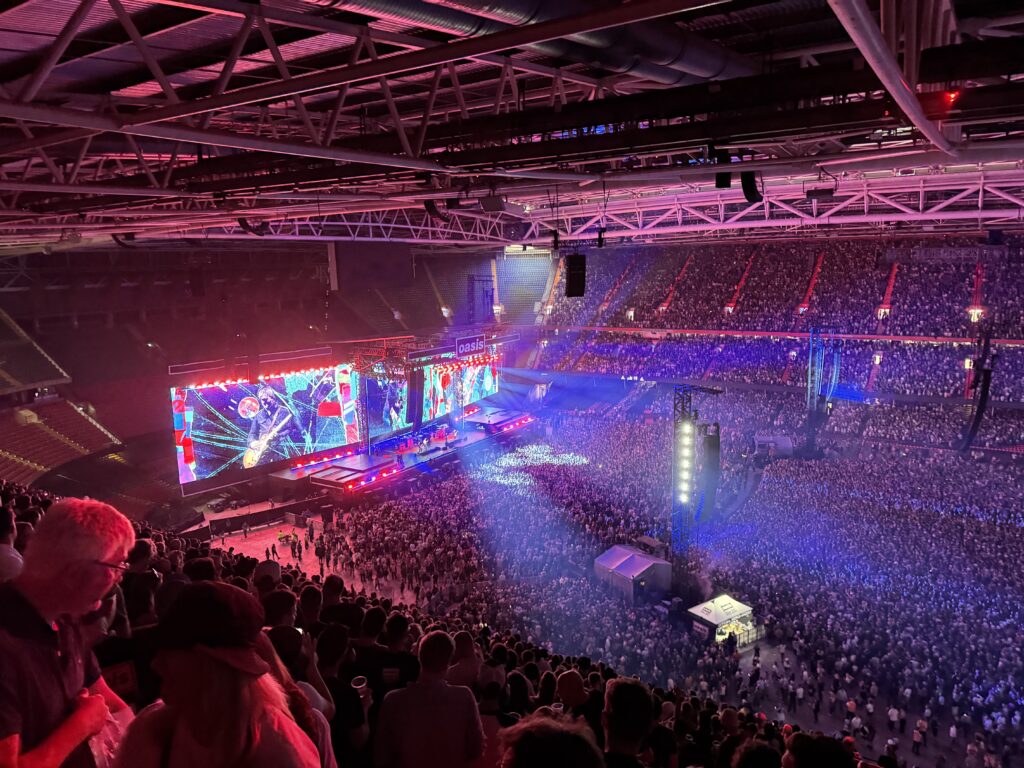
The Principality Stadium’s versatility extends far beyond the sporting field. It has hosted numerous events including Rugby Union World Cups, Rugby League World Cups, the only ever home fixture for the British and Irish Lions, The Community Shield, The Challenge Cup Final, the 2017 UEFA Champions League Final, World Heavyweight Championship Boxing, monster trucks, World Rally, Speedway Grand Prix, equestrian eventing, WWE, and even auditions for X Factor.
In 2002, the world’s first indoor cricket match was played as Britain took on a Rest of the World team in Power Cricket. British Speedway brought Grand Prix motorsport to the Millennium Stadium’s multipurpose capabilities in 2001, demonstrating that virtually any event could be accommodated within its walls.
In 2005, Tsunami Relief Cardiff was hosted, where a marathon Live Aid style music extravaganza took place to raise money for the victims of the disaster. It was a moment when the stadium became more than just a sporting venue; it became a place of unity and compassion.
The Manic Street Preachers played here on New Year’s Eve, as 1999 became 2000, belting out their anthentic Design for Life into the early hours of a new century. This was a stadium designed for life in the new millennia.
Music has become an integral part of the stadium’s identity. Some of the biggest names in pop, including Harry Styles, Rihanna, Ed Sheeran, Paul McCartney, The Rolling Stones, P!nk, One Direction, Madonna, Beyoncé and Coldplay, have played there. P!nk kicked off her spectacular Summer Carnival World Tour at Principality Stadium in Cardiff in 2024, treating fans to her high flying acrobatic performances beneath the closed roof.
Most recently, the stadium made headlines by hosting the opening shows of Oasis’s historic 2025 reunion tour on July 4th and 5th, marking the first time the Gallagher brothers had performed together in 16 years. The choice of Cardiff as the opening venue cemented the stadium’s reputation as one of the world’s premier concert locations.
A Name with History
On 8 September 2015, it was announced that the Millennium Stadium would be renamed Principality Stadium as the result of a 10 year naming rights deal with the Principality Building Society. On 22 January 2016, the Millennium Stadium was officially renamed as the Principality Stadium.
The new name, written bilingually as Stadiwm Principality Stadium and covering 114 square meters of the upper stadium, was lit up at a special evening ceremony, to be followed by a festival to encourage grassroots rugby. Some fans expressed opposition to the name change on social media, preferring the original Millennium Stadium moniker that had become so iconic. However, the new name has gradually been embraced, and importantly, the sponsorship deal helps fund the continued operation and improvement of this magnificent facility.
It’s worth noting that for UEFA events, due to regulations regarding non tournament sponsors, the venue is still often referred to as the National Stadium of Wales or by its original Millennium Stadium name in official documentation.
The Stadium Experience: What to Expect
Visiting the Principality Stadium is an experience that goes beyond simply watching an event. Full stadium tours include a visit to the indoor areas of the stadium including the Home and Away Dressing Rooms, Ray Gravell Press Conference Suite and the spectacular tunnel walk out into the stadium bowl to the hallowed turf, with plenty of photo opportunities along the way.
The stadium’s knowledgeable tour guides share fun facts on the stadium’s history of events from International Rugby Matches and World Cups, 2012 Olympic Events, world class boxing and the 2017 UEFA Champions League Final. Walking through that tunnel, hearing the recorded roar of a capacity crowd, and emerging onto the pristine pitch gives visitors a genuine taste of what it’s like to be a player on matchday.
Public tours are limited to 30 persons per tour, however larger private groups can be arranged. All stadium tours begin at the Welsh Rugby Union Store on Westgate Street and run from Monday to Saturday from 10am to 5pm and Sunday and Bank Holidays from 10:15am to 4pm. Tours do not run on 25 and 26 December, 1 January, Match Days and Event Days.
For the more adventurous, the stadium now offers SCALE, a roof adventure experience where visitors can actually climb to the top of the stadium and walk along the roof structure, offering breathtaking views across Cardiff and beyond. It’s one of the most unique stadium experiences available anywhere in the world.
The stadium welcomes over 1.3 million visitors per year, making it not just a sporting venue but one of Wales’s premier tourist attractions. On match days and event days, the atmosphere around the stadium is electric, with Cardiff’s pubs, bars, and restaurants filling with excited fans creating a festival like atmosphere throughout the city centre.
Location and Accessibility: A City Centre Icon
One of the Principality Stadium’s greatest assets is its location. Cardiff Central is the nearest station to the Stadium and operates mainline services from West Wales, the Midlands, the South Coast and London. Cardiff Queen Street Station is a 15 minute walk to the east of the Stadium and offers local rail services across Cardiff and from the South Wales Valleys.
Cardiff Central Bus Station is a five minute walk from the stadium, making public transport the easiest and most popular option for attending events. The stadium sits right in the heart of the city, meaning visitors can explore Cardiff’s shops, restaurants, historical sites, and cultural attractions all within walking distance.
The Principality Stadium is located within 30 minutes drive of Cardiff Airport and 45 minutes drive of Bristol Airport, with an express bus service operating directly from the terminal to the City Centre. For international visitors, this makes Cardiff an easily accessible destination.
There is no dedicated spectator car parking at or near the stadium on match days, but there is plenty of parking available in the City Center itself, with Park and Ride facilities available at locations like Leckwith. The advice for those staying in Cardiff? Walk to the stadium and soak up the incredible atmosphere along the way.
Economic and Cultural Impact
The Principality Stadium is far more than a sporting venue; it’s an economic powerhouse for Cardiff and Wales. Every major event brings tens of thousands of visitors to the city, filling hotels, restaurants, shops, and bars. The ripple effect of a single Champions League final or major concert can inject millions of pounds into the local economy.
Culturally, the stadium has become a symbol of modern Wales. It represents Welsh ambition, innovation, and the ability to compete on the world stage. When Wales plays rugby here, particularly during the Six Nations Championship, the entire nation seems to unite in support, with Welsh flags flying from homes and businesses across the country.
As Welsh poet Owen Sheers captured: There are moments when the many through the few become one. That’s how watching sport at Wales’s national stadium feels. The stadium represents Wales’s collective spirit and reminds the nation of what can be achieved when people come together.
The stadium will play a crucial role in hosting the opening ceremony and six matches during Euro 2028, bringing another major international football tournament to Cardiff and showcasing Wales to the world once again.
Future Vision: Staying Ahead of the Curve
At 26 years old, the Principality Stadium remains one of the world’s great sporting venues, but the Welsh Rugby Union recognises that continuous improvement is necessary to stay competitive with newer stadiums being built around the world.
WRU chief executive Abi Tierney discussed plans for redevelopment work during a meeting with the Senedd, revealing a two phase approach to upgrading the 73,000 capacity venue. Tierney pointed out that when the then Millennium Stadium was built in 1999 it had some of the best facilities in world sport, but 26 years on many other modern venues have surpassed it in what they offer, despite it still being an elite venue.
Phase one aims to enhance the stadium’s offerings and attract world class events. Phase two, commencing in 2026, will focus on a strategic redevelopment to guide the stadium into the next 25 years.
A significant aspect of the redevelopment includes installing solar panels on the stadium’s roof to reduce energy costs and promote environmental sustainability. This forward thinking approach demonstrates the WRU’s commitment not just to maintaining the stadium’s world class status, but also to environmental responsibility.
The WRU’s financial stability is credited for enabling this long term investment, ensuring the Principality Stadium remains competitive with newer venues and continues to attract major international events.
The planned improvements will likely include enhanced hospitality facilities, upgraded technology throughout the venue, improved accessibility features, and modernised amenities that meet the expectations of 21st century audiences while preserving the unique atmosphere that makes the stadium so special.
For those planning to visit the Principality Stadium, whether for an event or a tour, here’s what you need to know:
Practical Information for Visitors
Stadium Tours: Tours can be booked online or by calling the stadium directly. Prices vary but typically range from reasonable rates for adults to discounted prices for children and seniors. Group bookings and discounts are available.
Getting There: The stadium is located on Westgate Street in Cardiff city centre. Cardiff Central Railway Station is literally across the road, making it one of the most accessible stadiums in the UK by public transport. Direct trains run from London Paddington in around two hours, with regular services from Bristol, Birmingham, Manchester, and throughout Wales.
Nearby Attractions: Cardiff Castle is a five minute walk away, offering a fascinating glimpse into Welsh history from Roman times through the Victorian era. The National Museum Cardiff is equally close, featuring impressive art collections and natural history exhibits. Cardiff Bay, with its waterfront restaurants, the Wales Millennium Centre, and the Doctor Who Experience, is a 20 minute walk or short bus or taxi ride away.
Where to Eat and Drink: The area around the stadium is packed with pubs, restaurants, and bars. Traditional Welsh pubs like The Owain Glyndwr and The City Arms offer pre match atmosphere and excellent Welsh ales. For dining, everything from traditional fish and chips to international cuisine is available within a short walk. On event days, book restaurants in advance as they fill up quickly.
What to Bring: Check the stadium’s website for specific event restrictions, but generally, bags are discouraged and there’s no bag storage available. The stadium has a retractable roof, so weather is less of a concern than at open air venues, though it’s still Wales, so a light jacket is always advisable.
Accessibility: The stadium offers excellent accessibility facilities, with step free access, accessible seating areas, accessible toilets, and sensory rooms available. The stadium recently launched accessible fan guides tailored to individual accessibility needs, a first for a sporting venue.
Why Every Sports Fan Should Visit
The Principality Stadium offers something truly unique in the world of sports venues. Its central city location means you can walk from your hotel, stopping at historical sites and grabbing a pint along the way, before emerging into a state of the art arena that rivals any stadium on Earth. The retractable roof technology creates an atmosphere that must be experienced to be believed, particularly when 73,000 voices rise in song together.
For rugby fans, this is hallowed ground, the spiritual home of Welsh rugby where some of the sport’s greatest moments have unfolded. For football supporters, it’s a venue that has hosted FA Cup finals and a Champions League final, maintaining the highest standards of FIFA and UEFA. For music lovers, it’s where the world’s biggest artists come to perform, knowing the acoustics and atmosphere will elevate their shows to unforgettable levels.
But beyond the events themselves, visiting the Principality Stadium is about experiencing Welsh culture at its finest. The warmth of Welsh hospitality, the passion of Welsh sports fans, the beauty of Cardiff as a city, and the pride of a nation all come together in this magnificent venue.
Whether your favourite stadium moment was Ian Rush’s match winning goal against Germany, Gareth Edwards’ 1973 try for the Barbarians, or Steven Gerrard’s sizzling strike from 40 yards to break West Ham hearts in the 125th FA Cup Final, the stadium’s presence will live on long after you’ve left.
The Heart of Welsh Identity
As we look to the future, the Principality Stadium stands as more than just bricks, steel, and a retractable roof. It represents Welsh identity, ambition, and the ability to punch above one’s weight on the global stage. This small nation of three million people built a world class stadium that attracts global superstars, hosts major international events, and creates memories that last lifetimes.
From its innovative design that was ahead of its time in 1999 to its continued evolution to meet the demands of modern audiences, the Principality Stadium embodies the Welsh spirit of innovation and determination. It’s a place where sport, music, culture, and community come together, where collective experiences create bonds that transcend the events themselves.
For travellers to Wales, the Principality Stadium should be at the top of your itinerary. Whether you’re lucky enough to attend a match or concert, or simply take a tour and soak up the history, you’ll leave with a deeper appreciation for Welsh culture and a profound respect for what this remarkable building represents.
In Cardiff, the Principality Stadium isn’t just a landmark; it’s the beating heart of the city, a source of pride for the nation, and a cathedral where sporting dreams come true. It’s a place where, as the Welsh would say, the dragon roars loudest and where memories are made that will be treasured forever.
Come to Cardiff. Experience the Principality Stadium. And understand why this venue has earned its place among the greatest sporting arenas on Earth.
