
TL;DR
St David’s Day falls on 1 March every year and marks the national day of Wales. It honours Dewi Sant, a 6th century Celtic monk and bishop who lived a life of remarkable simplicity, founded one of the most important monasteries in the medieval Christian world, and whose last words, ‘Do the little things,’ remain a guiding philosophy for Welsh people to this day. The celebration has grown from a medieval religious feast into a vibrant national festival of culture, food, language, and community. In 2026, it is bigger than ever, with 92 events funded by the Welsh Government taking place across the country. This article tells the full story: who David was, how the day evolved through history, what people do to celebrate, and what the future of Dydd Gwyl Dewi might look like.
A Birth Foretold, A Life Extraordinary
The story of St David begins in the most dramatic fashion imaginable. According to centuries of tradition, his birth was foretold by an angel thirty years before it happened. And when the moment finally came, it did not arrive gently. Somewhere around the year 500 AD, on a clifftop on the south-west coast of Pembrokeshire, a woman named Non gave birth alone in the middle of a ferocious storm. Thunder rolled across the headland and lightning split the sky. The rock beneath her, it is said, split apart with the force of her pain, her fingers leaving marks in the stone. And at the exact moment the child was born, the storm relented, and a radiant holy light filled the air around them.
The place where this happened sits today just outside the tiny city that bears her son’s name. The ruins of Capel Non, a small ancient chapel built to mark the birthplace, still stand close to the cliff edge. A holy well nearby, said to have sprung up at the moment of the birth, has drawn pilgrims and visitors for over a thousand years. The water, according to tradition, carries healing properties. On a clear day, the Irish Sea glitters beyond the headland. It is one of the most quietly extraordinary places in Wales, and most people who visit it have never heard of it.
The child born in that storm was David, known in Welsh as Dewi, and the circumstances of his birth were only the beginning of a life woven through with the miraculous and the remarkable. His mother Non was the daughter of a local chieftain. His father, Sant, was a prince of Ceredigion. Both parents would eventually be venerated as saints in their own right. David was, in other words, born into the highest ranks of early Welsh society, at a time when the line between kingship, nobility and religious leadership was blurred almost entirely.
The primary account of his life comes from a biography called the Buchedd Dewi, or Life of David, written around 1090 by a monk named Rhygyfarch. That is roughly 500 years after David’s death, and historians approach it with appropriate caution. But what it preserves, drawn from centuries of oral tradition and fragmentary records from St Davids Cathedral, is the richest portrait we have of a man who shaped the spiritual life of a nation.
The Waterman of Mynyw
David grew up in the Celtic Christian tradition of 6th century Wales, a world of small kingdoms, monastic communities, and a Christianity still finding its shape across the British Isles. As a young man he was educated at the monastery of Hen Fynyw under the tutelage of St Paulinus, a blind monk of considerable reputation. According to one of the more charming legends surrounding his life, David restored his teacher’s sight simply by making the sign of the cross over his eyes. It was the first of many miracles attributed to him.
After his education, David set out as a missionary. He travelled widely across Wales and beyond, as far as Brittany in France and, according to tradition, to Jerusalem itself, where he was consecrated as a bishop. The stories of his journeys read as a map of early Celtic Christianity: a world connected not by roads and railways but by sea routes and monastic networks, where Irish monks, Welsh bishops, Cornish hermits and Breton abbots shared a common language of faith. David founded churches and monasteries wherever he went. Over fifty churches in Wales would eventually bear his name in pre-Reformation times. He may even have had a hand in founding the monastery at Glastonbury, though that claim has never been settled.
But it was at a valley called Glyn Rhosyn, the Vale of Roses, on the far western tip of Pembrokeshire, that David found his true home. Here, on the headland where St Davids Cathedral stands today, he established the monastery that would define his legacy. The community he built was built on the principles of the Desert Fathers of Egypt, the earliest Christian monks: radical simplicity, communal labour, prayer, and an almost complete rejection of material comfort.
The monks of David’s community ploughed their fields by hand, without oxen. They were forbidden to eat meat or drink beer. They owned nothing: even to say ‘my book’ was considered a spiritual offence. They spent their evenings in prayer, reading and writing. And David himself lived the most austere life of all. He ate only bread with herbs and salt. He drank only water. His nickname, earned through this extraordinary self-discipline, was Dewi Ddyfrwr: David the Waterman.
It is almost certainly this diet of leeks and water that gave the world one of its most enduring national symbols. When you pin a leek to your lapel on 1 March, you are carrying a vegetable that has been associated with the Welsh people for over fifteen centuries, rooted in the daily habits of a monk who lived and died in a stone beehive cell on the edge of the Atlantic.
The Hill That Rose and the Dove That Descended
Of all the miracles attributed to Dewi Sant, the most famous took place not in his monastery but in the village of Llanddewi Brefi in Ceredigion. A great gathering had been called, the Synod of Brefi, to debate the Pelagian heresy, a theological controversy that had been unsettling the church. David had not been invited initially. His reputation, however, was such that messengers were sent to bring him to the gathering.
When he arrived and began to speak, the crowd was so vast that people at the edges could neither see nor hear him. According to the story that has been told ever since, David placed a white handkerchief on the ground and stood upon it. As he preached, the ground beneath his feet rose slowly upward, forming a hill, so that everyone in that enormous crowd could see him clearly. A white dove, sent by God, descended and settled on his shoulder. His words rang out across the assembled thousands, and the heresy was defeated. The hill at Llanddewi Brefi is still there. You can visit it today.
It was at this gathering, according to Rhygyfarch, that David was declared Archbishop of Wales by popular acclaim. The white dove became one of his symbols, and you will see it in stained glass windows, carved on cathedral seats, and painted on church walls throughout Wales. He is often depicted as a bearded bishop with a dove on his shoulder, standing on a small hill. The image is both literal and symbolic: a man elevated, not by power or wealth, but by the force of his words and the purity of his faith.
He is also said to have performed many other miracles throughout his long life. He restored the sight of his mentor Paulinus. He raised a child from the dead by splashing the boy’s face with tears. He caused a fresh spring of water to burst from dry ground at Glastonbury when his community needed it. Whether these stories are history, parable, or devotional legend matters less than what they tell us about how the Welsh people understood this man: as someone who could be trusted, who stood close to the divine, and who cared deeply about ordinary people.
The Last Words That Became a Philosophy
On the Sunday before his death, which is believed to have fallen on 1 March in the year 589, David gave his final sermon to his monks and to the community that had gathered around his monastery over decades. He was, by most accounts, well over a hundred years old. The Celtic Christian tradition was notable for its extreme ascetics, and David had spent a lifetime living as sparingly as any of them.
His final words to his followers have been preserved, passed down through centuries, and remain among the most quoted phrases in the Welsh language. In Welsh they are: ‘Arglwyddi, brodyr, a chwiorydd, Byddwch lawen a chadwch eich ffyd a’ch credd, a gwnewch y petheu bychain a glywsoch ac y welsoch gennyf i.’ In English: ‘Lords, brothers and sisters, be joyful, keep your faith and your creed, and do the little things that you have seen me do and heard about.’
“Gwnewch y pethau bychain mewn bywyd. Do the little things in life.”
That last phrase, ‘Gwnewch y pethau bychain’, has embedded itself in Welsh culture as thoroughly as any other expression. You see it on tea towels and greeting cards, painted on pub walls and embroidered on cushions. But it carries genuine weight. In a world that celebrates the dramatic and the grand, David’s final message was a quiet insistence on the value of small, consistent acts of goodness. He died the following morning, 1 March, and was buried in the cathedral that stood on the site of his monastery.
The news of his death reportedly spread across the Celtic world. Monks and pilgrims came from Ireland, from Cornwall, from Brittany, to pay their respects. His shrine became one of the great pilgrimage destinations of medieval Europe. At its peak, the Pope himself declared that two pilgrimages to St Davids were equal in spiritual value to one journey to Rome. Three pilgrimages to St Davids equalled one to Jerusalem. For hundreds of years, the road to the far western tip of Wales was one of the most travelled in the Christian world.
From Holy Day to National Day: A History of the Celebration
The Medieval Period
The feast day of David was first recorded in the Annales Cambriae, the Welsh Chronicles, around the 10th century. By this point, his reputation had long since spread beyond Wales. His name was invoked in the great early Welsh poem Armes Prydein, written around 930 AD, which prophesied that the Welsh people would one day unite behind the banner of Dewi Sant to drive out their enemies. The line ‘A lluman glan Dewi a ddyrchafant’, ‘And they will raise the pure banner of Dewi’, speaks to how completely David had become identified not just with the church but with Welsh national identity itself.
He was officially canonised by Pope Callixtus II in 1120, a formal recognition that had long been obvious to the Welsh people. His shrine was destroyed by fire in 645 and repeatedly raided by Vikings who stripped it of its treasures and murdered bishops in the Cathedral. But it was always rebuilt, always restored. The determination to keep the shrine alive speaks to how essential David had become to Wales’s sense of itself.
In 1398, Archbishop Arundel commanded that David’s feast day be celebrated by every church in the Province of Canterbury. By 1415, it was being observed under the full dignity of a major feast, with nine lessons and choir leadership. Medieval Welsh poets including Iolo Goch and Lewys Glyn Cothi wrote verses in his honour. For several centuries, 1 March was primarily a religious observance: a day of special masses, pilgrimage, and devotion.
The Reformation and the Cultural Turn
The Protestant Reformation of the 16th century changed the character of the day dramatically. The great cycle of Catholic feast days was dismantled, and St David’s Day as a religious festival effectively came to an end. But something interesting happened. Rather than disappearing, the day simply transformed. It became, over the course of the 17th and 18th centuries, a cultural and patriotic festival rather than a religious one.
Welsh people in London began gathering on 1 March to celebrate their heritage with feasting, singing and the wearing of the leek. The 17th century diarist Samuel Pepys recorded the celebrations with some fascination, noting that Welsh gatherings for the day could spark counter-celebrations among their English neighbours that were not always friendly. By the 18th century, the custom had emerged of confectioners producing ‘taffies’, gingerbread figures baked in the shape of a Welshman riding a goat, to mock the celebrations. The Welsh people had, in other words, made their patriotism visible and public enough to provoke a reaction.
It was also in this period that the Honourable Society of Cymmrodorion, a society for Welsh people in London founded in 1751, began to formalise the celebration with dinners and cultural events. The Welsh diaspora in England, America, and further afield played a crucial role in keeping the day alive and giving it its explicitly national character. Being Welsh and celebrating St David’s Day became, in many ways, the same thing.
The 19th Century and the Rise of the Daffodil
Two things happened in the 19th century that reshaped St David’s Day into something closer to its modern form. The first was the standardisation of Welsh national costume. The tall black hat, long woollen skirt, white apron, and red shawl that generations of Welsh schoolchildren have worn on 1 March were not ancient garments. They were based on the everyday working clothes of rural Welsh women in the late 18th and early 19th centuries, which the Victorians romanticised and standardised into a ‘national costume’. Lady Llanover, a fierce champion of Welsh culture, played a significant role in codifying and promoting this look in the 1830s and 1840s. It became, and remains, one of the most instantly recognisable images of Welsh cultural identity.
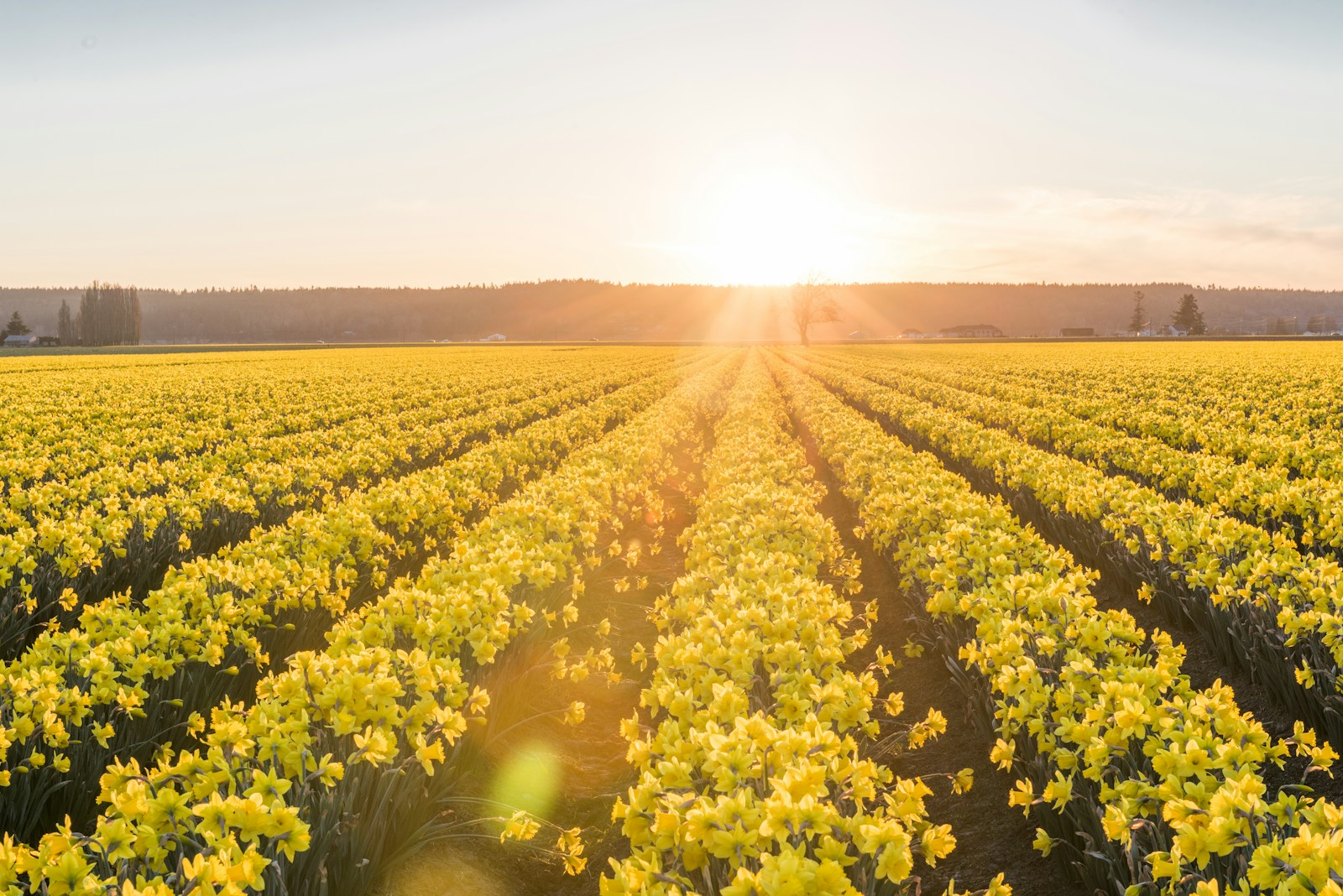
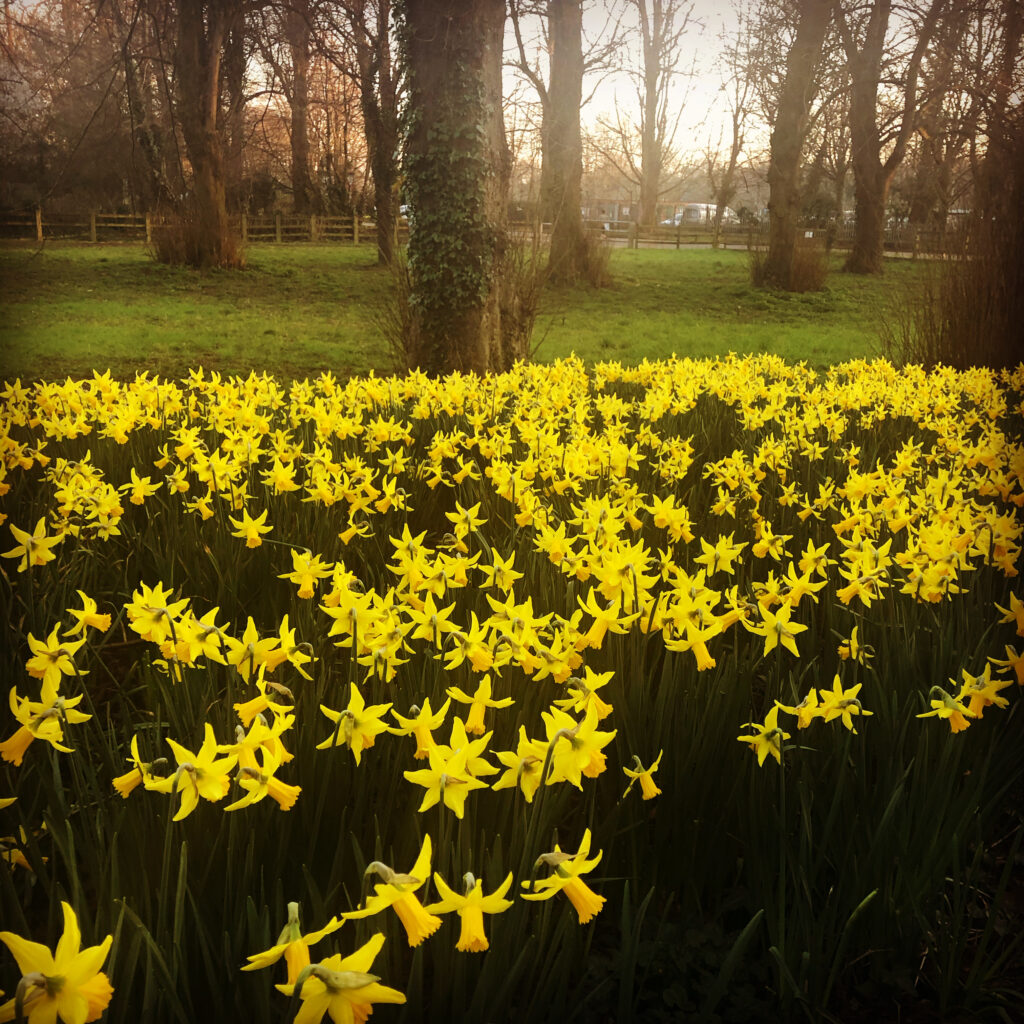
The second was the rise of the daffodil as a national symbol alongside the leek. The leek had been Wales’s emblem for centuries, its connection to David and to Welsh military identity long established. But the daffodil, which blooms naturally across Wales in late February and early March, began to attract prominent advocates. David Lloyd George, the Welsh Liberal statesman and future Prime Minister, was a passionate public champion of the daffodil as a more beautiful and less pungent national symbol. He was not wrong that it was more visually appealing. The crucial linguistic link helped too: the Welsh word for daffodil, cenhinen Pedr, or Peter’s leek, is close enough to cenhinen, the word for leek, that the two became interchangeable in popular usage.
Today, both are worn with equal pride on 1 March. The choice between them is largely personal. Some people wear both.
The Symbols, the Food, and the Traditions
The Leek
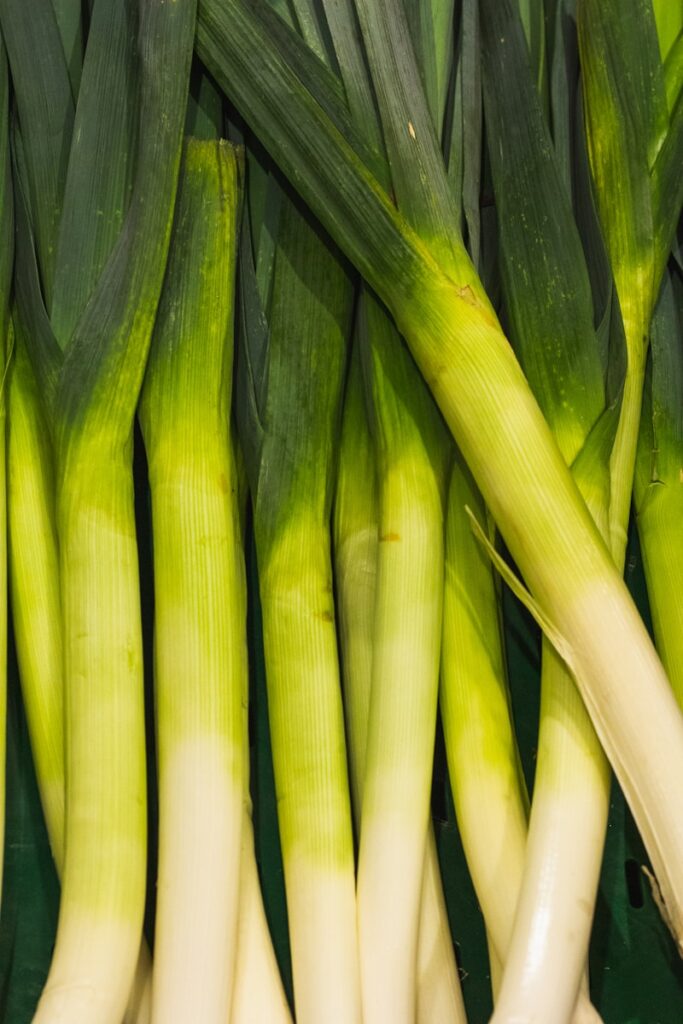
The leek’s connection to Wales predates David himself in some accounts, but the most persistent story links it directly to the man. The night before a great battle against the Saxons, so the legend goes, David instructed his soldiers to wear leeks in their helmets so that they could distinguish each other from the enemy in the confusion of combat. The battle was won. The leek was worn in victory, and it stayed. Medieval sources describe Welsh soldiers identifying themselves by wearing leeks in battle, and by the time of the Battle of Crecy in 1346, chroniclers were already associating the vegetable firmly with Welsh fighting men.
Shakespeare, writing at the turn of the 17th century, understood the symbolism well enough to include it in Henry V. In one famous scene, the Welsh captain Fluellen forces the blustering Pistol to eat a leek on St David’s Day as punishment for mockery. ‘If you can mock a leek, you can eat a leek.’ The fact that Shakespeare felt his London audience would understand this reference tells us how well established the custom already was by the 1590s.
The Daffodil
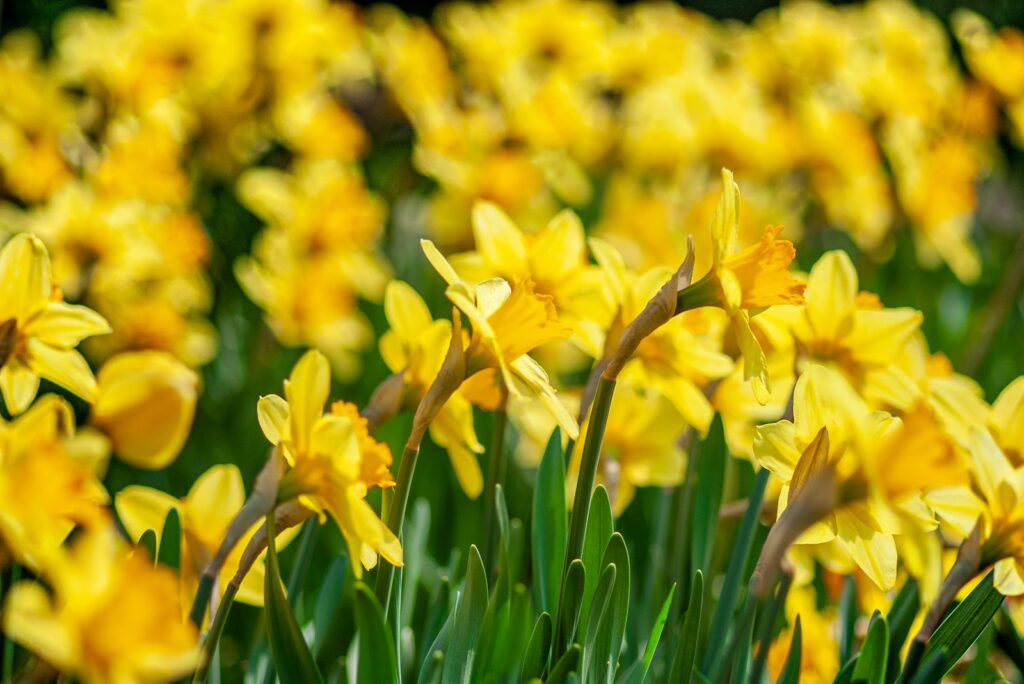
The native Welsh daffodil, the Lenten lily, is a smaller, more delicate thing than the large-trumpeted commercial varieties bred for garden centres. It flowers in abundance across the Welsh countryside from late February, carpeting woodland floors and hillside meadows in pale yellow before the leaves have fully arrived. There is something almost impossibly well-timed about it: a flower that blooms precisely at the moment Wales needs to celebrate itself, when the grey of winter is lifting and the light is beginning to return.
The Tenby Daffodil, a variety cultivated in Pembrokeshire since medieval times, has been awarded the Royal Horticultural Society’s Award of Garden Merit. One of the finest natural displays of wild daffodils in Wales can be found at Coed y Bwl Wood near Bridgend, where thousands of native plants flower together in a spectacle that has drawn visitors for generations.
The Food
Traditional Welsh food takes centre stage on 1 March, and the centrepiece is cawl. This ancient broth, made most often with Welsh lamb and root vegetables and slow-cooked over hours until the flavours meld completely, is the closest thing Wales has to a national dish. It is the kind of food that David himself might almost have approved of, though he would have left out the lamb. Served with good bread and sharp Welsh cheese, it is one of the most satisfying things you can eat on a cold March day.
Welsh cakes come second in the hierarchy of the day’s food. These small, flat, griddle-baked scones, studded with currants and dusted with caster sugar, are eaten everywhere in Wales year-round, but on St David’s Day they take on special significance. Every bakery, every school canteen, every community hall will have them. Bara brith, a dense and sticky fruit loaf made with tea-soaked dried fruit, is another constant presence. Welsh rarebit, that most misunderstood of dishes, is essentially an exceptionally good cheese sauce on toast, traditionally made with Welsh cheese and a splash of Welsh ale. The Glamorgan sausage, a vegetarian alternative made from leeks, Caerphilly cheese and breadcrumbs, has its own quiet army of devotees.
The Costume
In schools across Wales on 1 March, the corridors fill up with tall black hats, red shawls and white aprons. For girls, the full Welsh lady costume consists of a long woollen skirt in striped or checked flannel, a white blouse, a woollen shawl pinned across the chest, a white frilled bonnet, and over it all the extraordinary tall black hat, the Het Gymreig, that has become one of the most recognisable national symbols in the world. For boys, variations include flat caps, waistcoats, and, increasingly, Welsh rugby jerseys, which have a cultural legitimacy all of their own.
The costume is not ancient in its standardised form, but it represents something real: the everyday working dress of rural Welsh women at a time when Wales had a distinct material culture, before industrialisation swept much of it away. Wearing it on St David’s Day is an act of cultural memory, a way of insisting that Wales had and has its own way of doing things.
The Eisteddfod
No account of St David’s Day is complete without the eisteddfod. The word means ‘sitting together’ and the tradition of competitive gatherings for poets, musicians, harpists and storytellers stretches back to at least the 12th century, with roots that may go further still. On St David’s Day, schools across Wales hold mini-eisteddfodau where children compete in Welsh poetry recitation, singing, and musical performance. The atmosphere in a school hall during a St David’s Day eisteddfod, with children in national costume standing to recite poems they have memorised in Welsh, is one of the most distinctive experiences in Welsh cultural life.
The great National Eisteddfod of Wales, held every August, alternates between north and south Wales and draws tens of thousands of visitors. But St David’s Day carries its own eisteddfod tradition in communities across the country, in village halls and church rooms and school gymnasiums, judges awarding ribbons and the audience applauding with the slightly partisan enthusiasm that these occasions always produce.
St David’s Day in 2026: The Biggest Celebration Yet
In the weeks and days leading up to 1 March 2026, Wales is doing something it has not quite done before at this scale. The Welsh Government has invested one million pounds in a St David’s Day fund, and 92 funded events are taking place across the country between 16 February and 6 March. It is, the First Minister Eluned Morgan has said, an attempt to make 2026’s celebration the most memorable yet.
The range of events funded under the scheme speaks to the breadth of Welsh cultural life. In North Wales, workshops in cynganeddu, the ancient art of Welsh strict-metre poetry, are being run by the bard Mei Mac. In Wrexham, Avant Theatre is staging a youth-led celebration at Y Lab that brings together young people, performers and community partners for a day of creativity and culture. In South East Wales, Media Academy Cymru is organising a bilingual day of celebration at the Golden Cross in Cardiff, showcasing Welsh language, music and culture. In the Valleys, Age Connects Morgannwg is ensuring that older people across Rhondda Cynon Taf, Merthyr and Bridgend have the chance to be part of the celebrations.
National Trust Cymru is opening fifteen of its sites for free on 1 March, giving families across Wales the chance to explore the country’s heritage on the national day without any barrier of cost. Cadw heritage sites including Caerphilly Castle and St Davids Bishop’s Palace are also open. The social media campaign Random Acts of Welshness returns, inviting Welsh people everywhere in the world to share small celebrations of their culture, language and identity online. A daffodil given. A Welsh cake baked. A phrase spoken in Welsh to someone who did not expect it.
In St Davids itself, the most fitting place in the world to be on 1 March, the Band of the Prince of Wales performs at the Cathedral alongside Only Boys Aloud West and the Whitland Male Voice Choir. A Dragon Parade winds through the streets of Britain’s smallest city. Pilgrims of a secular kind walk the coastal path between St Non’s Chapel and the Cathedral, retracing steps that have been taken by the faithful and the curious for fourteen hundred years.
Cardiff has its parade through the city centre, which has grown year by year into one of the most colourful events on the Welsh calendar. Aberystwyth Arts Centre hosts Hwyl Dewi, a lively celebration of Welsh music and community. Swansea’s celebrations spread across the city. Wrexham, having found a new confidence in recent years, stages its own Gŵyl Dydd Gŵyl Dewi festival across the city centre.
Outside Wales, the Los Angeles St David’s Day Festival, the largest event of its kind in the United States, draws the Welsh American community together for an eisteddfod, Celtic marketplace, and concert. Washington DC holds a congressional reception at the Capitol. Disneyland Paris, in one of the more unexpected tributes to the patron saint, runs a Welsh-themed week with parades and fireworks.
The Bank Holiday Question: An Ongoing Story
There is one conversation that returns every year as reliably as the daffodils, and it is the question of whether St David’s Day should be a bank holiday. At present, 1 March is not a public holiday in Wales. People go to work. Shops open. Life continues, with daffodils pinned to lapels and perhaps a Welsh cake at the office, but without the full suspension of ordinary life that a bank holiday provides.
The campaigners for a bank holiday point out what seems an obvious injustice: Scotland has a bank holiday for St Andrew’s Day, and Northern Ireland has one for St Patrick’s Day. The Senedd voted unanimously in support of the proposal back in 2000. Polling consistently shows that around 75 to 87 percent of people in Wales support the idea. The economic argument is regularly made: a dedicated national holiday would boost tourism, support the hospitality sector, and give families the chance to fully engage with the cultural events that the day generates.
The UK Government, which holds the power to designate bank holidays and has not devolved this power to Wales as it has to Scotland and Northern Ireland, has repeatedly declined to act on it. Various Secretaries of State for Wales have cited economic concerns, business opposition and the particular role of schools in sustaining the tradition. Opponents argue, somewhat paradoxically, that making 1 March a day off school would actually reduce children’s engagement with St David’s Day celebrations, which are largely centred on school eisteddfodau and costume parades.
Some Welsh county councils have made the decision themselves, designating 1 March as a paid holiday for their staff. The movement shows no sign of losing momentum. As Wales continues to develop a stronger sense of its own distinct political and cultural identity, the bank holiday question is likely to become more rather than less pressing. There is something slightly absurd about asking a nation to celebrate its national day in whatever time it can squeeze around its working life.
The Welsh Language and the Future of the Day
St David’s Day has always been, at some level, about the Welsh language. David preached in Welsh, led a Welsh-speaking community, and left his last words in Welsh. The language has been the carrier of his memory and the medium through which the culture he helped shape has been transmitted. Today, Welsh is spoken by approximately 900,000 people, around 29 percent of the population of Wales, and is classified as a vulnerable language by UNESCO, meaning it needs active support and promotion to survive.
The number of Welsh speakers has actually grown in recent years, and Welsh is, remarkably, the fastest growing language in the UK on language learning platform Duolingo. A generation of learners is approaching the language not as an obligation but as a discovery, something to be proud of and curious about. St David’s Day is one of the moments in the year when that pride is most visible and most contagious.
On 1 March, children who are learning Welsh at school get to use it in contexts that feel genuinely festive. Adults who have let their Welsh slip find themselves looking up a phrase or two. People who have never considered learning it hear it sung, spoken and celebrated in a way that makes it feel alive and relevant rather than archaic. The Random Acts of Welshness campaign taps into this beautifully: one of its suggested acts is simply to wish someone a happy St David’s Day in Welsh. Dydd Gwyl Dewi Hapus. Even getting those syllables right is a small act of connection to something much larger.
The future of St David’s Day is likely to look both more global and more rooted. The Welsh diaspora, spread across the world from Patagonia in Argentina, where Welsh-speaking communities have existed since the 19th century, to the Welsh communities of Ohio, Pennsylvania and New South Wales, will continue to gather on 1 March to assert a heritage that travels well. At the same time, the investment in community events, Welsh language promotion and cultural celebration taking place in 2026 suggests that the day is becoming more deeply embedded in Welsh life, not less.
Dewi Sant, the monk who ate leeks and drank water and told his followers to do the little things, would perhaps not have anticipated that his feast day would one day be marked with parades through capital cities, fireworks at Disneyland, and a million-pound government fund. But there is something in his philosophy that maps onto the modern celebration surprisingly well. The little things add up. A daffodil pinned. A Welsh cake shared. A word spoken in an old language. A parade through a wet Welsh street. Taken together, they make something larger than themselves.
How to Get Involved This Year
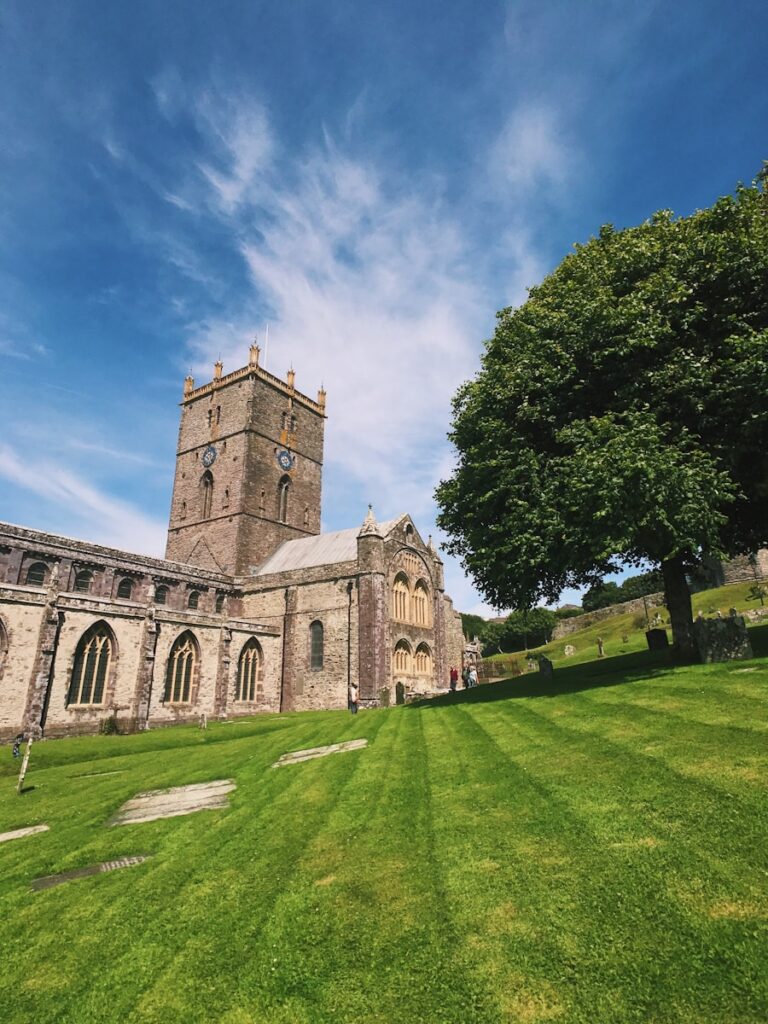
If you are in Wales, the simplest way to celebrate is to find your nearest event. Cardiff’s parade through the city centre is the largest public celebration in the country. Swansea, Aberystwyth, St Davids, Cardigan, Wrexham and dozens of towns large and small have their own events. The Visit Wales website carries a full listings guide. National Trust Cymru sites are free to enter on 1 March. Cadw heritage sites including some of Wales’s greatest castles are open for the day.
If you are further afield and Welsh by heritage or affection, the Random Acts of Welshness campaign is made for you. Cook a cawl. Buy a bunch of daffodils. Learn the opening line of the national anthem, Hen Wlad Fy Nhadau. Say Dydd Gwyl Dewi Hapus to anyone who will listen. Share it on social with the hashtag and join something much larger than your kitchen.
And if you have never visited Wales and are reading this wondering what all the fuss is about, let this be the year you find out. St Davids in Pembrokeshire, the city where David founded his monastery and where his bones are believed to rest in the Cathedral, is one of the most unexpectedly moving places in the British Isles. Standing in that Cathedral on 1 March, with the choir singing and the daffodils yellow at the altar and the sea wind coming in off the headland, it is not difficult to understand why a 6th century monk is still celebrated with such warmth, fourteen centuries after his death.
He did the little things. And they turned out to matter rather a lot.
Frequently Asked Questions
When is St David’s Day?
St David’s Day falls on 1 March every year. The date marks the anniversary of Dewi Sant’s death in 589 AD.
Who was St David?
Dewi Sant, known in English as St David, was a 6th century Welsh Celtic monk, bishop and preacher. He was born in Pembrokeshire around 500 AD, founded a monastery on the site where St Davids Cathedral now stands, and became one of the most revered figures in the early Christian church in Wales. He was canonised by Pope Callixtus II in 1120.
What are the national symbols of Wales worn on St David’s Day?
Both the leek and the daffodil are national emblems of Wales worn on 1 March. The leek has the older association, linked to St David’s own diet and to stories of Welsh soldiers wearing leeks to identify each other in battle. The daffodil became popular in the 19th century and was championed by David Lloyd George among others. Its Welsh name, cenhinen Pedr, or Peter’s leek, links it linguistically to the older emblem. Both are widely worn today.
Is St David’s Day a bank holiday?
No. Despite strong and consistent public support in Wales, with polls showing between 75 and 87 percent of Welsh people in favour, St David’s Day is not currently a bank holiday. The UK Government holds the power to designate bank holidays and has so far declined to act on repeated calls from the Senedd and the public. Scotland has a bank holiday for St Andrew’s Day and Northern Ireland for St Patrick’s Day. The campaign for a Welsh national holiday on 1 March continues.
What is the traditional food for St David’s Day?
Cawl, a slow-cooked lamb and vegetable broth, is the most traditional dish associated with the day and is widely considered the national food of Wales. Welsh cakes, small griddle-baked currant scones dusted with sugar, are eaten throughout the celebrations. Bara brith, a tea-soaked fruit loaf, Welsh rarebit (a rich cheese sauce on toast), and Glamorgan sausage (a vegetarian sausage made from Caerphilly cheese and leeks) are all associated with the day.
What are the biggest St David’s Day events in 2026?
In 2026, the Welsh Government has funded 92 events across Wales through a one million pound St David’s Day fund, making it the largest nationally supported celebration to date. Cardiff’s city centre parade is the biggest public event. National Trust Cymru is opening fifteen heritage sites for free on 1 March. Major events are also taking place in Swansea, Aberystwyth, Wrexham, St Davids, and communities across North, South and Mid Wales.
What does ‘Gwnewch y pethau bychain’ mean?
It means ‘Do the little things’ in Welsh. These were the last words spoken by Dewi Sant to his monks on the Sunday before his death, and the phrase has become one of the most beloved and widely quoted in Welsh culture. It is a reminder that small, consistent acts of goodness and integrity matter, and that a life of simplicity and care has its own extraordinary power.
How do you say Happy St David’s Day in Welsh?
Dydd Gwyl Dewi Hapus. Approximate pronunciation: Deethe Goo-il Dew-ee Hap-iss. Even attempting it is a small act of cultural connection that Welsh people will appreciate enormously.
Where is the best place to celebrate St David’s Day in Wales?
St Davids in Pembrokeshire, the city named after the patron saint himself, is the most historically significant place to mark the day. The Cathedral service, the Dragon Parade through the streets, and the walk from St Non’s Chapel along the coast make it an unforgettable experience. Cardiff’s parade and Swansea’s city-wide celebrations are excellent for those who want a larger, more urban festival atmosphere. Wherever you are in Wales on 1 March, something will be happening nearby.
What to Do in Wales? A Land of Castles, Coastlines & Celtic Spirit
