
Geography and Landscape
1. Wales has over 1,680 miles of coastline
Despite being a relatively small country covering just 8,023 square miles, Wales boasts an extraordinarily long and varied coastline. The Wales Coast Path, opened in 2012, was the first dedicated path to cover the entire coastline of any country in the world, running for 870 miles from Chester in the north to Chepstow in the south.
2. Snowdon is the highest mountain in Wales and England
Standing at 3,560 feet (1,085 metres), Yr Wyddfa—known in English as Snowdon—is the highest peak south of Scotland. The mountain attracts over 600,000 visitors annually, making it one of the busiest mountains in Britain. On a clear day, views from the summit extend to Ireland, the Isle of Man, and the Lake District.
The Ultimate Snowdon (Yr Wyddfa) Climb: Which Trail Will You Take? Interactive Map
3. Wales has three National Parks
Snowdonia (Eryri), the Brecon Beacons (Bannau Brycheiniog), and the Pembrokeshire Coast together protect some of the most spectacular landscapes in Britain. These parks cover approximately 20 per cent of the Welsh land area and attract millions of visitors each year.
4. The Pembrokeshire Coast is Britain’s only coastal National Park
Designated in 1952, the Pembrokeshire Coast National Park protects 186 miles of stunning coastline including dramatic cliffs, sandy beaches, and offshore islands. The park is home to internationally important seabird colonies and one of the finest stretches of coastal walking anywhere in Europe.
5. Wales has over 500 waterfalls
The wet Welsh climate and mountainous terrain combine to create an abundance of waterfalls. The Brecon Beacons alone contains numerous spectacular falls, while the waterfalls of the Vale of Neath have been described as “Waterfall Country.” Pistyll Rhaeadr in Powys, at 240 feet, is often considered the tallest single-drop waterfall in Wales.
6. Cardigan Bay is home to the largest population of bottlenose dolphins in Europe
An estimated 300 bottlenose dolphins make their home in Cardigan Bay, along with grey seals, harbour porpoises, and occasional visits from other whale and dolphin species. The bay’s clear waters and abundant fish stocks make it one of the best places in Britain for marine wildlife watching.
7. Wales has four Areas of Outstanding Natural Beauty
The Anglesey Coast, Clwydian Range and Dee Valley, Gower Peninsula, and Llŷn Peninsula are designated AONBs, protecting landscapes of exceptional beauty that fall outside the National Parks. The Gower Peninsula was the first area in Britain to receive AONB designation, in 1956.
History and Heritage
8. Wales has more castles per square mile than any other country in the world
With over 600 castles—more than one for every 12 square miles—Wales has an unmatched concentration of fortifications. These range from the mighty Edwardian fortresses of Caernarfon, Conwy, and Harlech to ruined Norman mottes and native Welsh strongholds. The castle-building reflects centuries of conflict between Welsh princes, Norman lords, and English kings.
9. Caernarfon Castle has never been taken by force
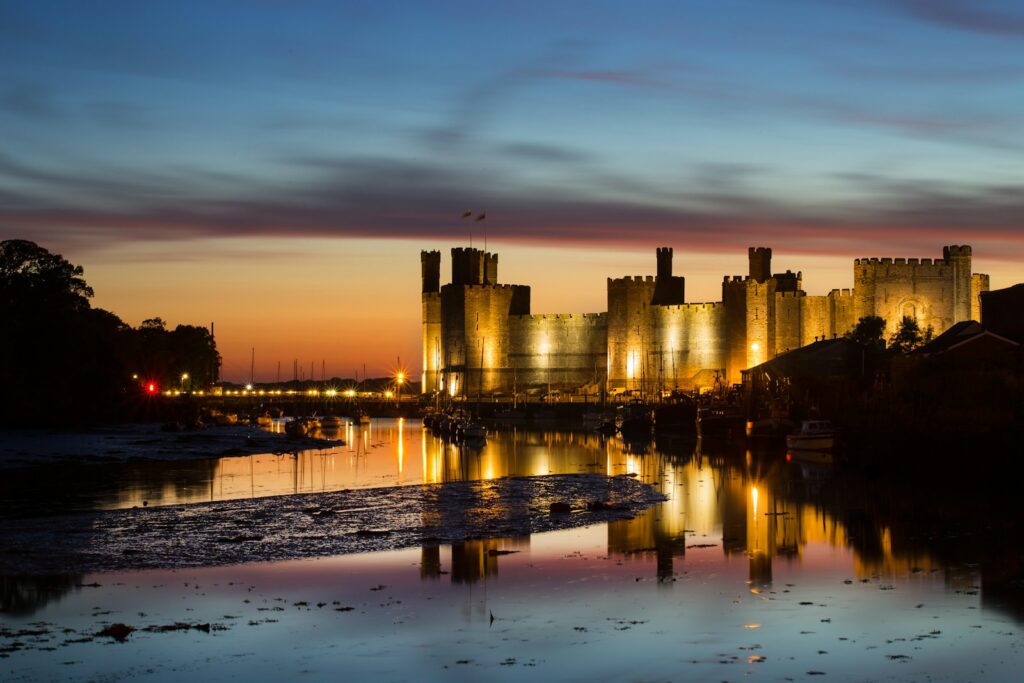
Despite numerous sieges and attacks, including during Owain Glyndŵr’s rebellion in the early fifteenth century, Caernarfon Castle has never fallen to an enemy assault. The fortress, built by Edward I between 1283 and 1330, remains one of the most impressive medieval castles in Europe and is a UNESCO World Heritage Site.
10. The Prince of Wales title dates back to 1301
Edward I created his son Edward (later Edward II) Prince of Wales in 1301, following the conquest of the last independent Welsh principality. The title has been granted to the heir apparent to the English and later British throne ever since, though it is not automatic and must be specifically conferred by the monarch.
11. Owain Glyndŵr led the last major Welsh uprising against English rule
Beginning in 1400, Glyndŵr’s rebellion came closer to achieving Welsh independence than any movement before or since. At its height, he controlled most of Wales, held parliaments at Machynlleth and Harlech, and negotiated alliances with France and Scotland. He disappeared around 1415 and was never captured, becoming a legendary figure of Welsh resistance.
12. The first recorded eisteddfod was held in 1176
The Lord Rhys held a gathering of poets and musicians at Cardigan Castle in 1176, which is considered the first recorded eisteddfod. This tradition of competitive arts festivals continues today, with the National Eisteddfod attracting over 150,000 visitors annually and remaining the largest festival of competitive music and poetry in Europe.
13. Wales was the first country in the world to establish a National Health Service hospital
Tredegar in south Wales provided the model for the National Health Service. The town’s Medical Aid Society, which provided healthcare funded by workers’ contributions, inspired Aneurin Bevan—born in Tredegar—to create the NHS in 1948, one of Britain’s greatest social achievements.
14. The Rebecca Riots were led by men dressed as women
Between 1839 and 1843, groups of protesters destroyed tollgates across south and west Wales in what became known as the Rebecca Riots. The rioters, protesting against high tolls and rural poverty, disguised themselves in women’s clothing and took their name from a biblical verse about possessing “the gates of those which hate them.”
15. St David is the only patron saint of the British Isles to be born in his country
St David (Dewi Sant) was born around 500 AD in Pembrokeshire and became the patron saint of Wales. St George (England), St Andrew (Scotland), and St Patrick (Ireland) were all born elsewhere. St David’s Day, celebrated on 1 March, is a national day of celebration in Wales.
Language and Culture
16. Welsh is one of the oldest living languages in Europe
Welsh (Cymraeg) evolved from Brythonic, the language spoken across Britain before the Roman invasion. It has been spoken continuously for approximately 1,500 years, making it one of Europe’s oldest languages still in daily use. The language survived attempts to suppress it and is now experiencing a revival. Welsh History & Culture
17. Approximately 900,000 people speak Welsh
Around 30 per cent of the Welsh population speaks Welsh, with higher percentages in the north and west. The language has official status in Wales, and all public bodies must treat Welsh and English equally. Welsh-medium education is available throughout the country.
18. The Welsh alphabet has no letters J, K, Q, V, X, or Z
The Welsh alphabet contains 29 letters, including eight digraphs (two-letter combinations) that are treated as single letters: ch, dd, ff, ng, ll, ph, rh, and th. The distinctive “ll” sound, a voiceless lateral fricative, is unique to Welsh and a few other languages.
19. Llanfairpwllgwyngyllgogerychwyrndrobwllllantysiliogogogoch is Europe’s longest place name
This village on Anglesey holds the record for the longest place name in Europe and one of the longest in the world. The name translates as “The church of St Mary in the hollow of white hazel near the rapid whirlpool and the church of St Tysilio near the red cave.” It was created in the nineteenth century as a publicity stunt to attract tourists—and it worked.
20. The Welsh national anthem was the first to be played at a sporting event
“Hen Wlad Fy Nhadau” (Land of My Fathers) was sung before the Wales versus New Zealand rugby match in 1905, becoming the first national anthem performed at an international sporting event. The tradition spread worldwide and is now standard at international competitions.
21. The red dragon has been a symbol of Wales for over a thousand years

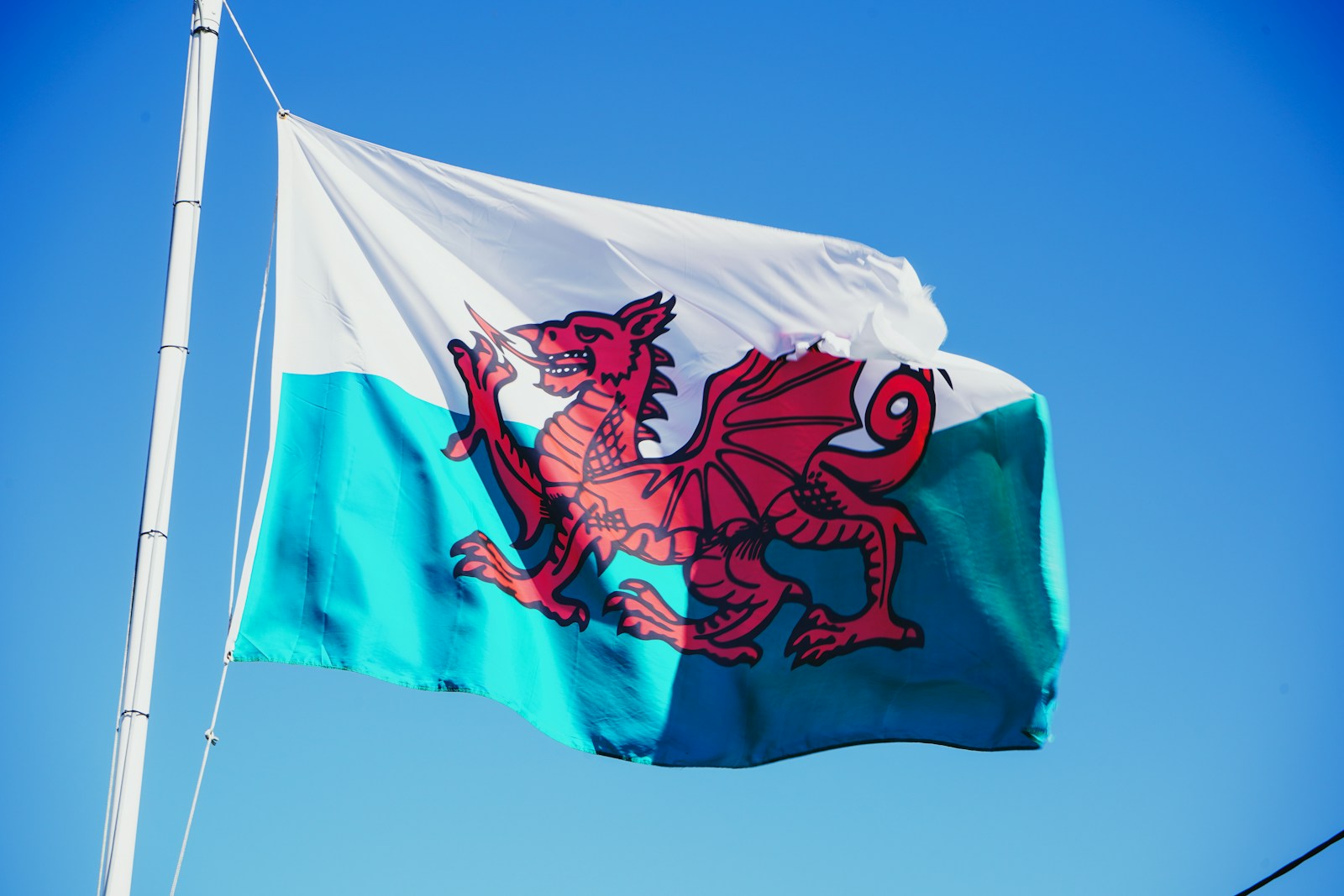
The red dragon (Y Ddraig Goch) appears on the Welsh flag and has represented Wales since at least the time of the Roman occupation. According to legend, the red dragon fought and defeated a white dragon, symbolising the victory of the Britons over the Saxon invaders.
Wales Flag: Amazing Story Behind the Welsh Flag and Symbolic Strong Red Dragon
22. Wales is known as the “Land of Song”
Male voice choirs emerged from Welsh chapel culture in the nineteenth century and became world-famous for their distinctive sound. The tradition continues today, with hundreds of choirs performing across Wales. The country has also produced numerous internationally successful singers, from Sir Tom Jones and Shirley Bassey to Bryn Terfel and Katherine Jenkins.
23. The lovespoon is a traditional Welsh symbol of romantic affection
Young men in Wales traditionally carved elaborate wooden spoons to give to women they were courting. The complexity of the carving demonstrated both skill and devotion. Different symbols carried specific meanings: hearts for love, wheels for hard work, and interlocking links for the desire to be together forever. The tradition dates back to at least the seventeenth century.
24. Cawl is considered the national dish of Wales
This traditional Welsh stew, made with lamb or beef, leeks, potatoes, and other root vegetables, has been prepared in Wales for centuries. Each region and family has its own recipe, and debate continues over the “correct” method of preparation. Cawl improves with reheating, making it a practical dish for cold Welsh winters.
25. The leek and daffodil are both national symbols of Wales
The leek has been associated with Wales since at least the time of Cadwaladr, a seventh-century king who supposedly ordered his soldiers to wear leeks in their caps to distinguish them from enemies. The daffodil, which blooms around St David’s Day, became popular as a national symbol in the nineteenth century, partly because the Welsh word for daffodil (cenhinen Bedr) is similar to the word for leek (cenhinen).
Love Flowers: Visit The National Botanic Garden of Wales
Sport
26. Rugby union is considered the national sport of Wales
Although football attracts more participants, rugby union holds a special place in Welsh culture. The Welsh Rugby Union was formed in 1881, and the national team has won the Six Nations Championship (and its predecessors) 28 times, more than any other nation.
27. The Millennium Stadium was the first stadium in Britain with a fully retractable roof

Opened in 1999 and now known as the Principality Stadium, this 74,500-seat venue in Cardiff was the first stadium in Britain capable of closing its roof. The stadium hosted the FA Cup finals while Wembley was being rebuilt and remains one of Europe’s premier sporting and entertainment venues.
Principality Stadium: The Beating Heart of Welsh Sport and Entertainment
28. Wales has won 28 Six Nations/Five Nations Championships
Since the competition began in 1883, Wales has won the championship outright 28 times, plus 12 shared titles. The Welsh team has achieved the Grand Slam (beating all other nations) 12 times, most recently in 2019.
29. Gareth Bale is Wales’s most expensive footballer
When Gareth Bale transferred from Tottenham Hotspur to Real Madrid in 2013 for approximately £85 million, he became the most expensive footballer in history at that time. Bale went on to win five Champions League titles with Real Madrid and helped lead Wales to their first major tournament semi-final at Euro 2016.
30. Wales qualified for their first World Cup in 64 years in 2022
After last appearing at the 1958 World Cup in Sweden, Wales qualified for the 2022 FIFA World Cup in Qatar, ending the longest gap between World Cup appearances for any European nation. The 1958 team, featuring the legendary John Charles, reached the quarter-finals before losing to Brazil.
31. Snooker champion Ray Reardon won six World Championships
Ray Reardon from Tredegar dominated professional snooker in the 1970s, winning the World Championship six times. Known as “Dracula” for his dark hair and widow’s peak, he was one of several Welsh players who achieved success in the sport, including Terry Griffiths and Mark Williams.
Industry and Innovation
32. Wales was once the world’s largest coal exporter
At its peak in 1913, the south Wales coalfield produced nearly 57 million tonnes of coal annually, and Cardiff was the largest coal-exporting port in the world. The coal industry shaped Welsh society, creating the valleys communities that became centres of political radicalism, choral singing, and rugby.
33. The world’s first passenger railway service ran in Wales
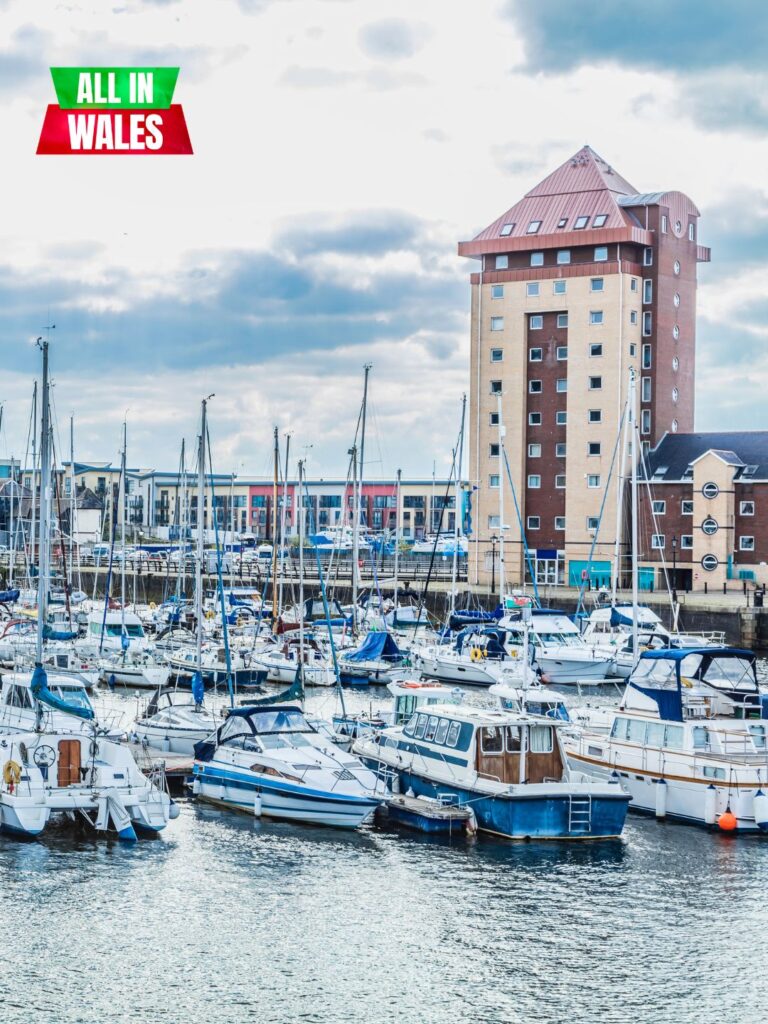
The Swansea and Mumbles Railway, opened in 1807, is widely considered the world’s first passenger railway. Originally horse-drawn and later steam and electric powered, it ran for 5.5 miles along Swansea Bay until its closure in 1960. The railway carried passengers 18 years before the more famous Stockton and Darlington Railway.
34. Welsh slate roofed the world
During the nineteenth century, Welsh slate quarries—particularly those around Llanberis, Blaenau Ffestiniog, and Bethesda—supplied roofing material across the globe. The Penrhyn Quarry near Bethesda was once the largest slate quarry in the world. The industry declined in the twentieth century, but Welsh slate remains prized for its quality and durability. The slate landscape of northwest Wales is a UNESCO World Heritage Site.
35. The first radio message across water was sent from Wales
Guglielmo Marconi sent the first radio transmission across water from Lavernock Point near Penarth to Flat Holm island in the Bristol Channel in May 1897. The message, reading “Are you ready?”, travelled approximately three miles and demonstrated the potential of wireless communication.
36. The equals sign was invented by a Welshman
Robert Recorde from Tenby invented the equals sign (=) in 1557, explaining that he chose two parallel lines “because no two things can be more equal.” Recorde, a physician and mathematician, also introduced the plus and minus signs to English-speaking mathematicians.
37. Wales has become a centre for television and film production
Bad Wolf Studios in Cardiff is one of Europe’s largest television production facilities, where productions including Doctor Who, His Dark Materials, and A Discovery of Witches have been filmed. The Welsh landscape has doubled for locations worldwide, and the creative industries contribute significantly to the Welsh economy.
Nature and Wildlife
38. Red kites were saved from extinction in Wales
By the early twentieth century, the red kite had been reduced to just a handful of breeding pairs in mid-Wales, making it Britain’s rarest breeding bird. A conservation programme that began in the 1960s has been spectacularly successful, and red kites are now a common sight across Wales. The Welsh population has grown from around 20 pairs to over 2,000.
39. Skomer Island hosts one of the world’s largest Manx shearwater colonies
The island off the Pembrokeshire coast is home to approximately 350,000 pairs of Manx shearwaters, around half the world’s population. The birds nest in burrows and return to the island at night, creating an otherworldly atmosphere of calls and wingbeats in the darkness.
40. Wales has its own unique species of fish
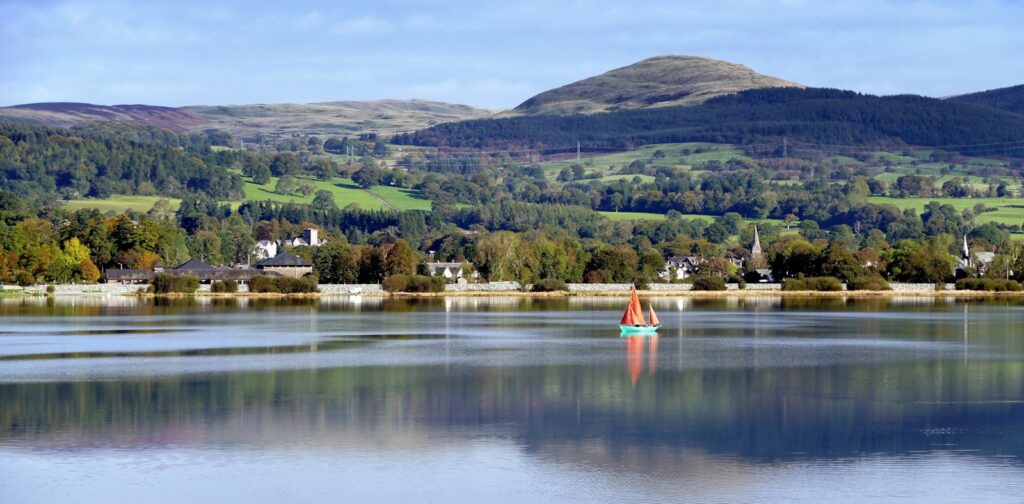
The gwyniad, a whitefish found only in Bala Lake (Llyn Tegid), evolved in isolation after the last ice age and exists nowhere else on Earth. This living relic of the ice age is now a protected species facing conservation challenges from invasive species and environmental change.
Bala Lake: A Complete Guide to Wales Largest Natural Lake
41. Puffins breed on Welsh islands
Skomer and Skokholm islands in Pembrokeshire host significant puffin colonies, with thousands of these charismatic seabirds returning each spring to breed. Boat trips from Martin’s Haven allow visitors to see puffins at close range during the breeding season from April to July.
42. Great Orme is home to a herd of wild Kashmir goats
The limestone headland above Llandudno supports a herd of approximately 200 Kashmir goats, descended from a pair given to Queen Victoria in the nineteenth century. The goats roam freely across the headland and occasionally venture into Llandudno town centre, particularly during bad weather.
Why you need to visit the Great Orme
Quirky Facts
43. Hay-on-Wye declared independence in 1977
The eccentric bookseller Richard Booth declared himself King of Hay and the town an independent kingdom in 1977, complete with its own passport and currency. While not officially recognised, the publicity helped transform Hay into the “Town of Books” with dozens of second-hand bookshops, and it now hosts the famous Hay Festival of literature annually.
44. The smallest house in Britain is in Conwy
The Quay House in Conwy measures just 72 inches wide and 122 inches high, making it the smallest house in Britain. The house was lived in until 1900, when the last occupant—a fisherman over six feet tall—was forced to leave because the building was deemed unfit for human habitation.
45. Wales has hosted the world bog snorkelling championship since 1976
Llanwrtyd Wells, which claims to be the smallest town in Britain, hosts the annual World Bog Snorkelling Championship. Competitors must complete two lengths of a 60-yard water-filled trench cut through a peat bog using only flippers—conventional swimming strokes are forbidden.
46. The world’s largest leek was grown in Wales
A leek weighing over 10 kilogrammes (22 pounds) was grown in Wales, demonstrating that the national vegetable can achieve impressive dimensions when cultivated competitively. Giant vegetable growing remains a popular pursuit at Welsh agricultural shows.
47. Portmeirion was built by one man over 50 years
The Italianate village of Portmeirion in Gwynedd was designed and built by the architect Sir Clough Williams-Ellis between 1925 and 1975. The colourful fantasy village, which served as the location for the cult television series The Prisoner, attracts visitors from around the world.
48. Wales has a town named after Marks & Spencer
Marksandspencer is a small hamlet near Llanrhystud in Ceredigion, named in honour of the retail chain. The story goes that when the village needed a name, residents chose to commemorate the company, though the exact circumstances remain debated.
49. Caerphilly cheese is one of the oldest British cheeses
Caerphilly cheese originated in the town of the same name in the early nineteenth century, created to provide a quick-ripening cheese that could be sold faster than traditional varieties. The crumbly, salty cheese was popular with miners who needed to replace salt lost through sweating. Most Caerphilly is now made in Somerset, though Welsh producers have revived traditional production.
Caerphilly: Where Medieval Might Meets Welsh Love and Pride
50. Wales has the only island off Britain where cars are banned
Caldey Island off the Pembrokeshire coast prohibits private motor vehicles, maintaining a peaceful atmosphere for the community of Cistercian monks who have lived there since 1929. Visitors can take boat trips from Tenby to explore the island, visit the monastery shop, and experience a tranquillity rare in the modern world.
Frequently Asked Questions About Wales
What is the capital of Wales?
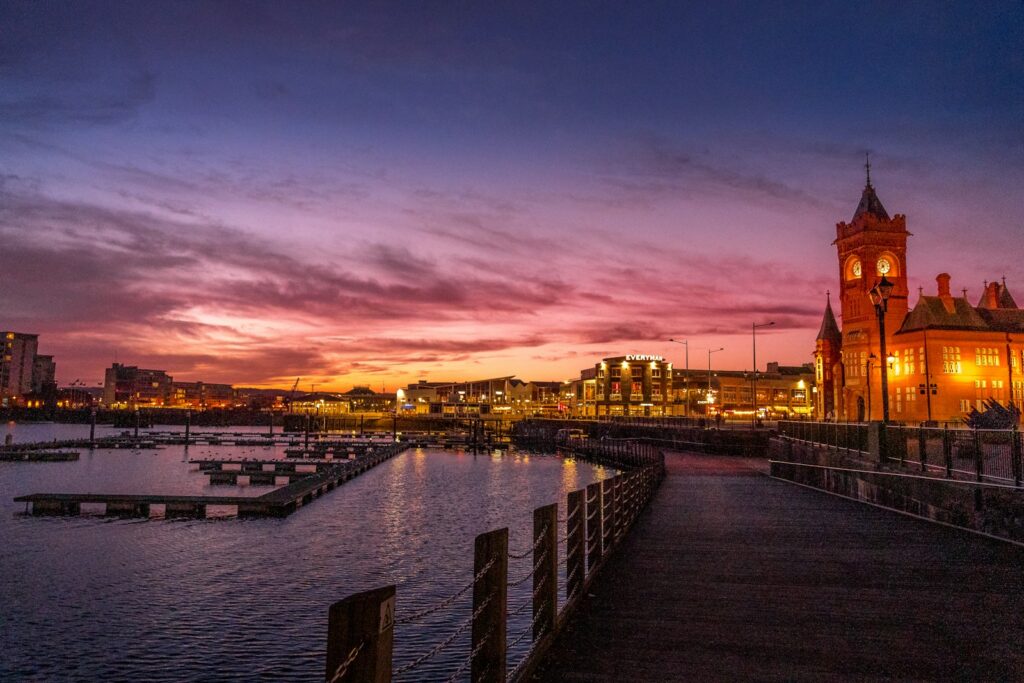
Cardiff (Caerdydd) is the capital of Wales and its largest city, with a population of approximately 360,000. Cardiff became the official capital in 1955 and is home to the Senedd (Welsh Parliament), the Principality Stadium, and numerous cultural institutions.
Historical Capitals of Wales: What Was the Capital Before Cardiff?
How big is Wales?
Wales covers approximately 8,023 square miles (20,779 square kilometres), making it slightly larger than Slovenia and slightly smaller than New Jersey. From north to south, the country measures approximately 170 miles, and from east to west around 60 miles at its widest point.
What is the population of Wales?
Wales has a population of approximately 3.1 million people. Around two-thirds live in the south, with significant populations in Cardiff, Swansea, and the valleys of the former coalfield.
What is the Population of Wales? Understanding Welsh Demographics
When did Wales become part of the United Kingdom?
Wales was annexed by England through the Laws in Wales Acts of 1535 and 1542 under Henry VIII. Wales has been part of the Kingdom of England and later the United Kingdom since that time, though it retained its distinct cultural identity and now has a devolved government with the Senedd.
Does Wales have its own government?
Yes, Wales has a devolved government with the Senedd (Welsh Parliament) in Cardiff Bay. The Senedd has powers over areas including health, education, transport, and the environment. The Welsh Government, led by the First Minister, is responsible for implementing policy in devolved areas.
What currency does Wales use?
Wales uses the British pound sterling (£), the same currency used throughout the United Kingdom. There are no separate Welsh banknotes as there are in Scotland.
Is Wales in England?
No, Wales is a separate country within the United Kingdom. Wales has its own distinct national identity, language, culture, and government. While Wales and England share a border and have been constitutionally linked since the sixteenth century, they are separate nations.
What language do they speak in Wales?
Both Welsh and English are official languages in Wales. Welsh is spoken by approximately 30 per cent of the population, with higher percentages in the north and west. All public signage in Wales is bilingual, and Welsh-medium education is available throughout the country.
What is Wales famous for?
Wales is famous for its castles, mountains, male voice choirs, rugby, the Welsh language, and distinctive cultural traditions. The country is also known for producing famous singers, actors, and sportspeople, and for its contributions to industry during the coal and slate eras.
What is the Welsh flag?
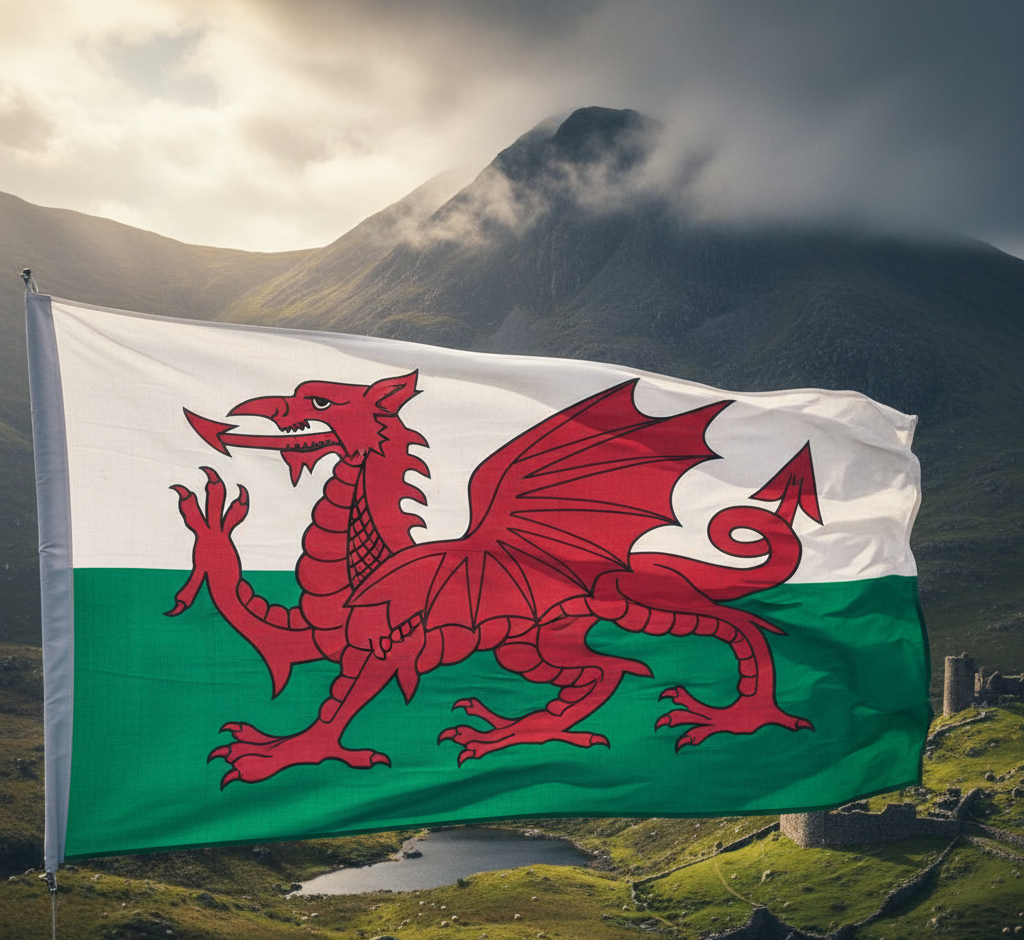
The Welsh flag features a red dragon (Y Ddraig Goch) on a green and white background. The dragon has been a symbol of Wales for over a thousand years and is one of the oldest national emblems still in use.
Wales Flag: Amazing Story Behind the Welsh Flag and Symbolic Strong Red Dragon
