
Article Summary
Ruthin Castle is a historic fortification in the Vale of Clwyd, Denbighshire, with origins dating back to 1277 when it was built during Edward I’s conquest of Wales. Today the castle operates as a luxury hotel set within extensive grounds, offering visitors the chance to stay in a building steeped in over 700 years of Welsh history. This guide covers the castle’s fascinating past, its role in the Welsh wars of independence, and practical information for those wishing to visit or stay at this remarkable property.
A Castle Between Two Worlds
Ruthin Castle occupies a strategic position in the Vale of Clwyd, one of the most fertile and fought-over valleys in Wales. For centuries, this land marked the boundary between the Welsh kingdoms of the interior and the English-controlled lowlands to the east. The castle that rises here today speaks to that contested history—a fortress built by English conquerors, attacked by Welsh rebels, and transformed over the centuries into the romantic ruin and luxury hotel that visitors encounter today.
The castle’s story encompasses some of the most dramatic episodes in Welsh history. It witnessed the opening shots of Owain Glyndŵr’s rebellion, survived sieges during the Civil War, and fell into picturesque decay before Victorian romantics began its resurrection. Today, guests can sleep in rooms where medieval lords once plotted, dine in halls that have hosted centuries of Welsh hospitality, and walk grounds where the fate of nations was contested.
Ruthin itself is one of the most attractive small towns in Wales, its medieval street pattern and timber-framed buildings creating an atmosphere that complements the castle perfectly. Together, the castle and town offer a glimpse into Welsh history that few places can match.
The Edwardian Conquest and the First Castle
The first castle at Ruthin was built in 1277 by Dafydd ap Gruffudd, brother of Llywelyn ap Gruffudd, the last native Prince of Wales. Dafydd had sided with the English king Edward I against his own brother, and Edward rewarded him with lands in the Vale of Clwyd. The castle Dafydd built was a Welsh fortress, constructed to Welsh designs and serving Welsh purposes—though in the service of an English king.
This uncomfortable arrangement did not last. In 1282, Dafydd turned against Edward and launched an attack on Hawarden Castle, igniting the final war between England and the Welsh princes. Edward’s response was swift and overwhelming. By 1283, Llywelyn was dead, Dafydd was captured and executed with terrible cruelty, and Welsh independence was extinguished.
Edward I set about consolidating his conquest with a programme of castle-building unprecedented in British history. The great fortresses of Caernarfon, Conwy, Harlech, and Beaumaris are the most famous products of this campaign, but Ruthin too was transformed. Edward granted the lordship of Ruthin to Reginald de Grey, one of his most trusted commanders, and de Grey rebuilt the castle to English designs.
The castle that de Grey constructed was a formidable stronghold. Built in red sandstone quarried locally, it featured the concentric defences and sophisticated military architecture that characterised Edwardian castle-building. Though smaller than the great royal fortresses of the coast, Ruthin Castle was designed to dominate the Vale of Clwyd and overawe any Welsh resistance.
The de Grey Lords of Ruthin
The de Grey family held Ruthin for over two centuries, and their tenure shaped both the castle and the town. They were not absentee landlords but active lords who developed their Welsh possessions and engaged deeply with local affairs—though always from the perspective of English conquerors ruling a subject population.
Under the de Greys, Ruthin grew into a prosperous market town. The lords granted charters, established markets and fairs, and encouraged English settlers to take up residence. The castle served as the administrative centre of the lordship, housing courts, collecting taxes, and projecting the power of the English crown into the Welsh interior.
The town that grew up around the castle was deliberately English in character. Welsh people were largely excluded from residence within the town walls, confined instead to the surrounding countryside. This apartheid-like arrangement was common in the planted towns of medieval Wales and bred resentment that would eventually explode into rebellion.
The de Grey lords lived in considerable style. The castle was not merely a military installation but a lordly residence, with halls for feasting, chambers for private life, chapels for worship, and gardens for recreation. Archaeological and historical evidence suggests a sophisticated household that maintained the standards expected of one of England’s leading baronial families.
Owain Glyndŵr and the Attack of 1400
The event for which Ruthin Castle is most famous occurred on 18 September 1400, when Owain Glyndŵr launched his rebellion against English rule with an attack on the town. The assault on Ruthin marked the beginning of the last and greatest Welsh war of independence, a conflict that would consume Wales for fifteen years.
The immediate cause of Glyndŵr’s revolt was a land dispute with Reginald de Grey, the lord of Ruthin. De Grey had seized lands that Glyndŵr claimed as his own, and when Glyndŵr sought justice through the English courts, he was rebuffed. The personal grievance combined with broader Welsh resentment of English discrimination and heavy taxation to create an explosive situation.
On that September day in 1400, Glyndŵr and his followers descended on Ruthin during the town’s fair, when the streets would have been crowded with traders and visitors. They burned the town and attacked the castle, though they were unable to take the fortress itself. Similar attacks followed on other English-held towns across northeast Wales.
The assault on Ruthin was a declaration of war. Within days, Glyndŵr was proclaimed Prince of Wales by his followers, and the rebellion spread across the country. For the next decade and a half, Wales was engulfed in warfare that saw Glyndŵr control most of the country at his peak, hold parliaments at Machynlleth and Harlech, and negotiate alliances with France and Scotland.
The castle at Ruthin survived the rebellion, though the lordship suffered greatly from the disruption. The de Greys eventually regained control, but the scars of the conflict—physical and psychological—took generations to heal.
The Later Medieval Castle
Following the Glyndŵr rebellion, Ruthin Castle continued as the seat of the de Grey lords, though the family’s fortunes fluctuated with the turbulent politics of fifteenth-century England. The Wars of the Roses drew the de Greys into factional conflicts that would eventually cost them their lordship.
The castle was maintained and updated during this period, adapting to changing standards of comfort and defence. The transition from purely military architecture to something approaching a fortified manor house was underway, reflecting the gradual pacification of Wales under Tudor rule.
In 1508, the Ruthin lordship passed to the crown when the de Grey line failed. Henry VII granted it to his mother, Lady Margaret Beaufort, and subsequently it was held by various crown appointees. The castle’s role shifted from baronial stronghold to administrative centre, though it retained its defensive capabilities.
The Reformation brought changes to the castle’s religious life. The medieval chapel, where generations of de Greys had worshipped, was adapted to Protestant use. The religious houses that had held lands in the lordship were dissolved, their properties passing to new owners who would reshape the landscape of the Vale of Clwyd.
The Civil War and Destruction
The English Civil War of the 1640s brought renewed conflict to Ruthin Castle. Wales was predominantly Royalist, and Ruthin declared for King Charles I. The castle was garrisoned and fortified, preparing to resist the Parliamentary forces that controlled much of England.
In 1646, Parliamentary troops under General Thomas Mytton besieged Ruthin Castle. The garrison held out for several weeks, but without hope of relief, they eventually surrendered. The terms were honourable—the defenders were allowed to march out with their weapons—but the castle itself was not so fortunate.
Following the war, Parliament ordered the slighting of Ruthin Castle, the deliberate destruction of its defences to prevent any future military use. The walls were breached, towers were demolished, and the buildings were rendered uninhabitable. This fate befell many castles across Britain as Parliament sought to eliminate the strongholds that had prolonged the conflict.
The destruction of 1646 transformed Ruthin Castle from a functioning fortress into a romantic ruin. For the next two centuries, the castle mouldered picturesquely, its red sandstone walls gradually succumbing to weather and vegetation while the town of Ruthin grew and prospered around it.
Victorian Revival
The nineteenth century brought a new sensibility to ruined castles. Where previous generations had seen only useless relics, the Victorians perceived romance, history, and picturesque beauty. Ruthin Castle, with its dramatic silhouette and historical associations, attracted attention from antiquarians, artists, and eventually developers.
In 1826, the castle ruins and surrounding land were purchased by Frederick West, who began transforming the site. West built a new castellated mansion incorporating elements of the medieval ruins, creating the hybrid structure that forms the core of today’s hotel. The Victorian building was designed in a Gothic Revival style that complemented the genuine medieval remains while providing the comforts expected by nineteenth-century gentility.
The grounds were landscaped in the romantic manner, with walks and viewpoints designed to show the castle ruins to best advantage. Gardens were created, trees were planted, and the setting was transformed from a scene of neglect into a gentleman’s estate worthy of the Picturesque movement.
Subsequent owners continued the development. The castle passed through various hands, each adding to or modifying the Victorian mansion while preserving its medieval core. By the late nineteenth century, Ruthin Castle had been fully transformed from abandoned ruin to prestigious residence.
The Castle as Hotel
The twentieth century brought further changes to Ruthin Castle’s fortunes. The economics of maintaining large country houses became increasingly challenging, and like many such properties, Ruthin Castle eventually found a new life as a hotel.
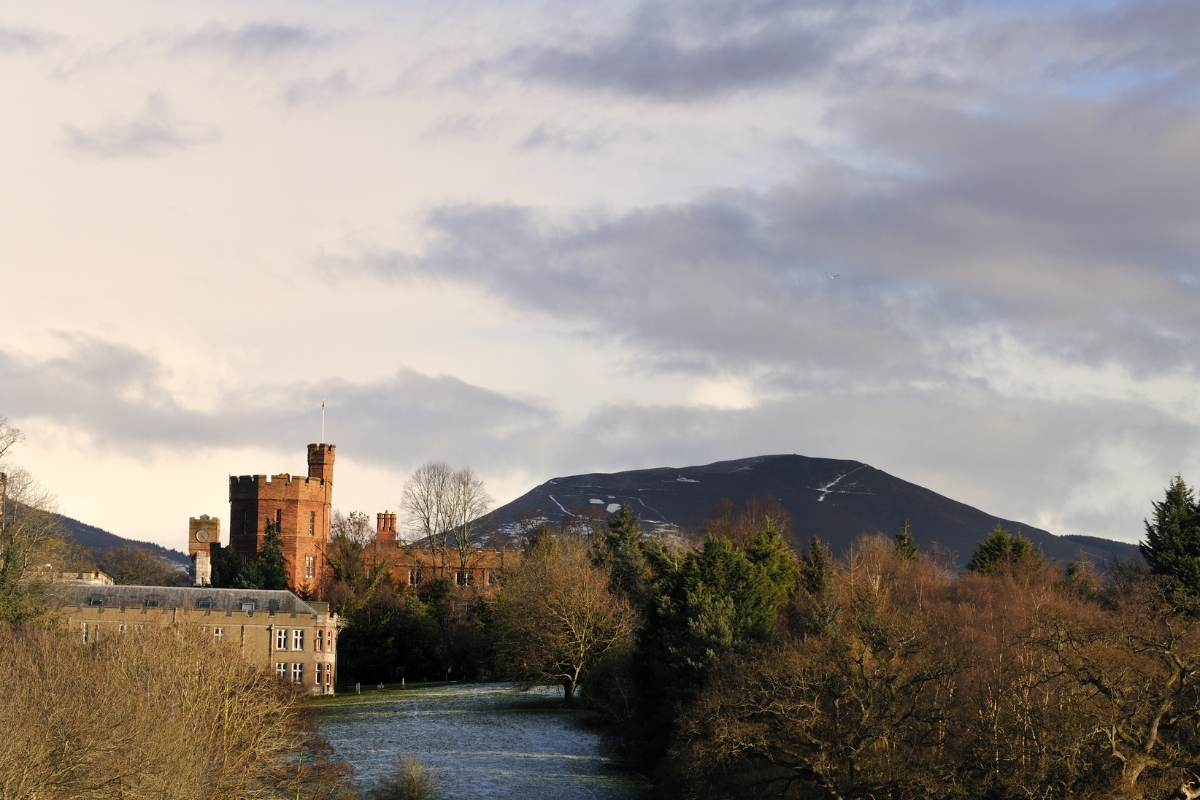
The castle has operated as a hotel since 1963, offering visitors the opportunity to stay in a building of genuine historical significance. The conversion preserved the Victorian interiors while adding the facilities expected by modern guests. Medieval ruins stand alongside Victorian architecture and contemporary comforts in a combination that captures the castle’s layered history.
Today, Ruthin Castle Hotel offers luxury accommodation in a setting unlike any conventional hotel. Guests can sleep in four-poster beds, dine in the medieval banqueting hall, and wander grounds where seven centuries of Welsh history unfolded. The castle hosts weddings, conferences, and special events, continuing its age-old role as a centre of hospitality and celebration.
The ruins of the medieval castle remain visible within the grounds, a reminder of the fortress that once dominated the Vale of Clwyd. Interpretation panels explain the history, and guests are free to explore the atmospheric remains of towers, walls, and chambers that witnessed the great events of Welsh medieval history.
The Castle Grounds
The grounds of Ruthin Castle extend to some 30 acres, encompassing formal gardens, woodland, and the medieval castle ruins. The landscape combines Victorian design with older elements, creating an environment that rewards exploration.
The formal gardens near the hotel feature lawns, herbaceous borders, and specimen trees planted over the past two centuries. Peacocks, a traditional feature of castle grounds, wander freely, adding colour and character to the scene. The gardens provide an attractive setting for outdoor events and a peaceful retreat for hotel guests.
Beyond the formal areas, woodland walks lead through more naturalistic planting to viewpoints overlooking the Vale of Clwyd. The surrounding landscape is one of the most beautiful in Wales—a broad, fertile valley framed by the Clwydian Range to the east and the hills of Denbighshire to the west.
The medieval ruins are accessible within the grounds, allowing visitors to explore the remains of the Edwardian fortress. Though much was destroyed during the Civil War slighting, substantial portions survive, including sections of curtain wall, tower bases, and the outlines of buildings. Standing among these ruins, with the Victorian hotel rising behind and the Welsh hills on the horizon, visitors can sense the weight of history that this place carries.
Medieval Banquets
Ruthin Castle has become famous for its medieval banquets, theatrical dining experiences that transport guests back to an imagined medieval past. These events have run for decades and have introduced countless visitors to the castle and its history.
The banquets take place in the castle’s medieval-themed banqueting hall, where guests are welcomed by costumed performers, served traditional fare, and entertained with music, song, and historical spectacle. The experience is unashamedly theatrical—more Hollywood medieval than historically accurate—but it delivers an entertaining evening that has proved enduringly popular.
The banquets are particularly popular with tour groups, corporate events, and celebration parties. They offer a form of entertainment that draws on the castle’s genuine history while providing the kind of immersive experience that modern visitors enjoy. For many guests, the medieval banquet serves as an introduction to Welsh history and the castle’s remarkable past.
Booking is essential for the medieval banquets, which run on scheduled evenings throughout the year. The castle also offers more conventional dining options for those preferring a quieter meal.
Ruthin Town
The castle cannot be understood in isolation from the town that grew up around it. Ruthin is one of the best-preserved medieval towns in Wales, and its streets and buildings complement the castle perfectly.
The town’s medieval layout survives largely intact, with narrow streets converging on St Peter’s Square, where the old courthouse and medieval buildings create an atmospheric centrepiece. The square hosts a regular market continuing a tradition that began under the de Grey lords.
Timber-framed buildings line the streets, their distinctive black-and-white facades dating from the fifteenth and sixteenth centuries. These structures, built during Ruthin’s prosperous Tudor period, give the town a character reminiscent of Chester or Shrewsbury—English border towns with which Ruthin shares much history.
St Peter’s Church, founded in the thirteenth century and rebuilt in the fifteenth, contains treasures including a remarkable medieval roof carved with hundreds of panels depicting religious and secular scenes. The church rewards careful exploration and speaks to the wealth and piety of medieval Ruthin.
Nantclwyd y Dre, reputedly the oldest timber-framed townhouse in Wales, has been restored and opened as a heritage attraction. The building tells the story of Ruthin’s domestic life across five centuries, from medieval merchant’s house to Victorian residence.
The Old Gaol, a Victorian prison built on the site of an earlier lock-up, has been converted into a museum exploring the history of crime and punishment in Wales. The combination of sober historical interpretation and the atmospheric prison buildings makes for a memorable visit.
Together, the castle and town offer a day’s exploration for visitors interested in Welsh history. The castle provides the grand narrative of conquest and rebellion, while the town reveals the texture of everyday life across the centuries.
Why You Should Visit Ruthin Castle
Living History
Few places in Wales offer such a direct connection to the great events of medieval history. Walking the grounds where Glyndŵr’s rebels attacked, standing among ruins that witnessed centuries of conflict, or dining in halls where medieval lords once feasted—Ruthin Castle makes history tangible in a way that museums and books cannot match.
Architectural Interest
The castle presents a fascinating architectural palimpsest, with medieval ruins, Victorian Gothic Revival mansion, and modern hotel facilities layered together. For those interested in how buildings evolve and adapt over time, Ruthin Castle offers a compelling case study.
Beautiful Setting
The Vale of Clwyd is one of the most attractive landscapes in Wales, and Ruthin Castle commands views across its full extent. The combination of historic architecture and natural beauty creates a setting that rewards both brief visits and extended stays.
Luxury Accommodation
For those seeking accommodation with character, Ruthin Castle Hotel offers a unique experience. Sleeping in a genuine medieval castle, surrounded by centuries of history, provides memories that no chain hotel can match.
Gateway to North Wales
Ruthin’s central location makes it an excellent base for exploring north Wales. The castles of the coast, the mountains of Snowdonia, and the heritage towns of the border are all within easy reach. A stay at Ruthin Castle combines historical immersion with practical access to the region’s attractions.
Planning Your Visit
Visiting the Castle
Ruthin Castle operates primarily as a hotel, but non-residents can visit the grounds and medieval ruins. The castle welcomes visitors for afternoon tea, dining, and the medieval banquets. Contacting the hotel in advance to confirm access and opening arrangements is advisable.
The medieval banquets require advance booking and run on scheduled evenings. These theatrical dining experiences provide an entertaining introduction to the castle’s history, though they should be understood as entertainment rather than strict historical recreation.
Staying at the Castle
Ruthin Castle Hotel offers accommodation ranging from standard rooms to luxury suites. Many rooms feature four-poster beds, period furnishings, and views over the grounds or the Vale of Clwyd. The hotel caters to leisure guests, weddings, and corporate events.
Booking directly with the hotel or through major travel websites is straightforward. Peak periods, particularly around bank holidays and during the summer season, may require advance reservation.
Getting to Ruthin
Ruthin lies in Denbighshire, approximately eight miles from the A55 North Wales Expressway. The town is well signposted from the main road, and the castle is easily found within Ruthin itself. The postcode for satellite navigation is LL15 2NU.
The nearest railway stations are Rhyl on the coast, approximately 12 miles distant, and Wrexham to the east. Bus services connect Ruthin with surrounding towns, though frequencies may be limited. A car is the most practical means of reaching the castle for most visitors.
Exploring Ruthin Town
A visit to the castle combines naturally with exploration of Ruthin town. The walk from the town centre to the castle takes only a few minutes, and the town’s attractions—St Peter’s Church, Nantclwyd y Dre, the Old Gaol, and the medieval streetscape—merit at least a half-day’s exploration.
The town offers cafés, pubs, and restaurants for refreshment, along with independent shops selling antiques, crafts, and local products. The weekly market provides an opportunity to purchase local produce and experience a tradition that has continued since medieval times.
Nearby Attractions
Ruthin Castle serves as an excellent base for exploring northeast Wales. Nearby attractions include:
Denbigh Castle – Another Edwardian fortress, crowning a hilltop town approximately seven miles to the north.
Llangollen – A picturesque town on the River Dee, home to the International Musical Eisteddfod and the heritage Llangollen Railway.
The Clwydian Range – An Area of Outstanding Natural Beauty offering excellent walking with panoramic views across the Vale of Clwyd.
Valle Crucis Abbey – A ruined Cistercian abbey near Llangollen, one of the most atmospheric monastic sites in Wales.
Erddig – A National Trust property near Wrexham, remarkable for its servants’ quarters and social history.
Frequently Asked Questions About Ruthin Castle
Where is Ruthin Castle located?
Ruthin Castle is located in the market town of Ruthin in Denbighshire, north Wales. It sits in the Vale of Clwyd, approximately eight miles from the A55 North Wales Expressway and around 25 miles west of Chester.
How old is Ruthin Castle?
The first castle at Ruthin was built in 1277, making the site over 700 years old. The medieval fortress was largely destroyed during the Civil War in 1646, and the current building incorporates Victorian additions built from 1826 onwards around the medieval ruins.
Who built Ruthin Castle?
The first castle was built by Dafydd ap Gruffudd in 1277. After Edward I’s conquest of Wales, the castle was rebuilt by Reginald de Grey, who was granted the lordship of Ruthin in 1282. The Victorian mansion was built by Frederick West from 1826.
What is the connection between Ruthin Castle and Owain Glyndŵr?
Owain Glyndŵr attacked Ruthin on 18 September 1400, marking the beginning of his rebellion against English rule. The attack was sparked partly by a land dispute between Glyndŵr and Reginald de Grey, the lord of Ruthin. Though the town was burned, the castle itself was not taken.
Can you stay at Ruthin Castle?
Yes, Ruthin Castle operates as a luxury hotel offering accommodation in rooms and suites, many featuring four-poster beds and period furnishings. The hotel also hosts weddings, conferences, and special events.
Can you visit Ruthin Castle without staying?
Yes, non-residents can visit for afternoon tea, dining, or the medieval banquets. The grounds and medieval ruins are accessible to visitors, though contacting the hotel in advance to confirm arrangements is advisable.
What are the medieval banquets at Ruthin Castle?
The medieval banquets are theatrical dining experiences featuring costumed performers, traditional fare, and historical entertainment. Running for decades, these events have become one of the castle’s most popular attractions. Advance booking is essential.
Is Ruthin Castle haunted?
Ruthin Castle has a reputation for paranormal activity, with reported sightings including a ghostly lady in grey. The castle has featured in ghost-hunting television programmes and offers ghost experience events for those interested in the supernatural.
What happened to Ruthin Castle during the Civil War?
Ruthin Castle was held for King Charles I during the Civil War and was besieged by Parliamentary forces in 1646. After the garrison surrendered, Parliament ordered the castle slighted—its defences deliberately destroyed to prevent future military use.
Is there parking at Ruthin Castle?
Yes, Ruthin Castle Hotel has parking for guests and visitors. The car park is located within the castle grounds.
What is there to see in Ruthin town?
Ruthin town offers medieval timber-framed buildings, St Peter’s Church with its remarkable carved roof, Nantclwyd y Dre heritage house, the Old Gaol museum, and a traditional market square. The town is one of the best-preserved medieval settlements in Wales.
How far is Ruthin Castle from Snowdonia?
Ruthin is approximately 25 miles from the northern fringes of Snowdonia National Park, making it a practical base for exploring both the Vale of Clwyd and the Welsh mountains.
Can you get married at Ruthin Castle?
Yes, Ruthin Castle is licensed for civil ceremonies and hosts weddings throughout the year. The castle offers various packages combining the ceremony, reception, and accommodation for wedding parties.
What is the best time to visit Ruthin Castle?
Ruthin Castle welcomes visitors year-round. Summer offers the best weather for exploring the grounds, while winter brings atmospheric conditions and festive events. The medieval banquets run throughout the year on scheduled evenings.
Is Ruthin Castle dog-friendly?
The hotel welcomes dogs in certain rooms and areas. Guests travelling with dogs should contact the hotel when booking to confirm arrangements and any restrictions that may apply.
How far is Ruthin Castle from Chester?
Ruthin Castle is approximately 25 miles from Chester, around 40 minutes by car via the A494 and A55.
