
Article Summary
Borth Beach is a dramatic three-mile stretch of sand and shingle on the Cardigan Bay coast of mid-Wales, famous for its prehistoric submerged forest, excellent surfing conditions, and unspoilt natural character. This traditional Welsh seaside village offers a wilder alternative to more developed resorts, with stunning views across to the Llŷn Peninsula and access to the Dyfi National Nature Reserve. This guide covers everything visitors need to know about Borth Beach, from its fascinating geological history and wildlife to practical information for planning your visit.
Where the Mountains Meet the Sea
Borth occupies one of the most striking coastal locations in Wales, a long ribbon of village stretched along a shingle ridge where the hills of mid-Wales finally yield to Cardigan Bay. To the north, the beach extends towards the Dyfi Estuary and the distant peaks of Snowdonia. To the south, cliffs rise towards Aberystwyth. And beneath the sand, visible at low tide, lie the remains of an ancient forest that drowned four thousand years ago.
This is not a manicured resort beach with promenades and amusement arcades. Borth retains a wildness that has largely vanished from the British coast—a place where Atlantic storms crash against the shore, where the sky seems impossibly vast, and where the boundary between land and sea feels provisional and ever-shifting. Visitors come here for space, fresh air, and the kind of elemental coastal experience that more developed destinations cannot offer.
The village itself has a pleasingly unpolished character. A single main street runs parallel to the beach, lined with a mixture of Victorian boarding houses, twentieth-century bungalows, and the occasional older cottage. There are no chain stores, no multiplex cinemas, no crowds pushing along congested pavements. Borth offers instead the quiet pleasures of a traditional Welsh seaside community that has resisted the pressures of mass tourism.
The Submerged Forest
Borth’s most remarkable feature lies not on the beach but beneath it. At low tide, particularly after storms have shifted the sand, the stumps and roots of an ancient forest emerge from the beach—a prehistoric landscape preserved for millennia beneath the waves.
The submerged forest dates from the Bronze Age, around 4,500 years ago, when sea levels were significantly lower than today. What is now Cardigan Bay was then a wooded lowland, home to communities of early farmers who worked the land and hunted in the forests. Oak, pine, birch, willow, and alder grew where waves now break, and peat deposits preserve the remains of the plants and animals that lived among them.
As sea levels rose following the last Ice Age, the forest was gradually inundated. The trees died and fell, but the waterlogged, anaerobic conditions of the peat preserved their remains. Today, the stumps stand as silent witnesses to a lost landscape, their gnarled forms exposed when tide and weather conditions align.
Walking among the submerged forest is an eerie and moving experience. The stumps, blackened by millennia underwater, are clearly recognisable as trees—you can see the grain of the wood, the patterns of roots spreading into the ancient soil. Some stumps stand waist-high; others are barely visible above the sand. The forest extends for a considerable distance along the beach, revealing itself gradually as you walk.
The submerged forest has fuelled local legends for centuries. Welsh mythology speaks of Cantre’r Gwaelod, a drowned kingdom that once occupied Cardigan Bay. According to the legend, the land was protected by sea walls and sluice gates, but a keeper named Seithennin, drunk at a feast, neglected his duties and allowed the sea to flood in. The kingdom was lost beneath the waves, its bells still audible on stormy nights.
Like many legends, the story of Cantre’r Gwaelod contains a kernel of truth. The coastline of Cardigan Bay has changed dramatically over the millennia, and communities have certainly been displaced by rising seas. The submerged forest at Borth provides tangible evidence of this lost landscape, giving physical form to stories passed down through generations.
Visitors wishing to see the submerged forest should check tide times and visit at low tide, ideally during spring tides when the water retreats furthest. The forest is most visible after storms, which scour away the overlying sand. The stumps are fragile and protected—visitors should look but not touch or remove any material.
The Beach
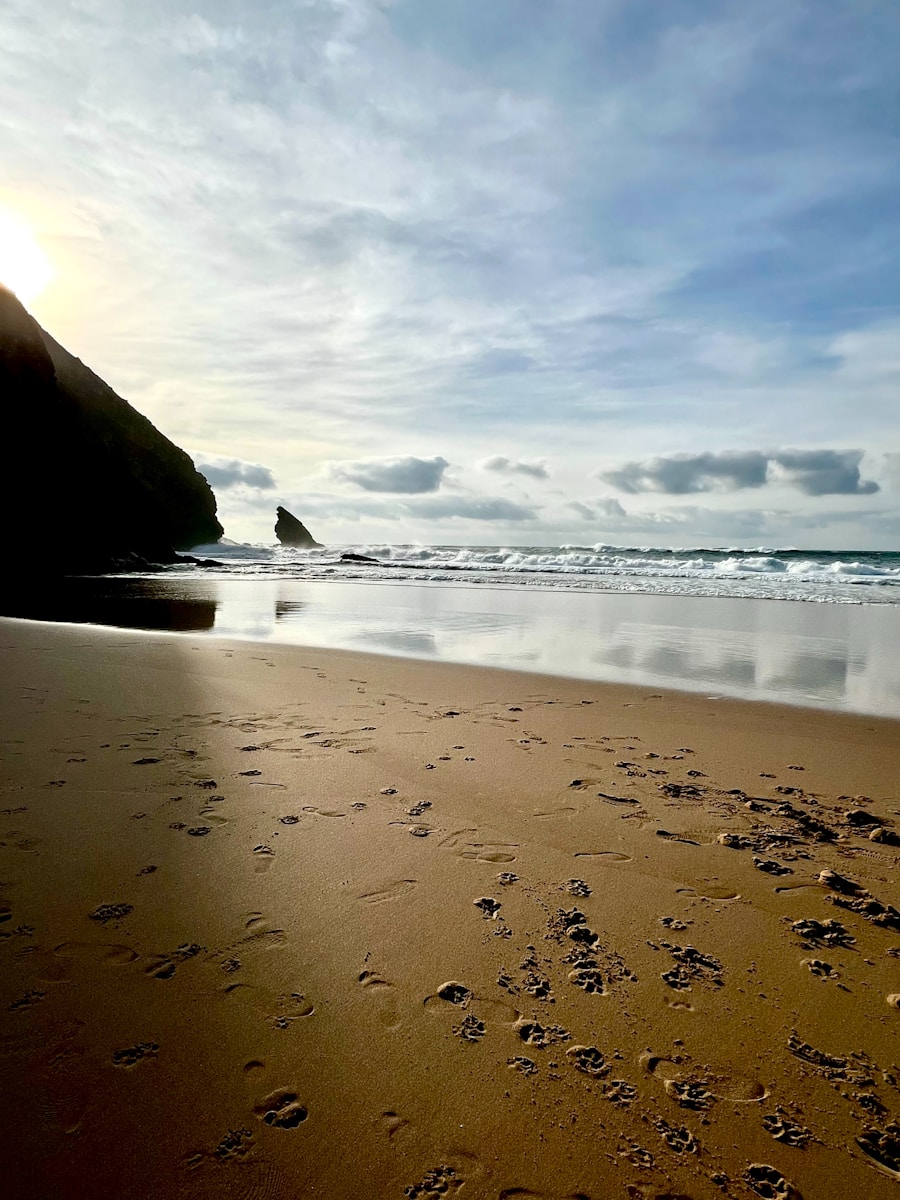
Borth Beach stretches for approximately three miles, from the rocky outcrops below Upper Borth in the south to the mouth of the Dyfi Estuary in the north. The character of the beach changes along its length, offering different experiences depending on where you choose to walk.
The southern section, nearest the village centre, features a mixture of sand and shingle. This is the most accessible part of the beach, with easy access from the village street and the greatest concentration of facilities. The shingle ridge that protects the village from the sea is most prominent here, a natural barrier that has been reinforced over the years to protect against flooding.
Moving northward, the beach becomes sandier and the dunes more prominent. This central section offers excellent walking, with firm sand at low tide extending towards the distant mountains of Snowdonia visible on the northern horizon. The sense of space here is remarkable—on quiet days, you may have hundreds of metres of beach to yourself, with only seabirds for company.
The northern end of the beach merges into the Dyfi Estuary, where the character changes again. Sand gives way to saltmarsh and mudflat, and the birdlife becomes increasingly abundant. This area lies within the Dyfi National Nature Reserve, and access may be restricted during sensitive periods for wildlife.
The beach faces west into Cardigan Bay, receiving the full force of Atlantic weather systems. This exposure gives Borth its character—the big skies, the powerful waves, the sense of being at the edge of things. It also means conditions can change rapidly, and visitors should be prepared for wind and rain even in summer.
Surfing at Borth
Borth has established itself as one of the better surfing destinations on the Welsh coast, attracting wave-riders who appreciate its consistent swells and uncrowded waters. The beach break works across a range of conditions, producing waves suitable for beginners through to experienced surfers.
The best waves typically arrive between autumn and spring, when Atlantic low-pressure systems send swells rolling into Cardigan Bay. Winter surfing at Borth can be excellent, with powerful waves and empty lineups for those willing to brave the cold water. Wetsuits are essential year-round—water temperatures in Cardigan Bay rarely exceed the mid-teens even in high summer.
The beach break character means that sandbars shift constantly, and the quality of waves varies accordingly. Local knowledge helps in finding the best peaks, and the small community of regular surfers is generally welcoming to visitors who show respect for the lineup.
For beginners, Borth offers gentler conditions during summer and on smaller swells. The beach’s gradual gradient makes it suitable for learning, and surf schools operate during the season offering lessons and equipment hire. The Borth Surf School has taught generations of visitors to stand up on their first waves.
Beyond surfing, the beach offers opportunities for bodyboarding, stand-up paddleboarding, and sea swimming. The same exposure that brings good waves also brings currents and hazards, so water users should exercise appropriate caution and be aware of local conditions.
The Village
Borth village stretches along the coast for approximately a mile, its buildings strung along the High Street that runs parallel to the beach. The settlement has a linear character quite different from the clustered villages typical of inland Wales, shaped by the narrow strip of land between the hills and the sea.
The village’s origins lie in fishing and farming, though by the Victorian era it had begun to attract visitors seeking sea air and bathing. The railway arrived in 1863, connecting Borth to Aberystwyth and the wider network, and the village developed as a modest resort serving visitors from the industrial towns of the English Midlands.
Much of the architecture dates from this Victorian and Edwardian period—three-storey boarding houses and hotels that once accommodated the seasonal influx of holidaymakers. The trade has diminished since the mid-twentieth century heyday of the British seaside holiday, and some buildings show the effects of reduced investment. But this slightly faded quality contributes to Borth’s charm, distinguishing it from more polished resorts that have sacrificed character for commercial appeal.
The High Street offers the services visitors need without excessive commercialisation. A general store supplies groceries and beach essentials. Fish and chip shops provide the quintessential seaside meal. Cafés serve tea, coffee, and home-cooked food. Pubs offer refreshment and conviviality after a day on the beach. There are no chain retailers, no identical high street names—just independent businesses serving locals and visitors alike.
The Animalarium, located at the northern end of the village, provides a family attraction focused on animal welfare and conservation. Housing rescued and rehomed animals from around the world, it offers an alternative to beach-based activities and supports important conservation work.
Ynyslas and the Dyfi National Nature Reserve
At the northern end of Borth Beach, the landscape transitions into one of the most important nature conservation sites in Wales. Ynyslas, a peninsula of sand dunes extending into the Dyfi Estuary, forms part of the Dyfi National Nature Reserve—a landscape of exceptional ecological significance.
The dune system at Ynyslas is one of the finest in Wales, a dynamic landscape shaped by wind and tide. Mobile dunes near the beach give way to more stable vegetated dunes inland, and the succession of habitats supports a remarkable diversity of plant and animal life.
In summer, the dune slacks—the low-lying areas between dune ridges—are carpeted with wildflowers. Orchids are particularly notable, with species including marsh helleborine, early marsh orchid, and the rare fen orchid. Sea holly, with its distinctive blue-grey spiny leaves, colonises the more exposed areas, while the fixed dunes support rich grassland communities.
The estuary itself is internationally important for wading birds and wildfowl. At low tide, vast mudflats provide feeding grounds for oystercatchers, curlews, redshanks, and dunlins. In winter, the estuary hosts significant numbers of wigeon, teal, and other wildfowl. The spectacle of thousands of birds feeding and roosting against the backdrop of the Welsh hills is one of the great wildlife experiences of the British coast.
A visitor centre at Ynyslas provides information about the reserve and its wildlife. Guided walks are offered during the season, and interpretation panels along the trails explain the ecology and management of this special place. The centre also offers views across the estuary towards the Dyfi Osprey Project site, where ospreys have bred since returning to Wales in 2011.
Access to parts of the reserve may be restricted during sensitive periods, particularly the bird breeding season. Visitors should check current arrangements and follow any guidance to minimise disturbance to wildlife.
Walking and Wildlife
Beyond the beach and dunes, Borth offers excellent walking in the surrounding landscape. The Wales Coast Path passes through the village, providing well-marked routes north towards Aberdyfi and south towards Aberystwyth. The Ceredigion section of the coast path is one of the finest in Wales, combining coastal drama with relatively gentle terrain.
Heading south from Borth, the coast path climbs onto the cliffs that lead towards Aberystwyth. The walking here is spectacular, with views across Cardigan Bay and inland to the Cambrian Mountains. The path passes through farmland and along cliff tops, offering a different perspective on the coast from the beach-level experience.
Northward, the path crosses the Dyfi Estuary—by ferry in summer, by the road bridge at other times—and continues towards Aberdyfi and the southern fringes of Snowdonia. This section combines coastal walking with the estuarine landscape, offering abundant birdwatching opportunities.
The hills behind Borth provide further walking possibilities. The village sits at the western end of the Cambrian Mountains, and footpaths climb into the uplands offering increasingly expansive views. The walking here is more demanding than the coastal paths, suitable for those seeking a proper hill day.
Wildlife is abundant throughout the area. In addition to the birds of the estuary and coast, visitors may encounter grey seals offshore, dolphins in Cardigan Bay, and the varied wildlife of the dunes and marshes. Red kites, once rare but now common across mid-Wales, are frequently seen soaring over the village and surrounding countryside.
The Railway
Borth station sits on the Cambrian Coast Line, one of the most scenic railway journeys in Britain. The line runs from Shrewsbury through mid-Wales to Aberystwyth, with a branch continuing along the coast to Pwllheli. Borth lies on the coastal section, between Aberystwyth to the south and Dovey Junction to the north.
The railway transformed Borth in the nineteenth century, connecting this remote village to the wider world and bringing the visitors who would shape its development as a resort. Today, the line continues to serve both locals and visitors, offering a relaxed and scenic alternative to driving.
Arriving at Borth by train is a pleasure in itself. The line hugs the coast for much of its route, offering views across Cardigan Bay that drivers, focused on the road, must miss. The approach to Borth passes along the edge of the Dyfi Estuary, with the village appearing as a line of buildings stretched along the shore.
The station is conveniently located in the centre of the village, within easy walking distance of the beach and local facilities. Services run several times daily, connecting Borth with Aberystwyth (approximately 15 minutes), Machynlleth (approximately 20 minutes), and the wider rail network via Shrewsbury.
For visitors without cars, the railway makes Borth accessible in a way that many comparable coastal locations are not. Combined with the Wales Coast Path, it allows for linear walks that end at a different station from where they began—avoiding the need to retrace your steps.
Practical Information for Visitors
Getting to Borth
By train: Borth station is served by Transport for Wales services on the Cambrian Coast Line. Trains run from Shrewsbury, Birmingham, and connecting services from elsewhere. The journey from Shrewsbury takes approximately two hours, from Aberystwyth around 15 minutes.
By car: Borth lies on the B4353 coast road between Aberystwyth and Machynlleth. From the A487 trunk road, follow signs for Borth at Tre’r Ddôl (from the north) or at Bow Street (from the south). The village is approximately six miles north of Aberystwyth. Sat nav postcode: SY24 5JA.
By bus: Bus services connect Borth with Aberystwyth and Machynlleth, though frequencies may be limited. Check current timetables before travelling.
Parking
Parking is available in the village, including a car park near the beach at the northern end. Street parking is possible along the High Street, though spaces can be limited during busy periods. During summer weekends and school holidays, arriving early is advisable.
The car park at Ynyslas serves visitors to the dunes and nature reserve, a short drive or longer walk from Borth village.
Accommodation
Borth offers a range of accommodation including bed and breakfasts, holiday cottages, and caravan parks. The Victorian and Edwardian guesthouses along the High Street provide traditional seaside accommodation, while self-catering options in the village and surrounding area suit those preferring independence.
The caravan parks at Borth and Ynyslas cater to visitors with touring caravans and motorhomes, as well as offering static caravan hire. These parks provide an affordable option for families and groups.
Booking ahead is advisable during summer and school holidays. Outside peak season, accommodation is generally readily available.
Eating and Drinking
The village offers a selection of cafés, pubs, and takeaways. Fish and chips remain the classic beach meal, available from several establishments. Cafés serve breakfast, lunch, and afternoon tea, often featuring local produce. The village pubs provide evening meals and refreshment throughout the day.
For more extensive dining options, Aberystwyth is approximately six miles south and offers a wider range of restaurants and cuisines.
Facilities
Borth has public toilets near the beach, a general store for supplies, and the essential services visitors require. The village is not heavily commercialised—those seeking extensive shopping or entertainment facilities should look to Aberystwyth.
The beach is not lifeguarded. Swimmers and water users should assess conditions carefully and be aware of currents and hazards. The beach’s exposed position means conditions can change rapidly.
Best Time to Visit
Summer brings the warmest weather and longest days, ideal for beach activities and walking. The village is busiest during school holidays, and accommodation should be booked well in advance.
Autumn offers excellent surfing conditions as Atlantic swells increase. The crowds diminish, and the landscape takes on golden and russet tones. This can be an ideal time for those seeking quieter conditions.
Winter transforms Borth into a dramatic, elemental landscape. Storms provide spectacular wave-watching, and the beach takes on a wild beauty quite different from summer. Accommodation is readily available, and the village offers a retreat from the bustle of everyday life.
Spring sees the return of migratory birds, the emergence of wildflowers in the dunes, and lengthening days. The beach is quiet before the summer season begins, and the surrounding countryside comes alive with new growth.
Tides and the Submerged Forest
Visitors wishing to see the submerged forest should plan around the tides. The forest is most visible at low tide, particularly during spring tides when the water retreats furthest. Tide tables are available online and at local businesses. The stumps are more prominent after storms have scoured away overlying sand.
The forest is a scheduled ancient monument—visitors should not remove any material or disturb the remains. Photography is welcome, but please respect this fragile and irreplaceable archaeological site.
Nearby Attractions
Aberystwyth
The largest town in mid-Wales, Aberystwyth lies six miles south of Borth and offers shops, restaurants, cultural attractions, and the Aberystwyth Cliff Railway. The National Library of Wales, one of the copyright libraries of the United Kingdom, is located here.
Machynlleth
The ancient capital of Wales, where Owain Glyndŵr held parliament in 1404, lies approximately ten miles north of Borth. The town offers the Centre for Alternative Technology, MOMA Machynlleth, and a vibrant market town atmosphere.
Devil’s Bridge
A spectacular gorge and waterfall system lies inland from Aberystwyth, accessible via the Vale of Rheidol Railway—a narrow-gauge heritage line offering one of the finest railway journeys in Wales.
Dyfi Osprey Project
Located at Cors Dyfi nature reserve, a few miles north of Borth, the project offers the chance to watch breeding ospreys during spring and summer via live camera feeds and viewing facilities.
Ynys-hir RSPB Reserve
This Royal Society for the Protection of Birds reserve lies across the Dyfi Estuary from Borth, offering excellent birdwatching in a variety of habitats including woodland, saltmarsh, and wetland.
Frequently Asked Questions About Borth Beach
Where is Borth Beach located?
Borth Beach is located on the Cardigan Bay coast of mid-Wales, in Ceredigion. The village lies approximately six miles north of Aberystwyth and ten miles southwest of Machynlleth, accessed via the B4353 coast road.
What is the submerged forest at Borth?
The submerged forest is the preserved remains of trees that grew on the site approximately 4,500 years ago, before rising sea levels flooded the area. The stumps and roots of oak, pine, birch, and other trees emerge from the sand at low tide, providing visible evidence of the prehistoric landscape.
When can you see the submerged forest at Borth?
The submerged forest is visible at low tide, particularly during spring tides and after storms have scoured away the overlying sand. Check tide tables and plan your visit for low water to maximise your chances of seeing the ancient stumps.
Is Borth Beach good for surfing?
Yes, Borth is one of the better surfing beaches in mid-Wales. The beach break produces consistent waves suitable for all abilities, with the best conditions typically between autumn and spring. Surf schools operate during the season for beginners.
Is Borth Beach sandy?
Borth Beach features a mixture of sand and shingle. The southern section near the village has more shingle, while the central and northern sections become sandier. At low tide, extensive sandy areas are exposed.
Are dogs allowed on Borth Beach?
Dogs are welcome on Borth Beach, though seasonal restrictions may apply in certain areas during summer months. Check local signage for current regulations. Outside peak season, dogs typically have access to the entire beach.
Is there parking at Borth Beach?
Yes, parking is available in the village including a car park near the beach. Street parking is also possible along the High Street. During busy periods, spaces can be limited, so early arrival is advisable in summer.
Does Borth have a train station?
Yes, Borth station is served by Transport for Wales services on the Cambrian Coast Line. Trains connect Borth with Aberystwyth, Machynlleth, Shrewsbury, and the wider rail network.
Can you swim at Borth Beach?
Swimming is possible at Borth Beach, but there are no lifeguards. The beach is exposed to Atlantic swells, and currents can be strong. Swimmers should assess conditions carefully and be aware of potential hazards.
What is Ynyslas?
Ynyslas is a sand dune peninsula at the northern end of Borth Beach, forming part of the Dyfi National Nature Reserve. The dunes support exceptional wildlife including rare orchids and breeding birds. A visitor centre provides information about the reserve.
What wildlife can you see at Borth?
The Borth area supports diverse wildlife including wading birds and wildfowl on the Dyfi Estuary, grey seals and dolphins offshore, red kites overhead, and rare orchids in the dunes. The Dyfi National Nature Reserve is internationally important for birds.
What is Cantre’r Gwaelod?
Cantre’r Gwaelod is a legendary drowned kingdom said to have occupied Cardigan Bay before being flooded due to the negligence of a gatekeeper. The submerged forest at Borth has been linked to this legend, providing possible evidence of the lost landscape.
How far is Borth from Aberystwyth?
Borth is approximately six miles north of Aberystwyth, around 15 minutes by car or the same by train on the Cambrian Coast Line.
Is Borth Beach lifeguarded?
No, Borth Beach does not have lifeguard cover. Visitors should take responsibility for their own safety and be aware of tides, currents, and changing conditions.
What facilities are there at Borth?
Borth village has public toilets, a general store, cafés, pubs, fish and chip shops, and accommodation including B&Bs and holiday cottages. The village is not heavily commercialised but offers essential services for visitors.
Can you walk to Aberystwyth from Borth?
Yes, the Wales Coast Path connects Borth to Aberystwyth via a clifftop route of approximately seven miles. The walk takes around three to four hours and offers spectacular views across Cardigan Bay.
What is the best time to visit Borth Beach?
Summer offers the warmest weather for beach activities, while autumn and winter bring the best surfing conditions and dramatic coastal scenery. Spring is excellent for wildflowers and migrating birds. Each season has its own character and appeal.
Also visit Talacre Beach: A Complete Guide to North Wales Golden Coast
