
Article Summary
Machynlleth is a historic market town in southern Gwynedd, widely regarded as the ancient capital of Wales where Owain Glyndŵr held the first Welsh parliament in 1404. Nestled in the Dyfi Valley at the meeting point of three counties, this vibrant town offers a unique blend of Welsh history, culture, and sustainability, being home to the Centre for Alternative Technology. This guide covers Machynlleth’s fascinating history, its cultural significance, and practical information for planning your visit to this characterful Welsh town.
Where Wales Finds Its Heart
Machynlleth sits at a crossroads in more ways than one. Geographically, it occupies the point where the Dyfi Valley opens towards Cardigan Bay, where the mountains of Snowdonia give way to the gentler hills of mid-Wales, and where three historic counties—Gwynedd, Powys, and Ceredigion—meet. Historically, it stands at the intersection of Welsh identity and resistance, the place where Owain Glyndŵr proclaimed himself Prince of Wales and summoned a parliament that represented, for a brief shining moment, an independent Welsh nation.
Today, Machynlleth—known affectionately as Mac to locals and visitors alike—is a small town of around 2,000 people that punches well above its weight culturally. It hosts one of Wales’s most important music festivals, houses a pioneering centre for environmental sustainability, maintains a thriving market tradition dating back over 700 years, and serves as an unofficial capital of Welsh-speaking mid-Wales. The town’s single main street, Maengwyn Street, is lined with independent shops, cafés, and galleries that give Machynlleth a character quite distinct from anywhere else in Wales.
For visitors, Machynlleth offers history, culture, and natural beauty in equal measure. The surrounding landscape is spectacular, the town itself is endlessly walkable, and the sense of being somewhere that matters—somewhere with stories to tell—is palpable from the moment you arrive.
Owain Glyndŵr and the Welsh Parliament
The name Machynlleth is inseparable from Owain Glyndŵr, the last native Welshman to hold the title Prince of Wales and the leader of the most serious challenge to English rule that Wales has ever mounted. Understanding Glyndŵr’s story is essential to understanding why this modest market town occupies such an outsized place in Welsh consciousness.
Owain Glyndŵr was born around 1359 into a family of Welsh nobility with blood ties to the princes of Powys and Deheubarth. Educated in England and trained in English law, he served in the English army and seemed destined for the life of an assimilated Welsh gentleman. But a dispute with a neighbouring English lord, combined with broader Welsh grievances against discriminatory laws and heavy taxation, ignited a rebellion that would consume Wales for fifteen years.
In September 1400, Glyndŵr was proclaimed Prince of Wales by his followers, and the revolt spread rapidly. By 1404, he controlled most of Wales and had captured the great English castles at Harlech and Aberystwyth. It was in this moment of triumph that he summoned a parliament to Machynlleth.
The parliament of 1404 was a statement of national sovereignty. Representatives came from all parts of Wales to acknowledge Glyndŵr as their prince and to discuss the governance of an independent Welsh state. Glyndŵr outlined ambitious plans: alliances with France and Scotland, the establishment of Welsh universities, an independent Welsh church free from Canterbury. For a brief period, Wales existed as a self-governing nation with Machynlleth as its capital.
The dream did not last. English military pressure gradually eroded Glyndŵr’s territorial gains, and by 1410 the revolt had effectively collapsed. Glyndŵr himself disappeared into the hills, never captured, never betrayed, his fate unknown. He became a figure of legend, the sleeping hero who would one day return to free his people.
Machynlleth’s role in this story ensures its place in Welsh hearts. The parliament held here represented the possibility of Welsh independence, a possibility that has never entirely faded from the national imagination. When Welsh devolution finally came in 1999, with the establishment of the National Assembly, historians and politicians alike looked back to Machynlleth and the parliament of 1404 as a precedent and an inspiration.
The Parliament House
The building known as Parliament House, or Senedd-dy in Welsh, stands on Maengwyn Street and claims to be the site where Glyndŵr’s parliament met in 1404. The current structure dates from the late medieval period, though it has been substantially altered over the centuries.
Parliament House now operates as a museum and exhibition space dedicated to Owain Glyndŵr and the struggle for Welsh independence. Displays tell the story of the uprising, explain the context of medieval Wales, and explore Glyndŵr’s enduring significance in Welsh culture. The building itself, with its stone walls and atmospheric interior, provides an evocative setting for contemplating this pivotal moment in Welsh history.
Whether this precise building hosted the parliament is debated by historians. Machynlleth in 1404 would have had several buildings capable of accommodating such a gathering, and records from the period are sparse. What is beyond doubt is that Glyndŵr held his parliament somewhere in Machynlleth, and Parliament House serves as a fitting memorial to that event regardless of its exact historical role.
The building was acquired by the local community in the nineteenth century specifically to preserve its association with Glyndŵr. This act of cultural preservation, at a time when Welsh identity was under pressure from industrialisation and anglicisation, speaks to the importance that the people of Machynlleth placed on maintaining their connection to this history.
The Clocktower
Machynlleth’s most prominent landmark is the Victorian clocktower that stands at the intersection of Maengwyn Street and Penrallt Street. Built in 1874 to commemorate the coming of age of Viscount Castlereagh, heir to the Marquess of Londonderry who owned much of the surrounding land, the tower has become the symbol of the town.
The clocktower rises to approximately 80 feet and is built in a Gothic Revival style with a clock face on each of its four sides. Its position at the heart of the town makes it a natural meeting point and orientation aid for visitors. The tower is illuminated at night, providing a beacon visible from the approaches to the town.
While the clocktower commemorates an English aristocrat rather than Welsh history, it has been thoroughly adopted by the town as its emblem. Images of the tower appear on signs, souvenirs, and promotional materials, and no visit to Machynlleth is complete without pausing to admire this Victorian addition to the ancient capital.
Maengwyn Street and the Town Centre
Maengwyn Street, the broad main thoroughfare that runs through the centre of Machynlleth, is one of the finest small-town high streets in Wales. Lined with Georgian and Victorian buildings housing independent shops, cafés, galleries, and pubs, it retains a character that has largely been lost from larger towns.
The street’s width reflects Machynlleth’s history as a market town. Markets have been held here since 1291, when Edward I granted a charter permitting a weekly market and annual fair. The Wednesday market continues to this day, with stalls selling local produce, crafts, and general goods. Market day brings the town to life, with farmers, traders, and shoppers converging on Maengwyn Street as they have for over 700 years.
The shops along Maengwyn Street reward exploration. Bookshops, antique dealers, outdoor equipment suppliers, craft galleries, and wholefood stores reflect the town’s diverse population of Welsh-speaking locals, alternative lifestyle enthusiasts, and creative professionals who have made Machynlleth their home. The absence of chain retailers gives the street a distinctive atmosphere that harks back to an earlier era of British retail.
Cafés and pubs punctuate the street, offering everything from traditional Welsh hospitality to vegetarian cuisine reflecting the town’s green credentials. The Wynnstay Hotel, an old coaching inn, anchors one end of the street and continues to serve travellers as it has for centuries.
The Centre for Alternative Technology
The Centre for Alternative Technology, universally known as CAT, has been a feature of Machynlleth life since 1973 and has done as much as anything to shape the town’s modern identity. Located three miles north of the town centre in a former slate quarry, CAT is Europe’s leading eco-centre, demonstrating sustainable technologies and inspiring visitors to live more environmentally responsible lives.
CAT was founded in the early 1970s by a group of idealists who believed that industrial society was heading for environmental catastrophe and that practical alternatives needed to be developed and demonstrated. They acquired the abandoned Llwyngwern slate quarry and set about creating a community that would live sustainably, generate its own power, grow its own food, and show visitors that another way of life was possible.
Fifty years later, CAT has evolved into a major educational attraction and a globally respected centre for sustainability research. The seven-acre site features working displays of renewable energy systems, organic gardens, eco-buildings, and sustainable technologies. Visitors can explore wind turbines, solar panels, water power systems, composting toilets, and buildings constructed from sustainable materials.
The cliff railway that carries visitors from the car park to the main site is itself a demonstration of water-powered transport, using the weight of descending water to lift the ascending car. This characterful arrival sets the tone for a visit that combines serious environmental education with genuine enjoyment.
CAT runs courses on everything from renewable energy installation to natural building techniques, attracting students from around the world. The centre’s Graduate School of the Environment offers master’s degrees in sustainability and related fields. What began as an alternative community has become a mainstream institution, its message of environmental responsibility now more urgent than ever.
For visitors to Machynlleth, CAT offers a fascinating day out and a thought-provoking experience. The combination of practical demonstrations, interactive displays, and beautiful natural surroundings makes it suitable for families, students, and anyone interested in how we might live more lightly on the earth.
MOMA Machynlleth
The Museum of Modern Art, Machynlleth—known as MOMA Machynlleth—brings contemporary art to this small Welsh town, demonstrating that culture need not be confined to capital cities. Housed in a complex of buildings including the former Tabernacle chapel, MOMA presents changing exhibitions of Welsh and international art alongside a permanent collection.
The Tabernacle, a handsome nineteenth-century Wesleyan chapel, was converted to arts use in the 1980s and provides an atmospheric setting for exhibitions. The main gallery space, with its high ceiling and excellent natural light, can accommodate substantial works, while smaller galleries allow for more intimate displays.
MOMA’s programme ranges from solo shows by established Welsh artists to group exhibitions exploring particular themes or movements. The collection includes significant works by Welsh artists from the twentieth and twenty-first centuries, providing a resource for understanding the development of art in Wales.
The presence of MOMA contributes to Machynlleth’s cultural vitality and attracts visitors who might not otherwise discover this corner of Wales. Combined with the commercial galleries along Maengwyn Street, it makes the town a genuine destination for art lovers.
The Machynlleth Festival
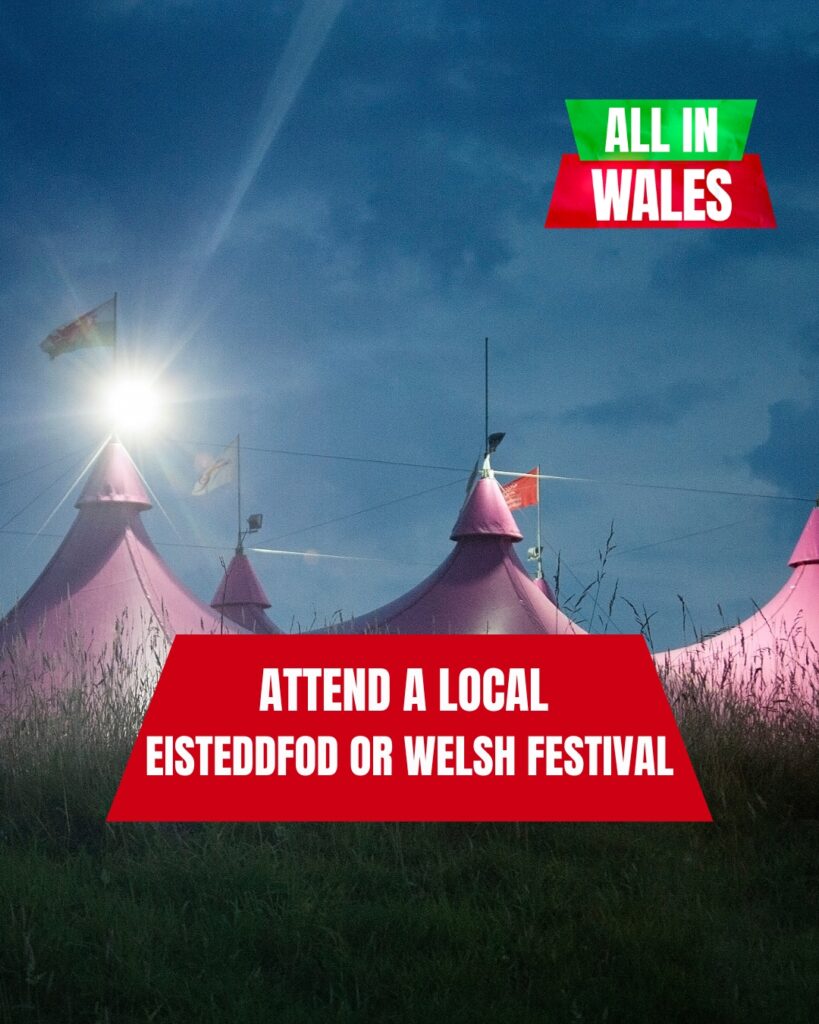
Each August, the Machynlleth Festival transforms this quiet market town into a centre of music-making. Established in 1987, the festival brings international classical musicians to perform in intimate venues around the town, creating an atmosphere quite unlike the larger festivals that dominate the classical music calendar.
The Tabernacle serves as the festival’s main venue, its acoustic well-suited to chamber music and solo recitals. Other performances take place in churches, chapels, and halls throughout Machynlleth and the surrounding area. The scale is deliberately modest, fostering close encounters between performers and audiences that are impossible in larger concert halls.
The festival has attracted musicians of the highest calibre over the years, drawn by the quality of the audiences and the pleasure of performing in such a characterful setting. For festival-goers, the combination of excellent music, beautiful surroundings, and the friendly atmosphere of a small town creates a memorable experience.
Beyond the festival fortnight, the Tabernacle hosts concerts and events throughout the year, ensuring that Machynlleth’s musical life extends across the calendar.
The Dyfi Valley and Surrounding Landscape
Machynlleth sits at the heart of the Dyfi Valley, a landscape of exceptional beauty that has been recognised through its designation as a UNESCO World Biosphere Reserve. The Dyfi Biosphere encompasses the estuary, the valley, and the surrounding hills, acknowledging both the natural importance of the area and the efforts of local communities to live sustainably within it.
The River Dyfi rises in the mountains above Bala and flows southwest through a broad valley before reaching the sea at Aberdyfi. The estuary is a haven for wildlife, particularly wading birds and wildfowl, while the valley floor is a patchwork of farms, villages, and patches of ancient woodland.
To the north of Machynlleth, the land rises towards the peaks of southern Snowdonia. Cadair Idris, one of the most celebrated mountains in Wales, lies within reach for a day’s expedition. The mountain’s dramatic profile dominates views to the north, and its summit offers panoramas extending from the Snowdon massif to Cardigan Bay.
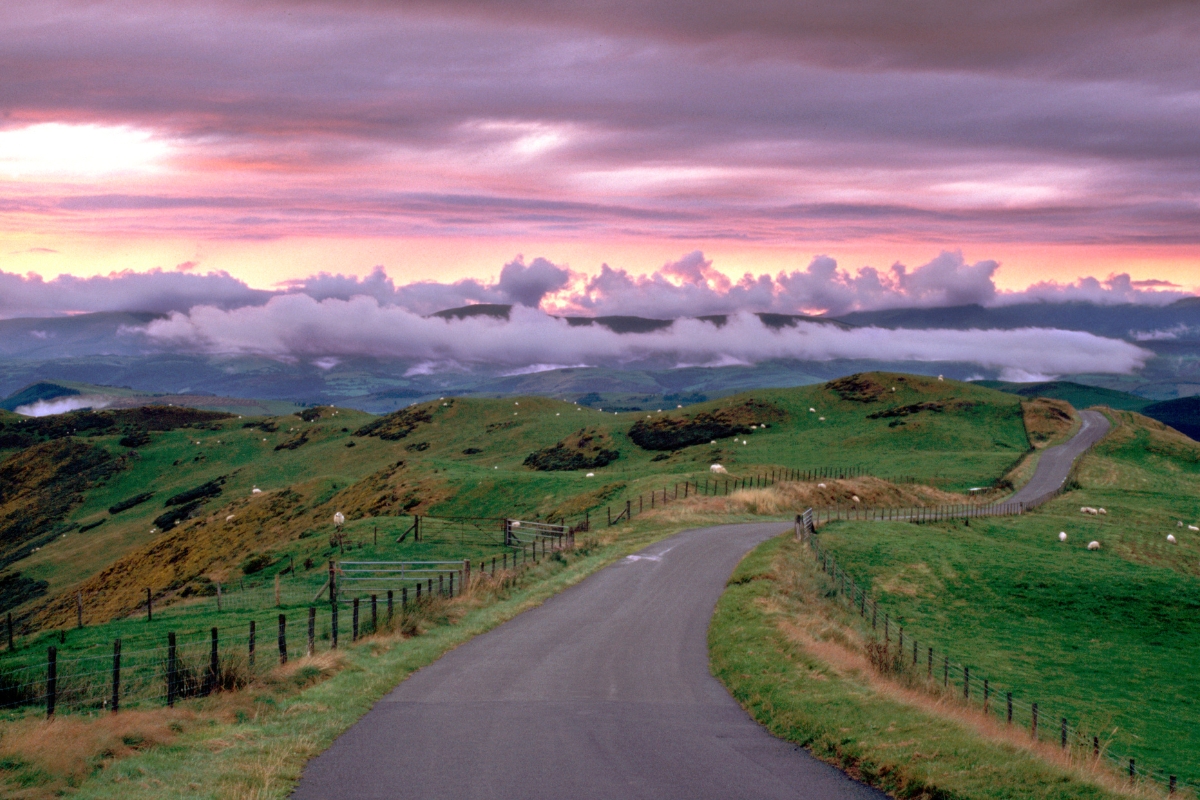
To the south and east, the landscape is gentler—rolling hills, wooded valleys, and the quiet roads that wind through the heart of mid-Wales. This is excellent cycling country, and mountain bikers have discovered the trails that thread through the forests.
The Dyfi Osprey Project, based at Cors Dyfi nature reserve a few miles west of Machynlleth, offers the chance to watch these magnificent birds during the breeding season. Ospreys returned to breed in Wales in 2011 after an absence of centuries, and the Dyfi nest has become a major attraction, with live cameras beaming images of the birds to a visitor centre and to viewers worldwide.
Welsh Language and Culture
Machynlleth lies within the Welsh-speaking heartland of mid-Wales, and the language is a living presence in the town. Street signs are bilingual, conversations in shops and cafés switch easily between Welsh and English, and Welsh-medium education ensures that the language is passed to new generations.
For visitors, this linguistic environment enriches the experience of the town. Even those who speak no Welsh will notice the distinctive soundscape and appreciate the survival of one of Europe’s oldest languages in everyday use. Those with some knowledge of Welsh will find Machynlleth a welcoming place to practise their skills.
The town’s cultural life reflects this Welsh identity. The Eisteddfod tradition, with its competitions in poetry, music, and other arts, has deep roots here. Local choirs, drama groups, and literary societies maintain traditions that stretch back generations. The connection between Machynlleth and Owain Glyndŵr reinforces the sense that Welsh culture and Welsh history are not museum pieces but living realities.
Practical Information for Visitors
Getting to Machynlleth
Machynlleth has its own railway station on the Cambrian Line, which runs from Shrewsbury to Aberystwyth and the Cambrian Coast. The station sits at the junction where the coast line branches from the main Cambrian route, making the town accessible by train from both directions. The journey from Shrewsbury takes approximately one hour and forty-five minutes, passing through spectacular mid-Wales scenery.
By road, Machynlleth lies on the A487 between Dolgellau and Aberystwyth, and on the A489 running east towards Newtown and the English border. From the north, the A470 provides a scenic route from Snowdonia. The town is approximately two hours’ drive from Cardiff, two and a half hours from Birmingham, and around ninety minutes from Shrewsbury.
Parking
Parking is available in the town centre, with the main car park located behind Maengwyn Street. On-street parking is also possible, though spaces can be scarce on market days and during busy periods. The car park at the Centre for Alternative Technology is separate and located at the attraction itself.
Accommodation
Machynlleth offers a range of accommodation options, from historic hotels and bed and breakfasts in the town centre to self-catering cottages in the surrounding countryside. The Wynnstay Hotel on Maengwyn Street provides traditional hospitality in the heart of town, while numerous smaller establishments cater to visitors seeking quieter stays.
The surrounding area includes holiday parks, camping sites, and farm accommodation for those preferring rural settings. The popularity of Machynlleth as a base for exploring mid-Wales means that booking ahead is advisable, particularly during the festival season and school holidays.
Eating and Drinking
Machynlleth punches above its weight for dining options, reflecting both its Welsh heritage and its alternative credentials. Traditional pubs serve hearty meals, while cafés offer everything from full Welsh breakfasts to vegetarian and vegan cuisine. The wholefood and organic movement has deep roots here, and several establishments specialise in locally sourced, environmentally conscious cooking.
The Wednesday market provides opportunities to purchase local produce, including Welsh cheeses, meats, baked goods, and seasonal vegetables. Several shops along Maengwyn Street specialise in organic and locally produced foods.
What to See and Do
A visit to Machynlleth might include:
Parliament House – The museum dedicated to Owain Glyndŵr and the parliament of 1404, essential for understanding the town’s historical significance.
The Clocktower – The Victorian landmark at the heart of the town, a natural starting point for exploration.
Maengwyn Street – The main shopping street with its independent retailers, galleries, and cafés.
The Centre for Alternative Technology – Europe’s leading eco-centre, three miles north of town, offering a full day’s visit.
MOMA Machynlleth – Contemporary art exhibitions in the converted Tabernacle chapel.
The Wednesday Market – The continuation of a 700-year trading tradition.
The Dyfi Valley – Walking, cycling, and wildlife watching in the UNESCO Biosphere Reserve.
How Long to Stay
Machynlleth rewards an overnight stay rather than a rushed day trip. A full day allows time to explore the town centre, visit Parliament House and MOMA, and stroll along Maengwyn Street. Adding a day for the Centre for Alternative Technology and another for exploring the Dyfi Valley or walking in the surrounding hills makes for a satisfying short break.
Those attending the Machynlleth Festival or using the town as a base for walking, cycling, or wildlife watching may wish to stay longer. The town’s compact size and excellent facilities make it a comfortable base for extended exploration of mid-Wales.
Frequently Asked Questions About Machynlleth
Where is Machynlleth located?
Machynlleth is located in southern Gwynedd in mid-Wales, at the head of the Dyfi Valley where it opens towards Cardigan Bay. It sits at the meeting point of three historic counties—Gwynedd, Powys, and Ceredigion—approximately 20 miles northeast of Aberystwyth.
How do you pronounce Machynlleth?
Machynlleth is pronounced roughly as “Ma-HUN-thleth” in Welsh, with the “ch” being a soft guttural sound and the “ll” being the distinctive Welsh lateral fricative. English speakers often approximate this as “Ma-KUNTH-leth” or simply “Mac” as a shortened form.
Why is Machynlleth called the ancient capital of Wales?
Machynlleth is called the ancient capital of Wales because Owain Glyndŵr held a Welsh parliament here in 1404 after being proclaimed Prince of Wales. This parliament, attended by representatives from all parts of Wales, represented a moment of Welsh national sovereignty and independence.
Who was Owain Glyndŵr?
Owain Glyndŵr was a Welsh nobleman who led a major revolt against English rule from 1400 to approximately 1415. He was proclaimed Prince of Wales by his followers and controlled most of Wales at the height of his power. He held a parliament at Machynlleth in 1404 and remains a potent symbol of Welsh national identity.
What is Parliament House in Machynlleth?
Parliament House is a medieval building on Maengwyn Street that traditionally marks the site where Owain Glyndŵr held his Welsh parliament in 1404. It now operates as a museum and exhibition space telling the story of Glyndŵr and the Welsh independence movement.
What is the Centre for Alternative Technology?
The Centre for Alternative Technology (CAT) is Europe’s leading eco-centre, located three miles north of Machynlleth. Founded in 1973, it demonstrates sustainable technologies including renewable energy, organic growing, and eco-building, and offers educational programmes and visitor attractions.
Is Machynlleth worth visiting?
Machynlleth is well worth visiting for its historical significance as the site of Glyndŵr’s parliament, its vibrant cultural life including MOMA and the annual festival, the nearby Centre for Alternative Technology, and its beautiful setting in the Dyfi Valley UNESCO Biosphere Reserve.
What is the Machynlleth Festival?
The Machynlleth Festival is an annual classical music festival held each August, bringing international musicians to perform in intimate venues around the town. Established in 1987, it has built a reputation for high-quality performances in atmospheric settings.
Is there a market in Machynlleth?
Yes, Machynlleth has held a weekly market since 1291 when Edward I granted the town a market charter. The market continues every Wednesday on Maengwyn Street, selling local produce, crafts, and general goods.
Does Machynlleth have a train station?
Yes, Machynlleth has a railway station on the Cambrian Line, serving as the junction where the Cambrian Coast Line branches from the main Shrewsbury to Aberystwyth route. The station provides connections to Shrewsbury, Birmingham, Aberystwyth, and the Cambrian Coast.
What is the Dyfi Biosphere?
The Dyfi Biosphere is a UNESCO World Biosphere Reserve encompassing the Dyfi Valley, estuary, and surrounding hills around Machynlleth. It recognises both the natural importance of the area and the local community’s commitment to sustainable living.
Can you see ospreys near Machynlleth?
Yes, the Dyfi Osprey Project at Cors Dyfi nature reserve, a few miles west of Machynlleth, offers the chance to watch breeding ospreys during spring and summer. The visitor centre features live camera feeds and information about these magnificent birds.
How far is Machynlleth from Aberystwyth?
Machynlleth is approximately 20 miles northeast of Aberystwyth, around 30 minutes by car via the A487 or approximately 35 minutes by train on the Cambrian Line.
What is the clocktower in Machynlleth?
The clocktower is a Victorian landmark built in 1874 at the centre of Machynlleth. Standing approximately 80 feet tall in Gothic Revival style, it has become the symbol of the town and appears on signs, souvenirs, and promotional materials.
Is Machynlleth a Welsh-speaking area?
Yes, Machynlleth lies within the Welsh-speaking heartland of mid-Wales. Welsh is widely spoken in the town and surrounding area, with bilingual signage and a strong Welsh cultural identity.
What outdoor activities are available near Machynlleth?
The area around Machynlleth offers excellent walking, cycling, and mountain biking, with access to southern Snowdonia including Cadair Idris. The Dyfi Valley provides gentler walks and wildlife watching, while the coast at Aberdyfi is easily accessible for beach visits.
The Ultimate Snowdon (Yr Wyddfa) Climb: Which Trail Will You Take? Interactive Map
